The latest series of political scandals, allegedly involving President Park Geun-hye and her confidante Choi Soon-sil, have fueled some opposition presidential hopefuls’ rise to prominence.
Some alternatives to conventional political bigwigs have taken to social networking tools such as Twitter, exerted clout over the users and further forged public opinion online.
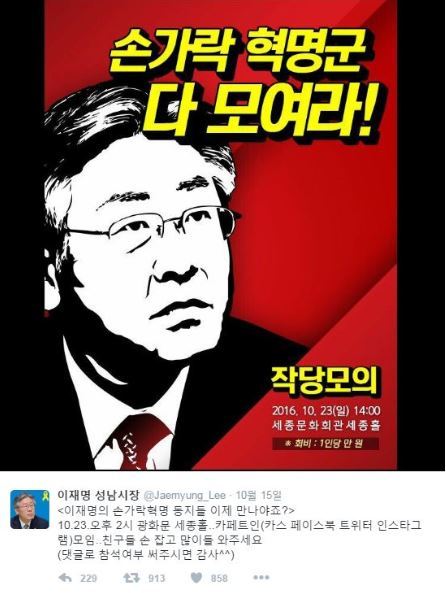
One of them, Mayor of Seongnam Lee Jae-myung, is backed by a social networking-savvy group of staunch supporters, who named themselves “Thumb Revolutionaries.”
The 52-year-old’s popularity rating more than quadrupled in about three months. In the second week of December, when the parliament voted for President Park’s impeachment bill, it stood at 18 percent, up from 3.8 percent in the first week of September, when he declared he would run for president.
The mayor of the city, located just southeast of Seoul, became popular without partisan endorsement from the main opposition Democratic Party of Korea. He garnered attention with notable speeches at the protest venues on the streets in the last few months, aggressive comments in interviews, populist policies for the city, as well as “‘creative’ ways of governance,” as Rep. Sohn Hye-won, the then-chief of public relations of the Democratic Party, put it in her lecture in August 2015.
On Oct. 23, Lee launched his group of supporters as part of his presidential bid. Thousands of online activists, mostly Seongnam citizens, huddled at the venue and were asked to share articles featuring the mayor through social networks and engage in Twitter conversations about him.
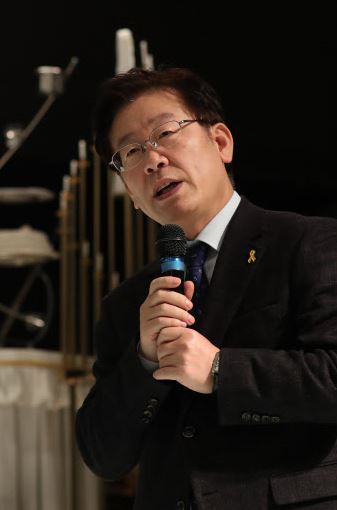
The idea of the online supporter group would have been impossible without Lee’s active use of Twitter since 2012. Lee’s Twitter account, created in 2010 when he was elected as mayor, is followed by some 350,000 followers. He tweets daily, sometimes more than a dozen times a day, to share interview articles about himself, quote other users’ posts on Twitter to respond to them.
Lee in a 2015 interview refuted words of some detractors, criticizing him for “tweeting too much.” He instead claimed his social network engagement is a “sheer form of governance.”
“Twitter is a direct route where citizens can reach out to the authorities and come up with their complaints,” Lee told local news outlet Law Issue.
Lee ordered some 140 sectors of Seongnam city public administration system to create Twitter accounts and take complaints and give feedback online. His strategy bore fruit. Twitter users’ access to the city government and social network-savvy mayor has reduced the time it takes to respond to complaints from a week to less than a day -- 23 hours and 38 minutes -- on monthly average as of Friday.
He also tweets to defend himself from political offensives. One of the tweets in November, pinned to the top of his feed as of Friday, claimed that he did not curse his sister-in-law and such speculation was fomented by his elder brother, known as his political arch enemy. Mainstream media outlets, Lee argued, turned a deaf ear to his explanation, making him turn to “Thumb Revolutionaries” and say, “Would you spread this for me?” Thousands of retweets and a slew of comments from his online loyalists followed the November post.
Lee’s active use of Twitter was inspired by that of Seoul Mayor Park Won-soon, who started to take to Twitter in 2009 and has some 1.9 million followers. He has established hashtags including “Won-soon Ssi” -- Mr. Won-soon in Korean -- and encouraged Twitter users to add the hashtags while sending compliments, complaints and suggestions to the mayor.
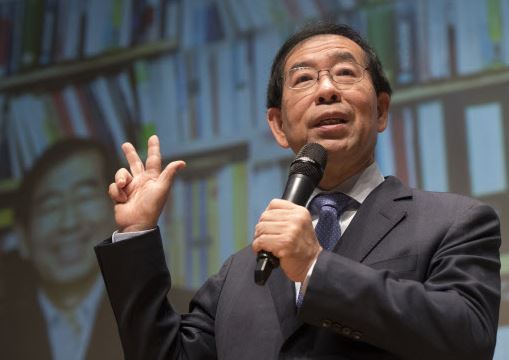
Park’s popularity has hovered at around 5 percent for months before it soared to 7 percent in the fourth week of November. Despite the recent drop in popularity to 3.9 percent, as of the second week of December, Park’s aides reportedly believed a moment of breakthrough in his presidential bidwould arrive.
This comes in contrast to how lawmakers use Twitter. Opposition presidential front-runner Rep. Moon Jae-in and former chief of minor opposition People’s Party Rep. Ahn Cheol-soo have large Twitter accounts, followed by some 1.23 million and 769,000 users, respectively. But they have relied on Twitter rather to unilaterally promote their plans of action, self-produced clips featuring the lawmakers, public statements and political views than to engage in conversations with ordinary users.
By Son Ji-hyoung ()
koreaherald@heraldcorp.com











