A South Korean agricultural aid program has more than doubled average productivity among participating rice farmers in eight African countries, officials said Friday as government agencies and development organizations gathered in Seoul to review its progress and discuss expansion.
The K-Ricebelt program, launched in 2023, produces and distributes high-quality, high-yielding rice seeds adapted to local conditions. It also supports farming infrastructure and technical training to help African countries strengthen food security and reduce their reliance on imported rice.
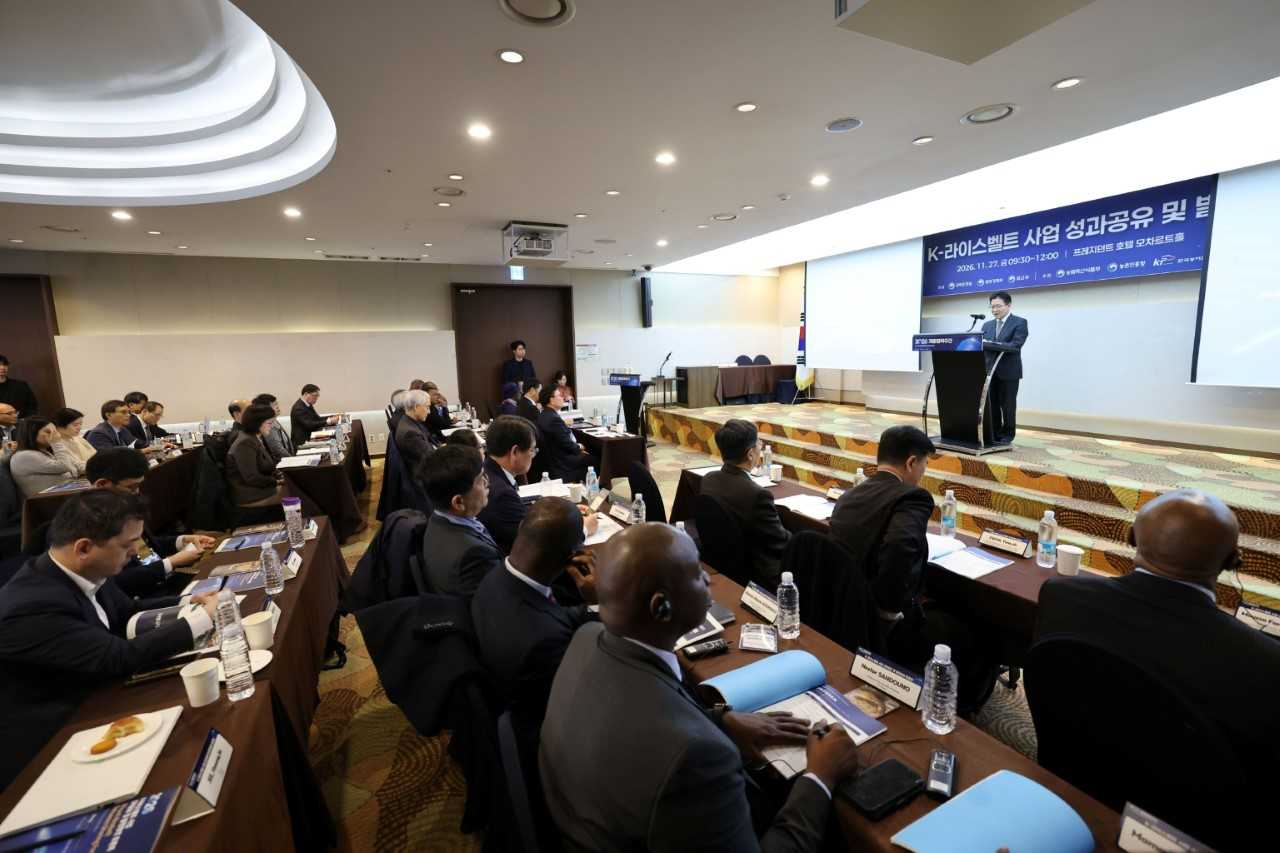
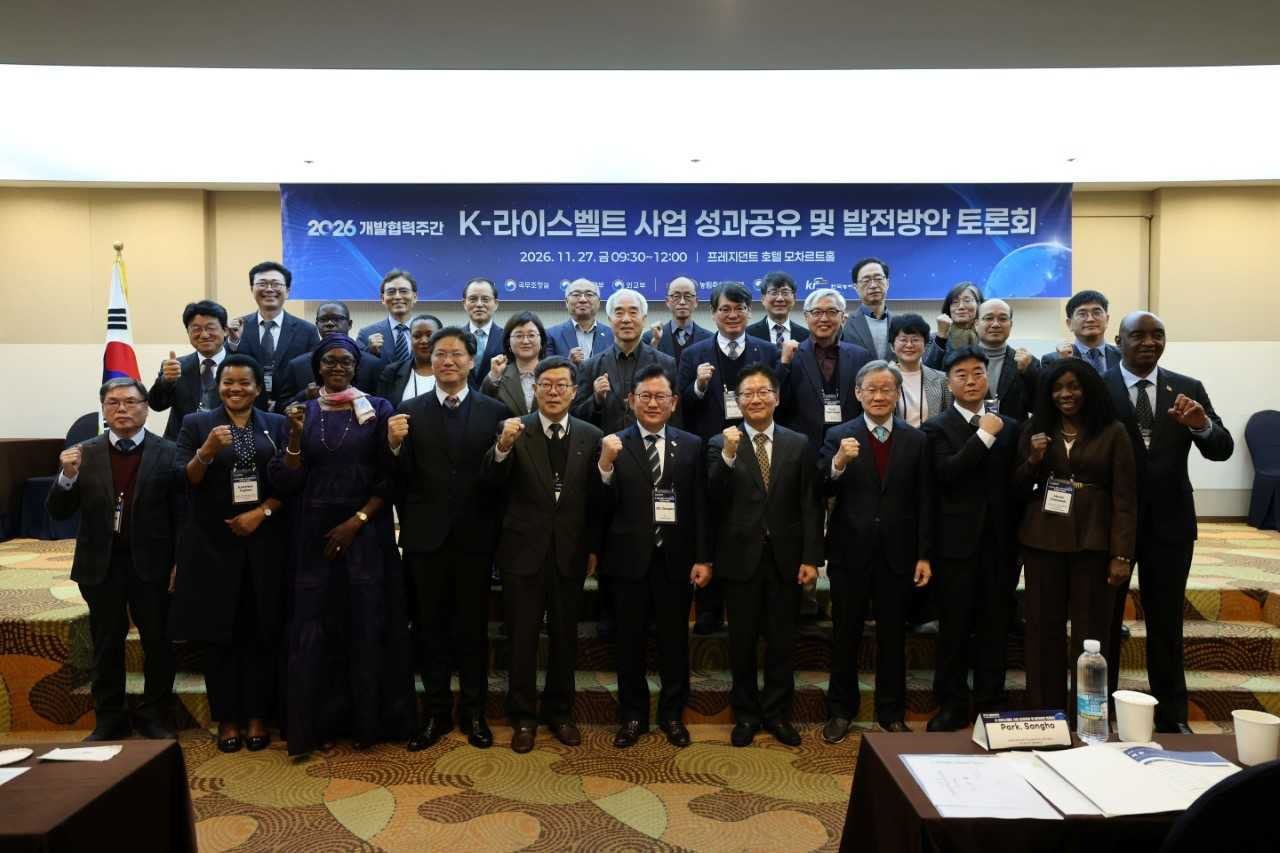
About 100 people attended the meeting at the President Hotel, jointly organized by South Korea’s Agriculture Ministry, Rural Development Administration and Korea Rural Community Corp. The event was part of Development Cooperation Week, which ran Nov. 24-27.
Participants included African embassy representatives, South Korean development agencies, businesses and experts, alongside representatives of the UN Food and Agriculture Organization, World Food Program, International Fund for Agricultural Development and African Development Bank.
Lee Seung-don, head of the Rural Development Administration, said average productivity among local farmers had more than doubled since the program began. He highlighted Uganda, where regional farmers’ cooperatives have taken a leading role in organizing production.
The program began in Ghana in 2023 and expanded in 2024 to Gambia, Guinea, Senegal, Uganda, Cameroon and Kenya. Sierra Leone joined this year, bringing the number of participating countries to eight.
The Agriculture Ministry oversees policy and coordination, the Rural Development Administration handles seed production and technical training, and the Korea Rural Community Corp. develops seed production infrastructure.
Park Sang-ho, the ministry’s director general for international agricultural cooperation, said seed production complexes would begin opening next year, starting in Ghana. He said the government planned to strengthen partnerships with businesses and international organizations alongside its cooperation with recipient governments.
Presentations examined Kenya’s rice seed production system and progress on a seed production complex in Senegal, offering examples of how the program operates locally.
A discussion chaired by former Vice Agriculture Minister Lee Myung-soo brought together five private-sector experts. They called for greater participation by nongovernmental organizations, businesses and international institutions, as well as more opportunities for young African farmers.
The experts also urged stronger connections between production, distribution and consumer demand to support the program’s long-term development.
Kim Woo-sang, an executive director at the Korea Rural Community Corp., said the meeting provided an opportunity to assess four years of work and discuss future directions with international organizations, academics and civil society groups.
He said the corporation would review the experts’ recommendations and incorporate them into implementation as it seeks to make the program broader and more inclusive.
shinyb@heraldcorp.com