The Ulsan complex is set to begin commercial operations in 2027, more than doubling petrochemicals’ share of S-Oil’s output to 25 percent.
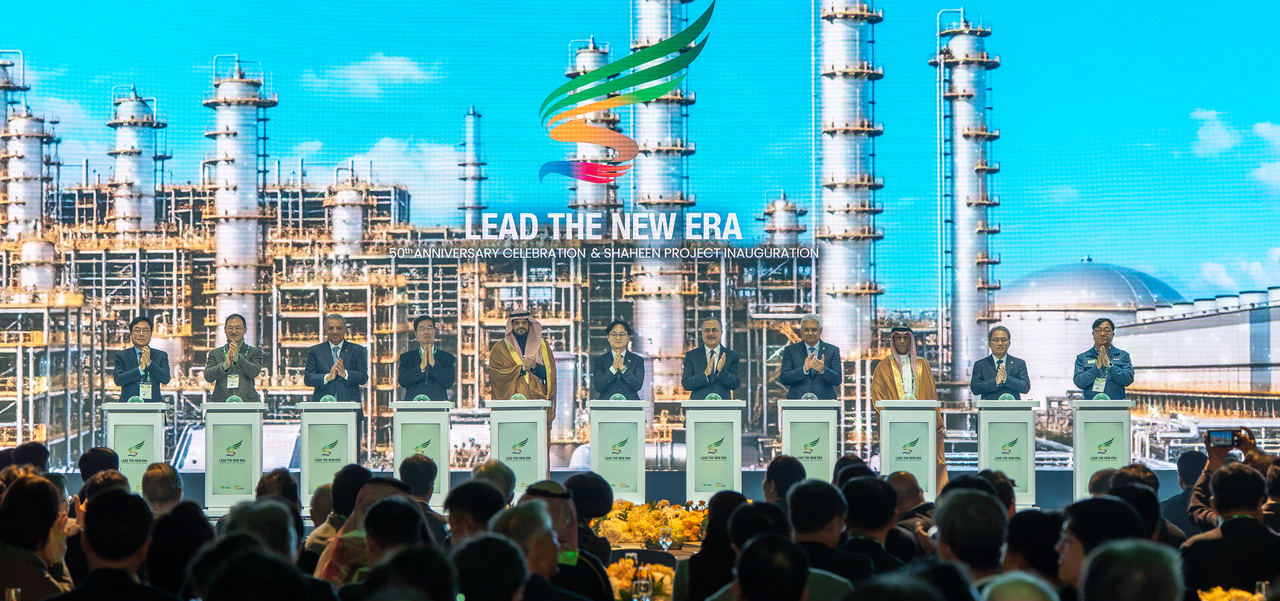
S-Oil marked the completion of its Shaheen petrochemical complex in Ulsan on Wednesday, capping South Korea’s largest-ever petrochemical investment as the refiner moves to expand its chemicals business. The project cost 9.26 trillion won ($6.9 billion).
The Shaheen Project is scheduled to begin commercial operations in 2027 after trial runs. It will add about 3.2 million metric tons of annual petrochemical production capacity and raise the share of petrochemicals in S-Oil’s total output from 12 percent to 25 percent, the company said.
S-Oil celebrated the project’s completion and its 50th anniversary at a ceremony in Seoul Wednesday, drawing about 500 guests. Among those attending were Kim Jung-kwan, Korea’s minister of trade, industry and resources, and Mohammed bin Abdulrahman Al-Ibrahim, Saudi Arabia’s assistant energy minister for oil and gas. Aramco President and CEO Amin H. Nasser and downstream president Mohammed Al-Qahtani also attended.
S-Oil announced the investment in November 2022 during Saudi Crown Prince Mohammed bin Salman’s visit to South Korea. Construction began in March 2023.
Nasser called Shaheen Aramco’s largest investment in South Korea. The state-owned Saudi oil company first invested in S-Oil in 1991 and became its majority shareholder in 2015.
“The project is also in line with Saudi Arabia’s national strategy to expand its petrochemical business at home and abroad,” Al-Ibrahim said.
“By integrating refining and petrochemicals, Shaheen aims to create more value from every barrel and enable more efficient production,” Nasser said, adding that the complex would support industries including electric vehicles, semiconductors and digital infrastructure.
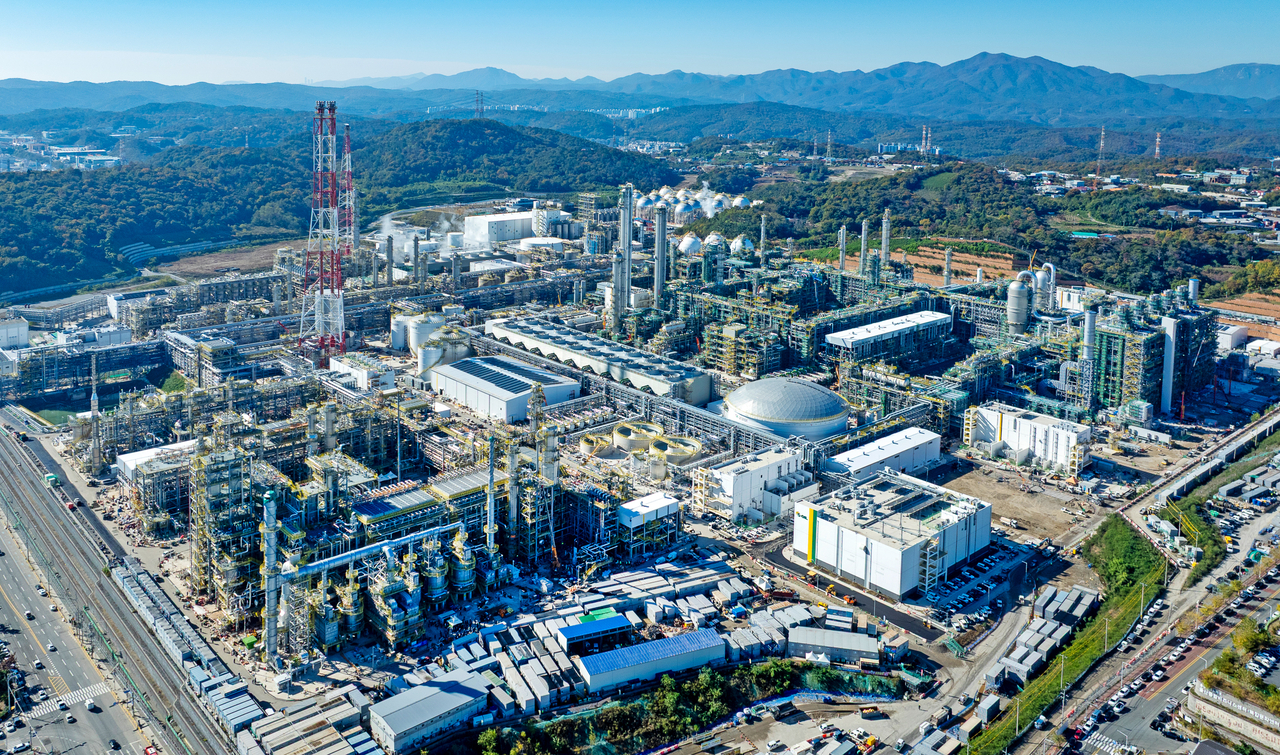
The 880,000-square-meter complex in the Onsan National Industrial Complex includes what S-Oil says is the world’s largest single-unit steam cracker, capable of producing 1.8 million metric tons of ethylene a year.
The cracker will also produce propylene and butadiene. Some of the ethylene will be converted into polyethylene, a plastic commonly used in packaging.
S-Oil expects to source 83 percent of the complex’s feedstock from its own facilities. The project is the first commercial use of Thermal Crude-to-Chemicals technology, which Aramco and US-based Lummus Technology developed to convert crude oil and low-value refining residues into feedstock for petrochemical production.
The expansion comes as other Korean petrochemical producers are cutting capacity in response to a global glut. S-Oil plans to supply feedstock by pipeline to manufacturers in Ulsan that have relied on imports and sell polyethylene overseas through Aramco affiliate SABIC.
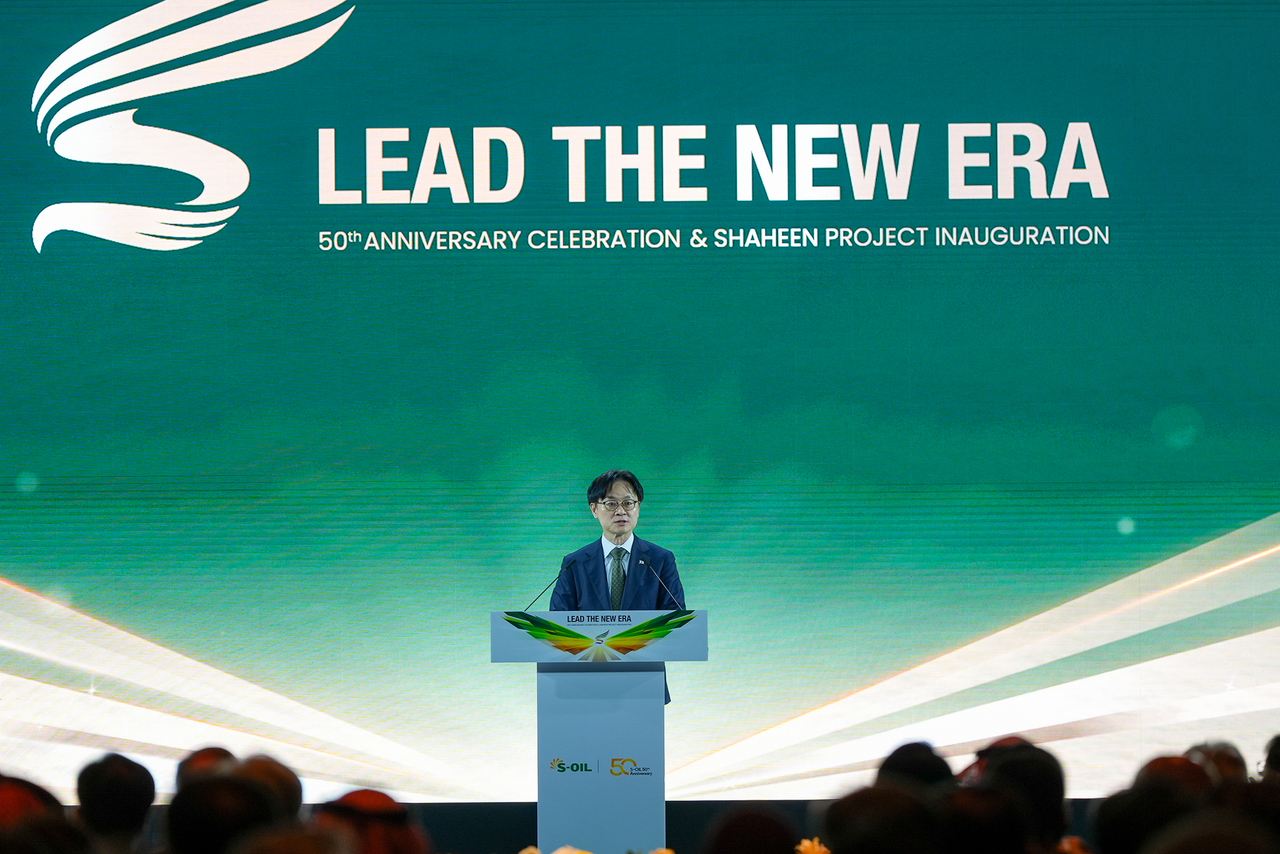
“We expect the project to open up new opportunities for Korea’s petrochemical industry at a time of transition,” Kim said. He also thanked Saudi Arabia for pledging to prioritize shipments of crude oil and naphtha to Korea after conflict in the Middle East disrupted energy supplies.
Kim said the government would support further investment and cooperation between the two countries. “I sincerely hope the Shaheen Project will take flight in South Korea and around the world,” he said.
Al-Ibrahim said Saudi crude accounted for about 40 percent of Korea’s crude oil imports in the 10 months of this year, up from about 35 percent in 2025.
“We will honor our commitment to ensuring a stable and reliable supply of crude oil to South Korea,” he said.
“I hope this occasion will help our two countries strengthen cooperation in the energy sector and build our capacity to tackle challenges together,” he said. “That will help our industries grow together and deepen the ties between our two countries.”
S-Oil began as a refiner in 1976 and later added facilities to turn heavy oil left over from refining into higher-value fuels such as gasoline and diesel.
It expanded into petrochemicals with a paraxylene plant in 2011 and completed a 4.8 trillion won project in 2018 that allowed it to use more refining byproducts to make chemicals. The company said it has invested more than 14 trillion won over the past decade, including Shaheen.
“This investment has cemented S-Oil’s position as an integrated refining and petrochemical company,” S-Oil board chair Kwon O-kyu said.
sahn@heraldcorp.com