Guinness Atkinson CEO calls K-beauty's tight value chain sturdy base for winning global consumers despite turbulent markets

American consumers who load up on K-beauty can now invest in how far the industry can go.
Guinness Atkinson Asset Management’s KBTY debuted on the NYSE Arca exchange on Nov. 12. The firm describes it as the first US-listed exchange-traded fund focused on K-beauty. It covers the industry's full value chain, from brands and manufacturers to medical aesthetics firms.
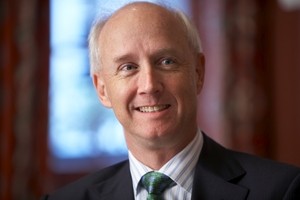
Guinness Atkinson CEO Jim Atkinson voiced his belief in an interview with The Korea Herald that K-beauty's three-decade industrial foundation can outlast both the hype and short-term market turbulence.
"I'm not too worried about industry success; I believe the industry is well positioned to continue its growth," he said. "The untapped addressable market is large."
Korea’s cosmetics exports to the US rose from $156 million in 2014 to $2.2 billion in 2025. In 2024, Korea overtook France as the leading supplier of skincare and makeup imports to the US, according to a Guinness Atkinson report.
The making of KBTY
The idea grew from an internal trends report on Korean cultural exports and, more personally, from an encounter at a newly opened Olive Young store in Atkinson's hometown of Pasadena, California.
The long line of shoppers outside brought the report to mind, and research soon convinced him the industry stood on solid ground.
"We put the KBTY web page up in August and it immediately became the most trafficked page on our site … and that activity has only grown through the launch period," Atkinson said. Retail investors have driven most of the interest, with advisers showing some appetite too, he added.
The fund is the company's first passive product, tracking the Indxx K-Beauty Index. Its top holdings range from beauty giants Amorepacific and LG Household & Health Care to rising name APR, manufacturers Kolmar Korea and Cosmax, as well as medical aesthetics players PharmaResearch and Hugel.
The lineup mirrors K-beauty's entire ecosystem, which, in Atkinson's view, owes its edge to infrastructure Korea built for speed and quality and now extends into medical aesthetics and clinical skincare.
"I thought the social media presence and obvious popularity behind K-Beauty was interesting, but I was impressed with the structural foundation behind the industry," he noted. "We've done a good job of making sure that all the vital parts of the ecosystem are represented."
Contract manufacturing entered Korean cosmetics in 1990. The original design manufacturing model now lets smaller brands reach shelves faster than their French and American rivals, he explained. Korea's Cosmetics Act, which took effect in 2000, codified standards for safety and efficacy.
"Korea set a regulatory standard for efficacy claims two decades before ingredient labels became social-media currency," he said.
Market test for K-beauty
Atkinson reckons K-beauty has barely made a dent in the global market.
"The global beauty market is growing about 5 percent per year, but the key point is that K-beauty has a tiny market share, for now," he observed.
That share sits below 2 percent in Europe and under 1 percent in India, and Korean brands hold only a small slice of the Middle East, one of the industry's fastest-rising markets.
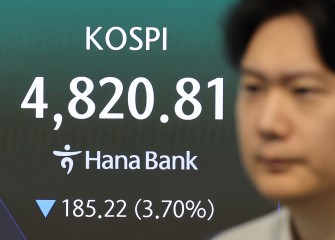
Atkinson’s confidence meets a sterner test on the stock market. K-beauty shares have come under pressure amid a broader market pullback. The benchmark Kospi, which topped 9,000 points in June, fell below 5,000 on Wednesday.
The stocks, he acknowledged, do not necessarily "mirror the success of the industry."
K-beauty shares had arguably outrun earnings, Atkinson noted, leaving them exposed to profit-taking, while currency appreciation, rising overseas costs and margin worries added pressure. Exports kept climbing all the same.
"The recent correction therefore appears to reflect a normalization of valuations," Atkinson argued.
Governance reforms keep Korea appealing to foreign investors, he added, though the market remains at the mercy of artificial intelligence demand, since Samsung Electronics and SK hynix make up almost half the Kospi.
Wall Street's own AI frenzy has kept rival fund issuers so focused on tech products that KBTY faces no US competition yet, though two developments could eventually draw them into K-beauty.
"First, K-Beauty does as we expect and takes the world by storm. Second, our ETF, KBTY, becomes a big success," he said. "These two points are linked."
minmin@heraldcorp.com