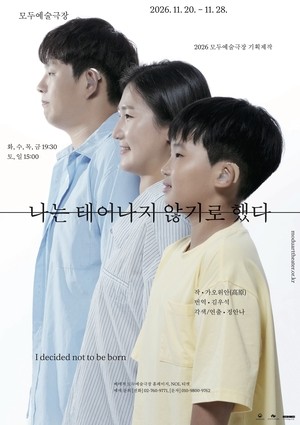
A barrier-free adaptation of a Chinese play asks: If given the choice, would you be born?
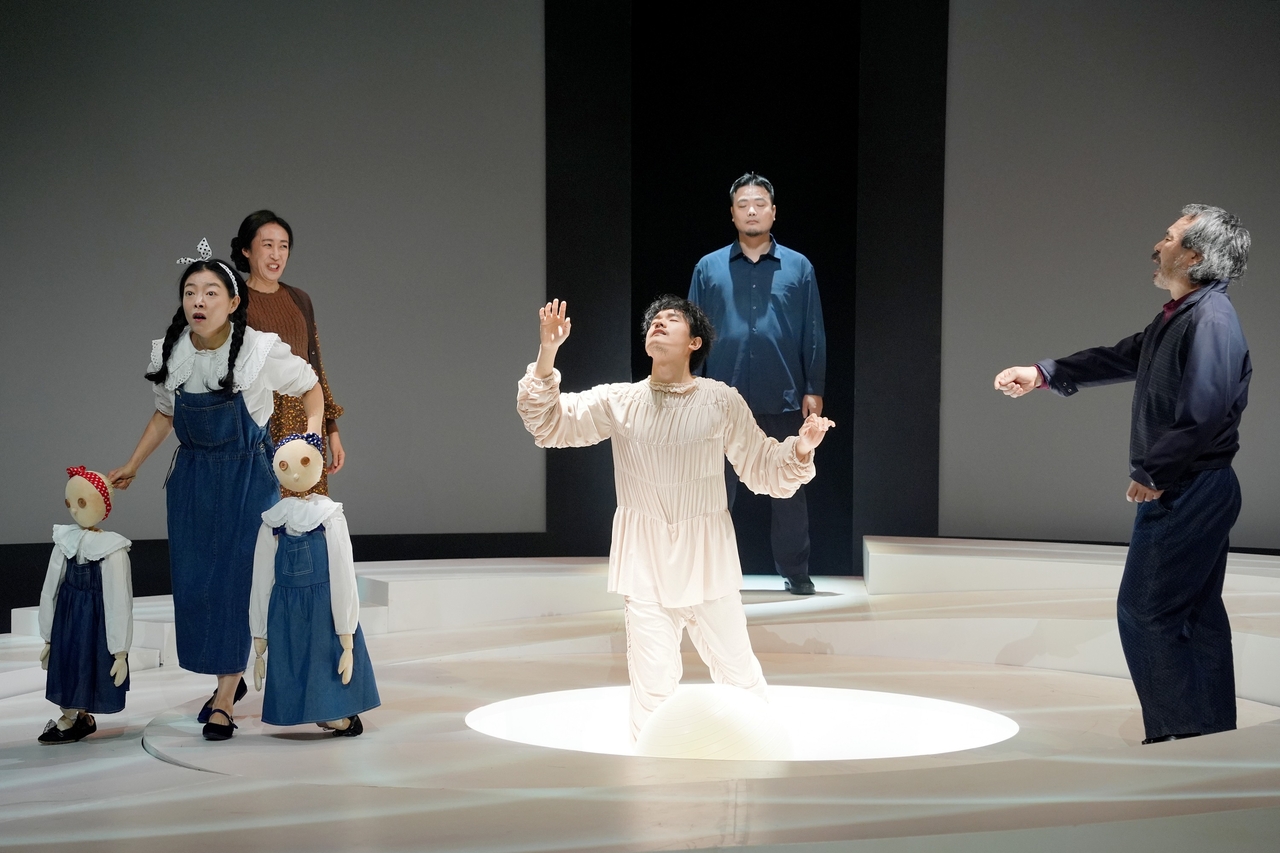
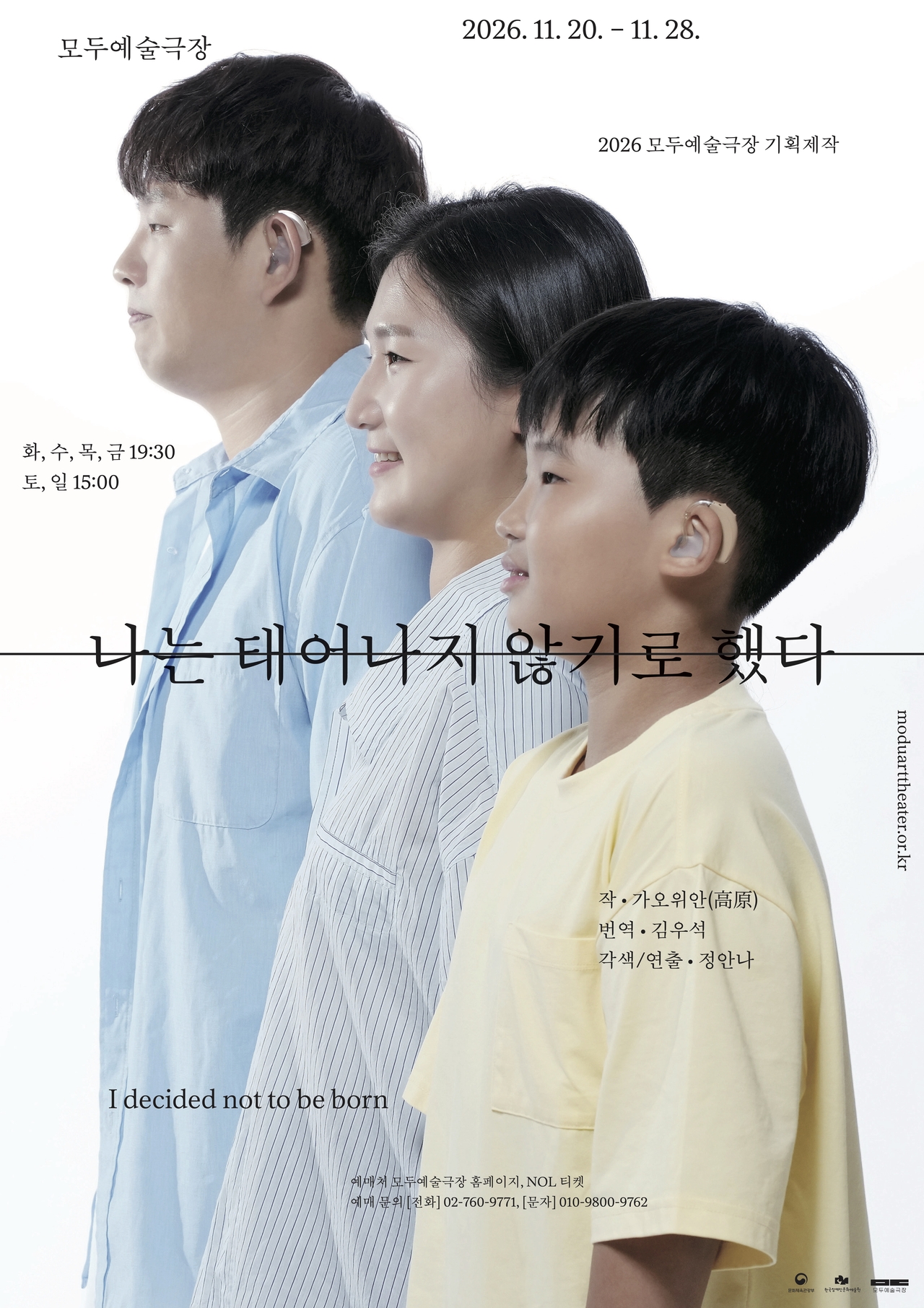
Ten minutes. That is how long expecting parents get to persuade their unborn child to be born in "I Decided Not to Be Born," now running at Modu Art Theater, Korea's first theater built for artists with disabilities, in Seoul through Nov. 28.
The play began in Beijing as "I Choose to Be Born," written by Gao Yuan for the Pleasure Troupe, a Beijing company of theater enthusiasts, most of whom have disabilities. The Seoul production flips the title.
It is set in a near future where parents can talk to a fetus through its brain waves, and where the law gives the fetus the final say. Parents must sit down for the conversation eight months into the pregnancy and describe their health and home life truthfully. If the child says no, it simply disappears. The play follows five families having that conversation at a hospital's Birth Coordination Center, but with the added pressure of raising Korea's birth rate.
Before agreeing to be born, Chanel has one last demand for her parents: sell the apartment in Jamsil and move to Daechi-dong, Seoul's cram school capital, where Korean parents go when they want to give their children every possible edge.
Having turned her parents down five times, Chanel is the most seasoned negotiator among the unborn. She opens with questions about the Middle East and Seoul housing prices, then grills her parents on their preparations. Her mother earned a master’s degree in child nutrition at Cambridge. Her father has collected certificates in everything from barista skills to law. Chanel wants to know whether her father has been made an executive yet. Then comes her final demand: the move to Daechi-dong cannot wait, because a child has to be born there, not move there later.
It is a bitter laugh at Korea's cutthroat race for success, one that now begins in the womb.
Silence speaks
The play is a barrier-free production, and weaves Korean Sign Language interpretation for every character and subtitles into the staging so seamlessly that they feel less like an accommodation than part of the play itself.
And it makes the introduction of Maru's deaf parents all the more striking. For several minutes, the family talks among themselves in sign language, with no voice interpretation, no subtitles, no translation of any kind.
On opening night, with many deaf theatergoers in the house, laughter rippled through the seats while hearing viewers could only watch, unable to follow. Even so, Maru's joy came through: a child about to be born deaf into a deaf family, who wants nothing more than to meet his parents and see the world.
For once, the theater belonged to its deaf audience, and the exclusion they know so well landed squarely on everyone else.
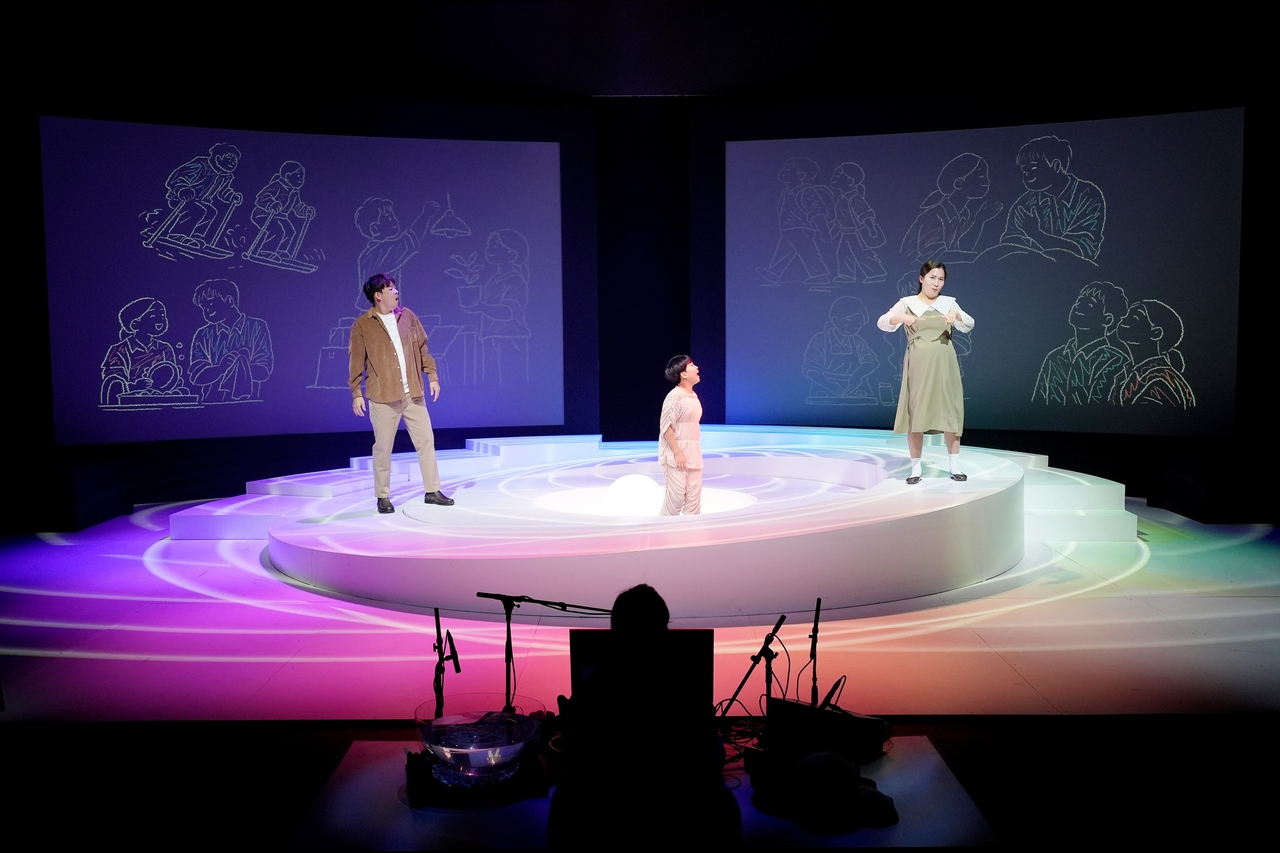
Then comes Mong-i, the play's darkest turn and the one that gives it its title. Mong-i's mother, Hyewon, arrives alone and asks not to be called Mom. She never wanted children and said so before marrying, but her husband changed his mind to please his own mother. She later learned he had poked holes in their condoms. She ended her first pregnancy. This time, numb with despair, she let the window for an abortion pass. As Mong-i, newly formed and eager to be born, keeps reaching for her, Hyewon turns the play's question around: Why does no one ask how anyone could want to be a mother?
"In this world, there is at least one person who would erase their own existence to grant your wish. Please remember that."
Having heard Hyewon out, Mong-i corrects herself mid-sentence, from "Mom" to "Hyewon," and leaves her with one thing to remember: "In this world, there is at least one person who would erase their own existence to grant your wish."
The last two choose to be born knowing what awaits them. Jeongnam, the long-awaited son of a convenience store owner from Gyeongsang Province, agrees at once, then asks the family to remember one more thing: their son is a girl, and always has been. Her father refuses to hear it. Her eldest sister replies that she now has a youngest sister.
Haessal, who has a 50 percent chance of developing a fatal degenerative disease, rejected birth two years earlier in protest at a system that lets adults hide behind children's choices. This time, Haessal reasons that to beat an opponent, you first have to step into the arena, and asks only that the mother let go when Haessal falls.
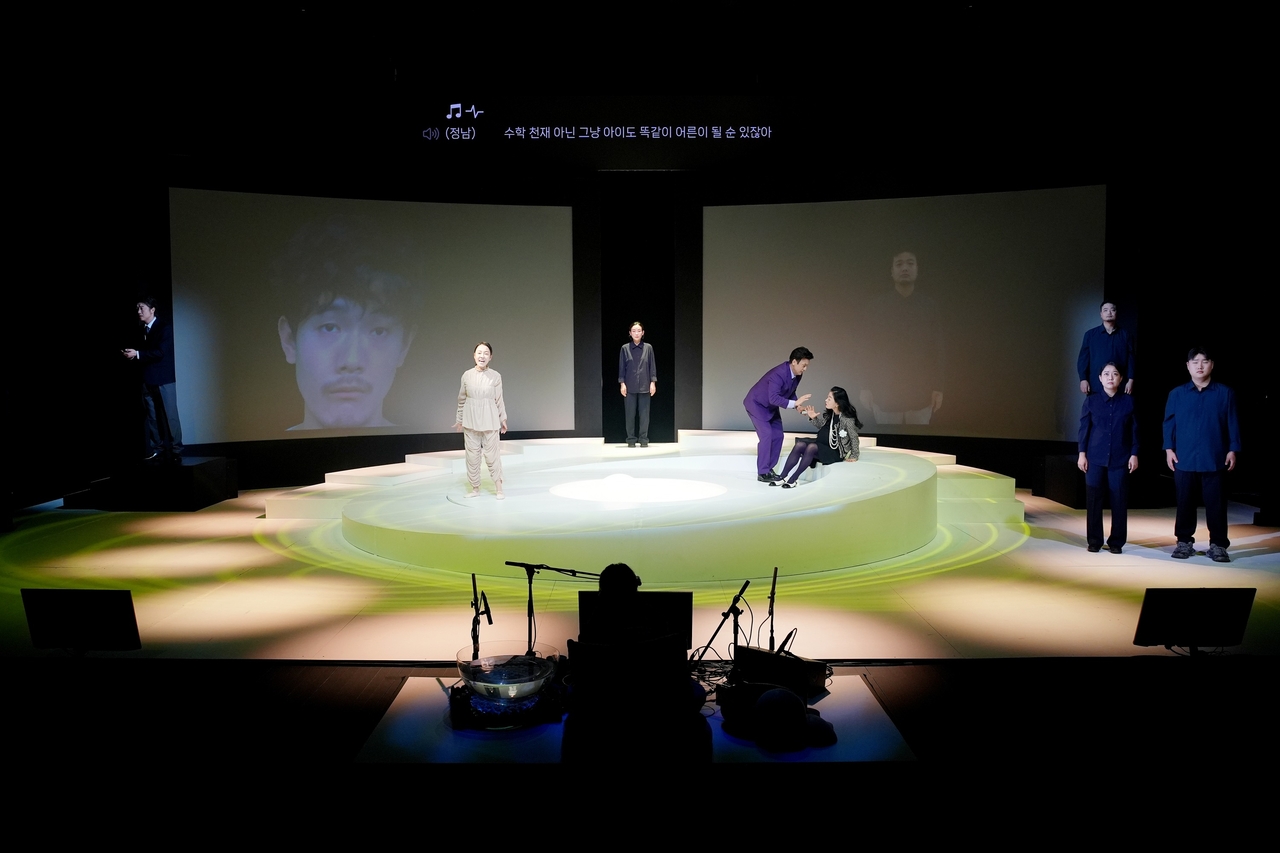
The four who remain promise to grow up as friends, then turn to the audience with one last question: If you had the choice, would you be born?
"More than whether to be born, what I most hope audiences reflect on is how to live," director Jung An-na told The Korea Herald Wednesday. The conditions the unborn weigh all come down to discrimination, she added, but no condition in life is absolute.
"More than whether to be born, what I most hope audiences reflect on is how to live."
Jung's own ambition goes further. Every sign language interpreter on stage is deaf, and she has come to believe the next step is to train them as actors. "Isn't making a performance they lead themselves the truer kind of barrier-free theater?" she said.
Anthony, a deaf theatergoer from France who gave only his first name, shares that hope. He does not know Korean Sign Language and could not follow every line, he wrote in a message to The Korea Herald, but the actors' expressiveness and the visual staging carried him through.
Still, he wished to see deaf performers lead the stage rather than serve as interpreters. "If deaf and hearing artists build a work together while respecting each other's language and culture, sign language can go beyond a means of communication and become an original artistic language that enriches a performance's story and aesthetics," he wrote.
gypark@heraldcorp.com