Last-minute rules and education chief’s exit leave Korea’s deeper exam flaws unresolved
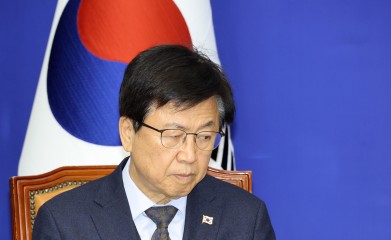
South Korea’s College Scholastic Ability Test, or Suneung, went ahead Thursday with roughly 490,000 candidates. Three days later, Education Minister Choi Kyo-jin resigned over last-minute anti-cheating measures.
President Lee Jae Myung accepted his resignation and assigned Prime Minister Han Seong-sook to oversee the follow-up. Choi’s departure addresses ministerial responsibility but leaves unanswered what the test system is meant to measure.
Smart glasses had previously been implicated in cheating on the Test of Proficiency in Korean and in other school assessments. Miniature cameras and wireless earpieces surfaced in national qualification exams, while there were anomalous jumps in trends in patent attorney exam results.
Yet authorities focused on smart glasses, broadening their response only after the top scorer in a tax accountant exam admitted using a camera and artificial intelligence.
Two days before the Suneung, the government added 8,400 personnel: 1,800 for electronic-device checks and 6,600 corridor proctors. Officials changed stationery rules the day before the test. On exam day, they placed stickers over clothing buttons and tightened public Wi-Fi controls near test sites.
Candidates faced last-minute instructions as teachers were expected to spot devices designed to evade detection.
The test ended without major disruptions, but the 111 electronic-device violations recorded by the Education Ministry are no proof of success. Five involved device use during the exam, including smart glasses in one case and a miniature camera paired with wireless earpieces in another. These cases show that vigilance can work, but expose the limits of relying on hastily mobilized staff.
Choi’s resignation was warranted. Why did repeated warnings fail to produce a plan before the final week?
The problem extends beyond the Suneung. University essay tests, interviews and oral exams are still underway, with safeguards varying by institution. Schools face similar anxieties over internal assessments and reported smart-glasses violations.
The Education Ministry cannot supervise every classroom, but it can set technical standards, help institutions acquire screening tools and settle legal questions about searches and signal detection before the next exam season.
Previous test results also merit review. The number of candidates scoring at least 90 on the accounting section of this year’s tax accountant exam jumped from two to 66. In the patent attorney exam, second-stage passers averaging 60 or more rose from three to 42.
Such anomalies warrant scrutiny amid admissions of AI-assisted cheating, but do not establish that any candidate cheated. Statistical screening, combined with access logs and digital evidence, could identify cases for investigation. Reviews must follow verifiable evidence and consistent standards, lest efforts to restore confidence cast suspicion on legitimate achievements.
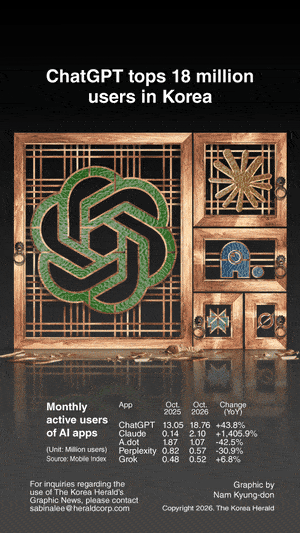
The deeper question is what exams should reward when AI answers standard questions with remarkable speed. A model reportedly solved the Suneung’s Korean, English and mathematics papers in about 10 minutes, earning perfect scores.
More searches and signal checks may help deter cheating, but cannot guarantee every concealed device will be found. The country must reconsider an assessment system centered on rapid recall and fixed-answer questions that AI can now handle with ease.
Korea’s ambition to become a leading AI power requires people who can question machine-generated answers and judge when they deserve trust. Assessment should be redesigned to test those abilities through written work and oral exams that probe reasoning, while retaining common academic standards.
To that end, policymakers must review university admissions safeguards and coordinate technical standards across agencies. They should also investigate past anomalies without prejudging candidates.
The next education minister will inherit more than an exam-security mess. The task is to restore faith in the testing process and reconsider what it certifies. A test earns trust when its rules are settled before the doors close and its grades reflect real merit, not borrowed intelligence.
khnews@heraldcorp.com