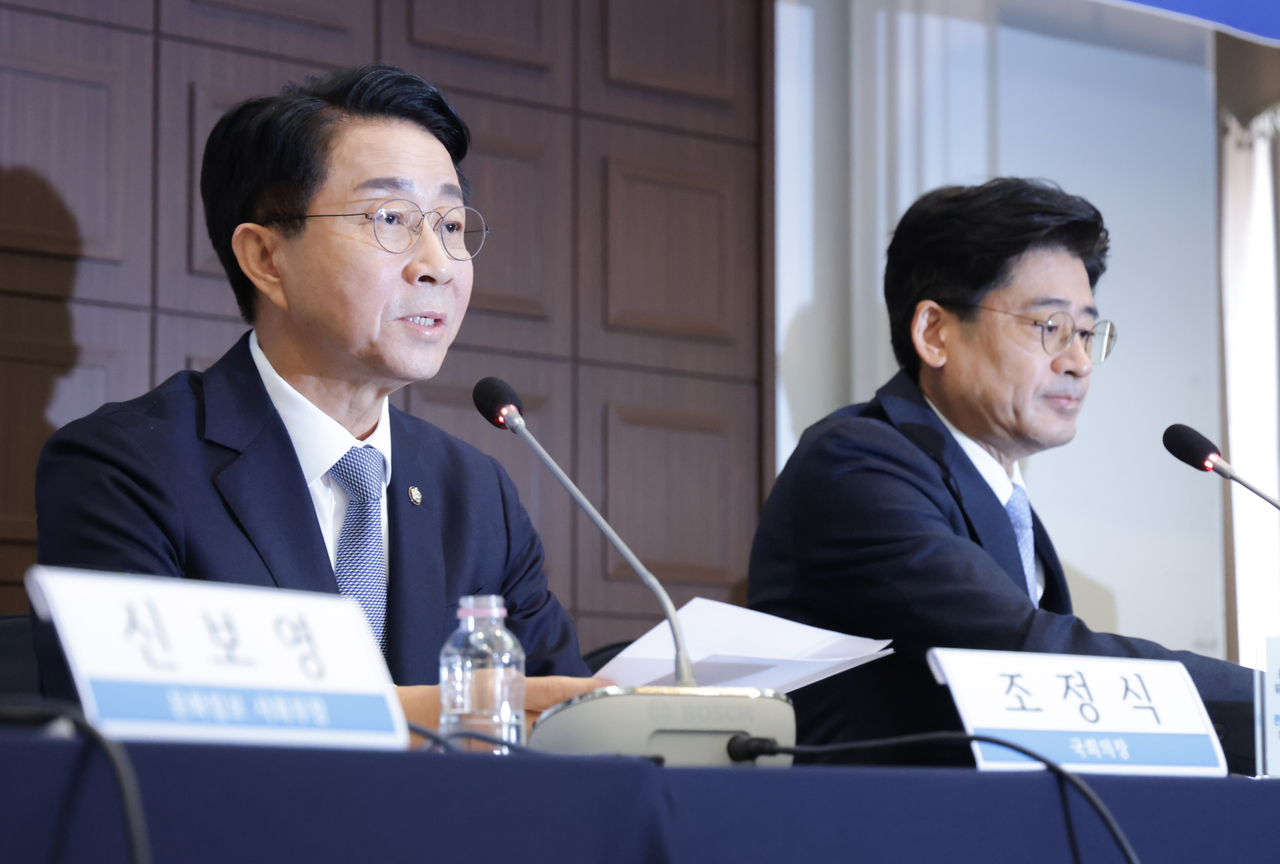
Rep. Cho Jeong-sik, speaker of the National Assembly, on Wednesday defended controversial provisions in a special counsel bill aimed at investigating alleged prosecutorial abuses of power against President Lee Jae Myung before he took office.
Speaking at a debate in Seoul hosted by the Kwanhun Club, a journalists' association, attended by senior staff from South Korean news organizations, the six-term lawmaker said it was "not unlawful" for prosecutors dispatched to the special counsel team to hold both investigative and indictment powers, citing a supplementary provision in a recent revision to the Criminal Procedure Act.
The special counsel bill has drawn criticism for appearing to contradict the ruling bloc's push to strip prosecutors of their investigative authority.
Prosecutors assigned to the special counsel team would be granted investigative powers for the duration of the probe, fueling criticism that the parliamentary-backed counsel would receive preferential treatment.
Cho, a member of the ruling Democratic Party of Korea, rejected the main opposition People Power Party's claim that the bill is unconstitutional.
"Had the bill moved forward without a legal basis, it would have been declared unconstitutional," he said.
"Does that mean the power (to appoint an official) should not be exercised? That is clearly not the case."
The bill has also come under fire for a provision giving Lee the authority to name the special counsel tasked with investigating the criminal allegations against him.
Cho also rejected claims that the National Assembly lacked bipartisan consultation over the bill, saying formal and informal discussions between the rival parties had been underway since the bill was proposed in April.
"The fact that the bill has contentious issues cannot justify indefinite delays," Cho said.
Asked about another controversy surrounding the liberal bloc's push to bring Supreme Court Chief Justice Jo Hee-de under parliamentary scrutiny, and whether it could undermine the separation of powers, Cho said there were competing interpretations of the move.
"There are differing views on whether this would undermine the separation of powers or whether it would simply be restoring normalcy to an abnormal situation," he said.
Cho also defended South Korea's criminal justice system overhaul, which took effect on Oct. 2, which abolished the prosecution service and separated the prosecution's investigative and indictment functions into two agencies.
"Wouldn't it be premature or risky to scrap everything and return to square one?" he said.
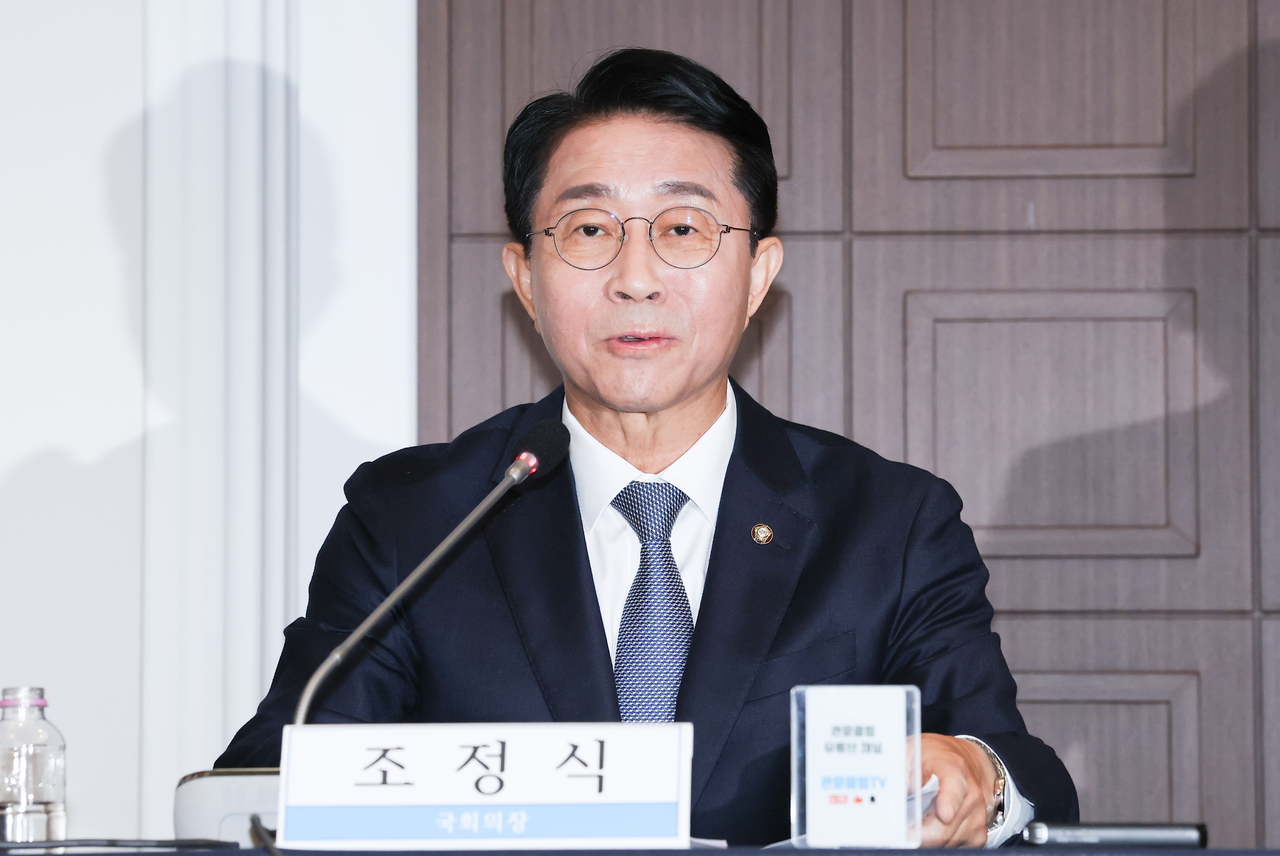
Speaker again rules out changing presidential terms
Cho — who in July came under fire and apologized for saying that changing the presidential term from a single five-year term to two four-year terms via a constitutional amendment is "up to the people" — again ruled out the idea of consecutive presidential terms.
"The question of a sitting president serving consecutive terms is not a subject for constitutional amendment discussions," Cho said. "This issue should no longer be used as a tool for a political strife."
However, Cho reignited his push for amending the Constitution, saying next year would be the optimal time to discuss the issue.
A new Constitution would serve as a cornerstone for South Korea's "security, peace, and prosperity," Cho said, adding, "Next year is a year without any major elections nationwide, making it the ideal time for a deliberate discussion to go ahead with amending the Constitution."
Cho added that, once the discussions start, the timing can be determined accordingly, which could be in 2027 before the general election or in 2028, coinciding with the general election.
Meanwhile, Cho unveiled his plan to travel to the United States next year, saying that the Democrats' election victories in the US midterms last week imply that South Korea will soon have "more (diplomatic) counterparts to deal with."
consnow@heraldcorp.com