Inside a Seoul classroom, seven marriage visa holders from China and Vietnam rehearse for naturalization interviews
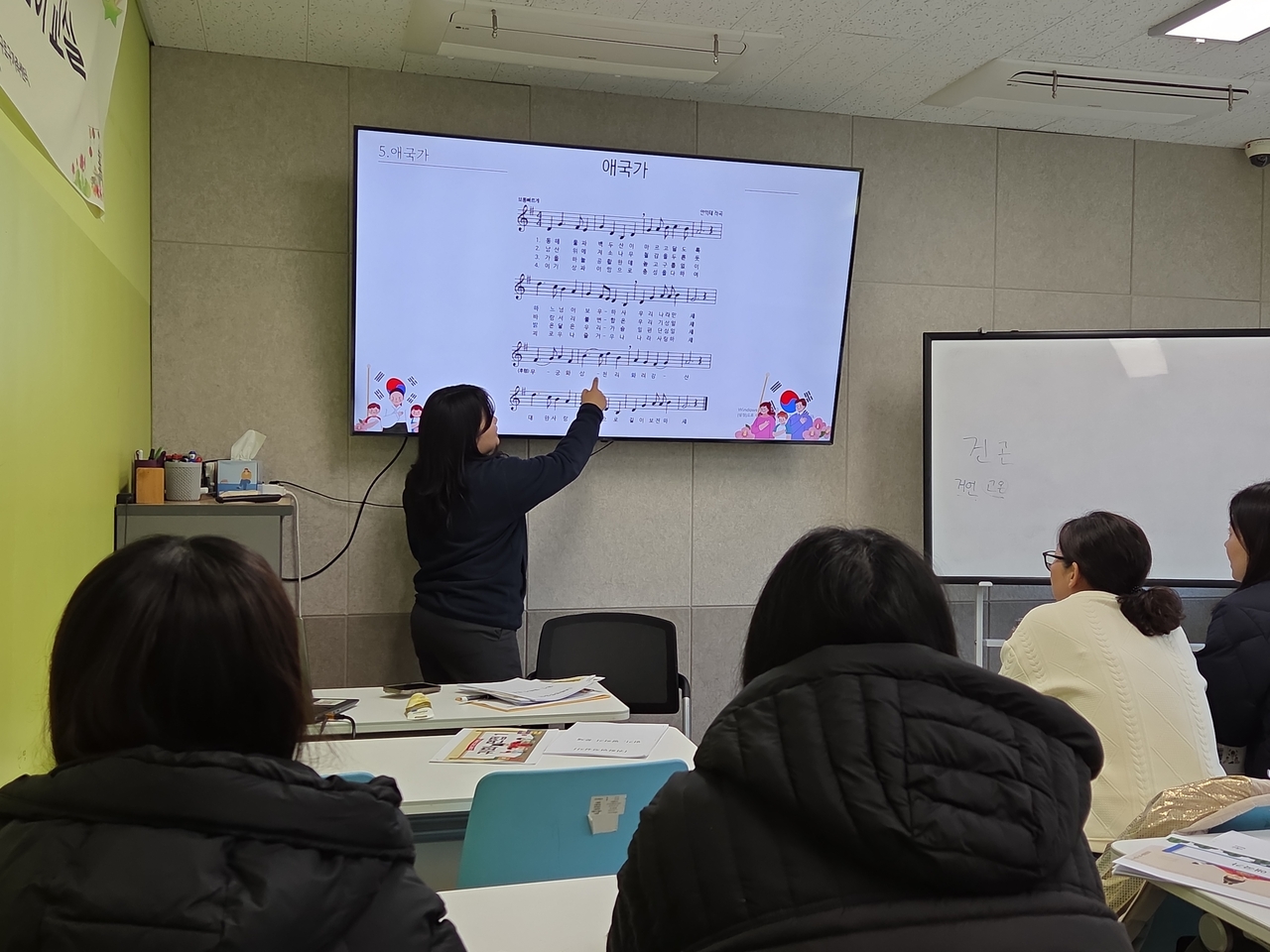
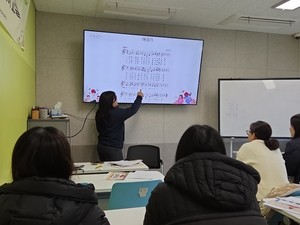
In a class preparing applicants for South Korean naturalization interviews, participants took turns introducing themselves at the Guro-gu Family Center in Seoul on Tuesday. After listening to their answers, social worker Ock He-won pointed out something most had left out.
“You shouldn't just end with an introduction. It's always good to include why you want to be in Korea,” Ock told the class.
The seven participants are marriage immigrants from China and Vietnam. All hold marriage visas and are seeking citizenship in the country, where they have built new lives.
Among them was Zou Chunyang, a 42-year-old Chinese national preparing for her fourth attempt at the interview.
For another participant, Wang Yue, citizenship would mean an end to regular visa renewals. Wang, a 38-year-old Chinese national, married a Korean man in 2019 and has a son.
“The biggest reasons I want citizenship would be to avoid the expense and inconvenience of renewing my visa every three years,” Wang told The Korea Herald.
Wang also wanted greater stability. She felt citizenship would put her in a more secure position if disagreements arose with her husband.
As a South Korean citizen, she could continue living in the country without having to maintain a visa, regardless of whether her marriage continued.
Ock led the two-hour session on her own, beginning with an explanation of the naturalization process and what applicants needed to do to prepare.
“I study a lot myself before teaching the class,” she said before the session began.
The lesson moved from the application process to the kinds of material participants might encounter in an interview.
They reviewed Korean banknotes and learned the names of the four trigrams on the national flag: “geon,” “gon,” “gam” and “ri.” They also reviewed the “mugunghwa,” or rose of Sharon, and went over the etiquette of facing the flag during the national anthem.
When the class turned to self-introductions, Ock began with the greeting.
Participants practiced saying “annyeonghaseyo,” or hello, as she coached them on intonation, tone of voice and eye contact. She advised them to keep their answers brief.
Each participant then gave an introduction and received individual feedback. Ock’s advice about explaining why they wanted to live in Korea gave them something specific to work on.
Most had introduced themselves without including that part, while Zou was among the few who had.
Zou already knew what it was like to sit for the interview. She had taken it twice after studying on her own and a third time after preparing with help from the center.
She had been unsuccessful each time. Questions about Korean history had been particularly difficult, she said.
The class ended with one more exercise in front of the group.
Participants came forward individually to sing “Aegukga,” South Korea’s national anthem, and received feedback on rhythm and pitch.
Earlier in the session, they had gone over what to do when the anthem was played. Now each had a turn singing it.
Six more sessions will follow Tuesday’s class. Participants will study Korean politics, economics and history, among other subjects that could come up in the interview.
The seventh and final session will bring the material together in a mock interview, giving participants a chance to see how much they have learned and what they still need to work on before the real thing.
For Zou, the history lessons will cover a subject she already knows can be difficult under interview conditions.
She said the center had helped her considerably and that she was learning a great deal in the current classes. She will soon sit for the interview a fourth time.
shwang9@heraldcorp.com