Veteran pianist marks 70 years since debut with autobiography, four-piano concert with 7 young pianists
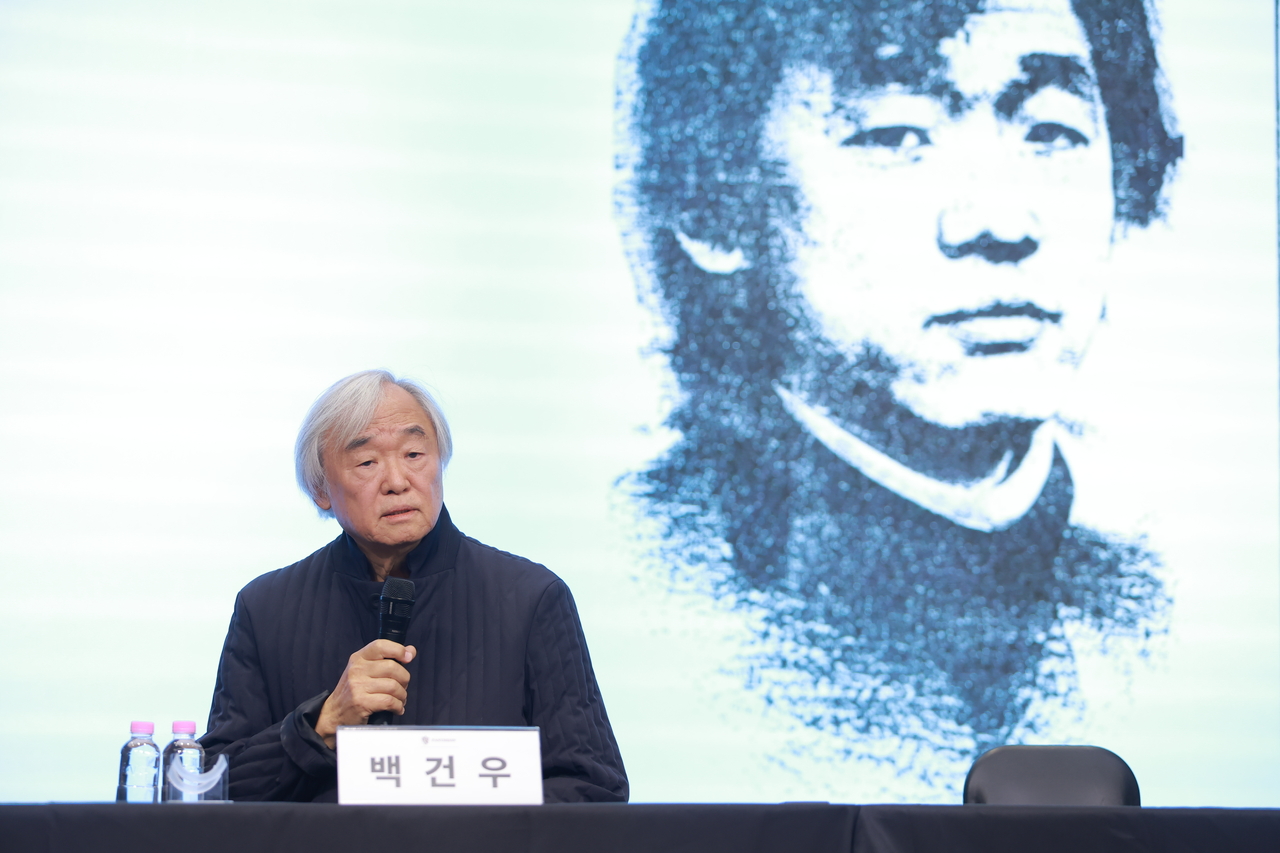
Seventy years after making his debut as a 10-year-old piano prodigy, Paik Kun-woo is still far from playing his final note.
Marking his 70th anniversary on stage this year, the 80-year-old pianist made it clear that retirement is not on his mind.
“To put it simply, there is no such thing as retirement in art,” he said at a press conference in Seoul on Tuesday.
“The world of music is so vast that you can always find music that suits your age. The problem is when you stop studying and cling to the same repertoire.”
That belief in constantly exploring new musical possibilities is reflected in Paik’s plans to mark his 70th anniversary on stage, while also looking back on a lifetime devoted to music.
His autobiography, “Paik Kun-woo, My Story,” is set to be published by Yonhap Infomax on Nov. 20. He will then take the stage for two concerts under the banner “Paik Kun-woo and Young Friends,” to be held at Suseong Artpia in Daegu on Nov. 29 and the Seoul Arts Center on Dec. 2, performing alongside seven younger pianists and two percussionists.
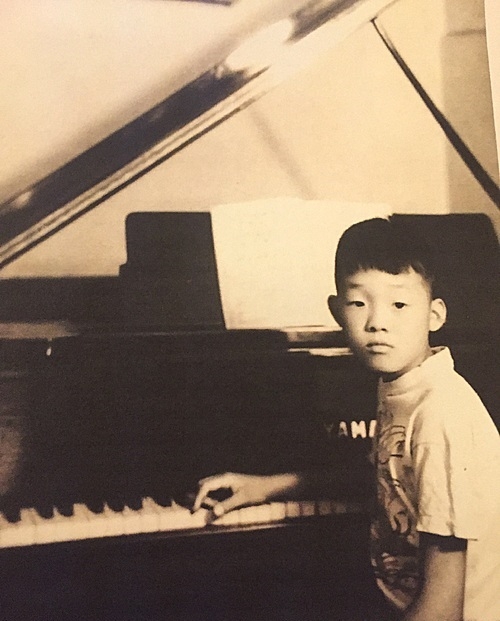
After his debut in 1956, Paik left for the United States at 15 to study at the Juilliard School. He has lived abroad ever since.
“The stories of my 65 years abroad are my history and also Korea’s history, and I thought telling them could help the next generation,” he said, explaining his decision to write the autobiography.
Part of that history is how difficult it once was simply to travel to perform.
“When I went abroad, Korea, simply put, did not exist,” Paik said. Some countries refused to issue visas on a South Korean passport even when he had a formal invitation to perform, he said, so he showed his US green card instead. Eastern Europe stayed closed to him until around 1990, after the 1988 Seoul Olympics.
The experience he most wanted to share, he said, was the Spoleto Festival in Italy, where before turning 20 he recalled seeing Italian film director Luchino Visconti stage an opera and American experimental composer John Cage play piano for a modern dance performance.
“You could feel the moment art was being created,” he said. “I want to tell young musicians the world is much wider than they think.”
For most of his career, however, he had little time to share such experiences in person.
“Until now, I was too busy with my own concerts to look after younger musicians,” he said. “But the young people I see today play so well that I naturally came to want to work with them.”
Paik said he had long doubted whether music could be taught at all. “Music is something you find yourself,” he said. Once he began working with younger musicians, however, he discovered there were other things he could offer.
It begins away from the keys. “The piano matters, but so does how that person is living right now, whether their relationships with their parents and with society are going well,” he said.
He traced this approach back to Rosina Lhevinne, his teacher at Juilliard, who would ask before every lesson how he was doing. “All of that comes together and becomes music,” he said.
The final chapter of his autobiography is addressed to parents. Paik said he wrote it for “a very sad reason,” pointing to suicide among young people in Korea.
“To me, the first and last teacher is the parent,” he said.
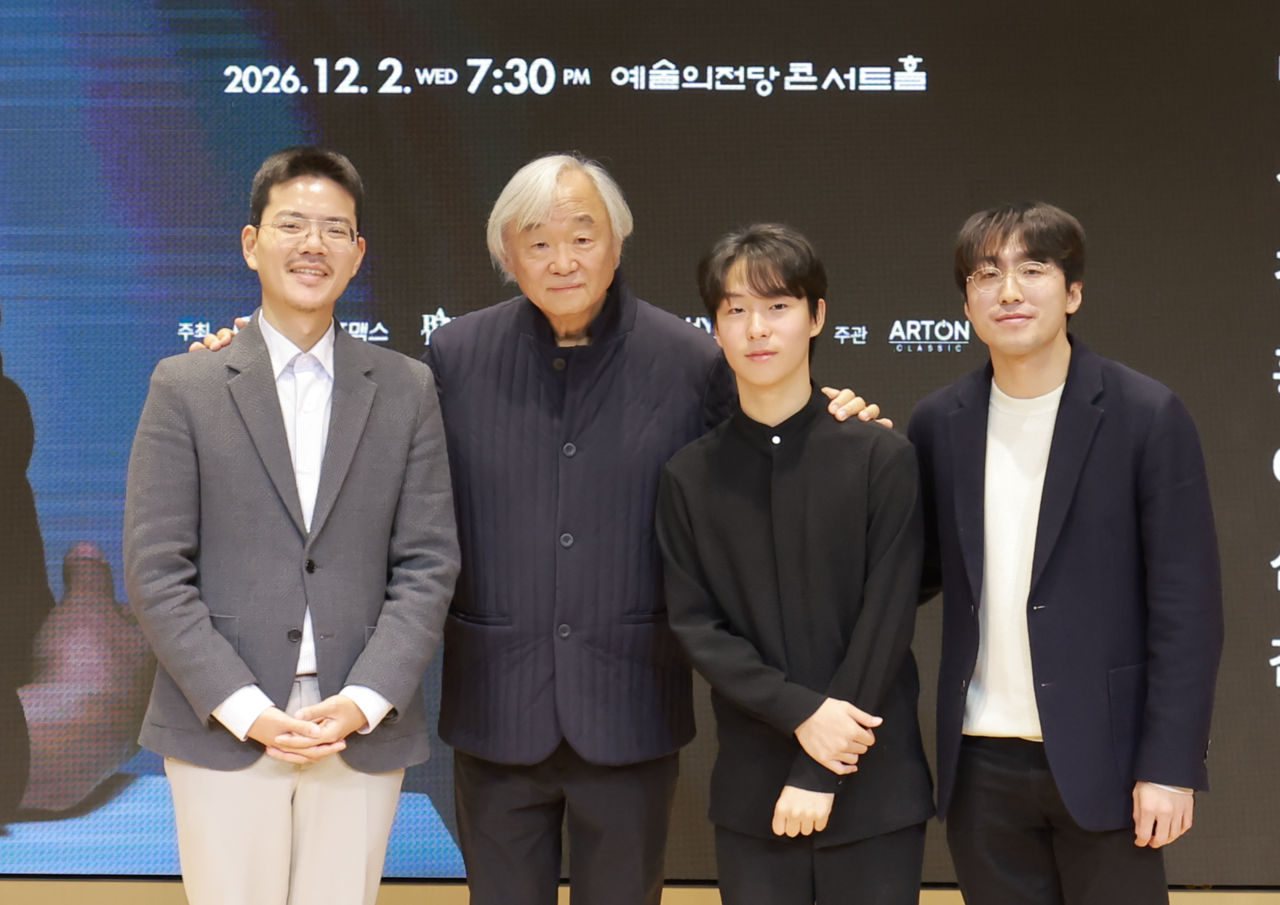
The concert format bringing Paik together with younger pianists began in Paris in 2021, when Paik performed with pianists Kim Hong-gi, Kim Do-hyun and Park Jin-hyung. Kim Do-hyun, 32, who placed second at the Ferruccio Busoni International Piano Competition that year, recalled late-night rehearsals at what he described as a piano factory outside Paris, and the warmth Paik showed the exhausted young players on the drive back.
“It taught me that when someone this warm makes music, that energy comes through in the music,” he said.
After that concert, Kim said, Paik suggested they stage another one in Korea. The Korean edition is bigger: Paik will be joined by seven younger pianists — Kim Hong-gi, Kim Do-hyun, Park Jin-hyung, Sun Youl, Kang Dong-hwi, Hong Seok-young and Lee Ju-eon — along with percussionists Shim Sun-min and Kim Seung-su.
The format is new for Lee, 15, who placed second at the Isangyun Competition in Tongyeong, South Gyeongsang Province, just last weekend. “Because I’m young, I’ve mostly played concertos or solo recitals,” he said. “Playing with four pianos is something unfamiliar to me.”
Paik’s advice was to listen. “Playing matters in music, but listening matters more,” he said.
“Pianists spend a lot of time alone thinking about how to express the music, but very little time listening to others and fitting in,” said Kim Hong-gi, 34. “With four pianos in one hall, instead of each of us trying to make our own sound, we have to listen to the others to find the balance.”
gypark@heraldcorp.com