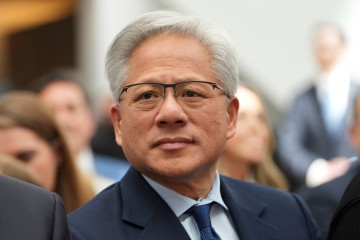
President Lee Jae Myung recently used his X account to say out loud what a large share of the country has been muttering for years. Political correctness, he wrote, has collided with public fatigue. The problem, in Lee’s telling, is not the values that political correctness claims to serve, but the people who preach them. Their hypocrisy has worn the public down, as have their double standards, captured by the Korean expression “nae-ro-nam-bul”: An act is romance when I do it, but adultery when others do. To underscore the irony of politically correct language, Lee then reached back four decades to Chun Doo-hwan, the military dictator who promised a "just society" while his government imprisoned dissidents.
Lee amplified a post from FM Korea, a radical conservative-leaning online platform, about migrant women getting priority in bookings at public postpartum care centers. He warned that support of this kind could turn into excessive privilege and eventually be perceived as reverse discrimination against families without immigrant members. Critics responded by condemning the president and calling his warning discriminatory.
Political correctness refers to the use of language intended to avoid offending people based on characteristics such as race, gender, culture or sexual orientation. Its purpose is to reduce discrimination and stereotyping through inclusive, gender-neutral and person-first language, while avoiding expressions that reinforce negative stereotypes.
Yet political correctness has itself become controversial. Some see it as censorship and a restriction on freedom of speech; others consider it a legitimate effort to curb hate speech and exclusion. At the heart of the debate are questions of language, naming and whose definitions should prevail.
The term dates back to the Soviet Union after the 1917 Russian Revolution, when it described adherence to Communist Party policies. In the United States, it gained popularity in the 1980s and became a political weapon in the 1990s, when conservatives used it to challenge what they saw as the growing influence of left-wing ideas in university curricula and teaching.
In Korea, political correctness has become a source of generational tension rooted in contrasting historical experiences. Older Koreans remember Japanese colonization, the Korean War and former President Park Chung-hee, whom many credit with rebuilding the nation. Those in middle age, by contrast, view Park through the lens of dictatorship and share memories of protesting against Chun Doo-hwan and participating in the democratization movement. Younger Koreans tend to have more fluid political identities and less engagement with traditional political discourse. These differences often fuel conflict across generations.
Critics argue that political correctness restricts public debate, encourages self-censorship and limits behavior without necessarily changing the underlying attitudes that cause discrimination and marginalization. Its premise is that language shapes reality and influences thought: Sexist or racist language, in this view, helps perpetuate sexism and racism.
The debate has particular implications for Korean society. Democracy has a relatively short history in Korea, and public discussion has not always been an established way of reconciling competing views. As awareness of diversity and inclusion grows, politically correct language will likely become more common. Yet the country's political polarization may make its acceptance harder. One recent study found that young people with conservative values and those who support meritocracy tend to resist political correctness.
Some see Lee's remarks as an attempt to reconnect with younger voters. Others argue that he is picking the wrong fight. But perhaps the substance of his point was that multicultural policy served a real purpose and may now need revisiting on its merits.
In the mid-2000s, marriage migrants were arriving in Korea in large numbers, often with little Korean-language ability, limited financial resources and uncertain legal standing. The 2006 comprehensive plan and the 2008 Multicultural Families Support Act were serious attempts to address their needs.
But Korea in 2026 is not Korea in 2008. The questions now concern children in schools, adults in the labor market and long-term residents growing old in a country where they want to build independent lives. A statute designed to support settlement may no longer be the right instrument for integration. The logic of 2008 should not be preserved under the cover of a moral slogan.
When an institution or policy is flawed, the debate should turn on substantive questions. Does the rule produce the outcomes we want? Who pays for it? Is the burden shared fairly? Too often, however, the discussion shuts down around a single question: Are you discriminating against minorities? Words become weapons for discrediting the other side and scoring political points. Once that accusation enters the debate, reform becomes nearly impossible.
Politics, properly understood, is not simply a morality contest. "Please stop hating" is an ethics lecture. It is certainly correct, but it is not, by itself, governing. Governing means resolving conflicts that will not settle themselves, repairing rules that produce irrational outcomes and having the patience to listen to people whose experiences and worldviews we do not share.
Countries conduct politics through competition and compromise between conservatives and progressives, not through the victory of one moral vocabulary over another. The resulting settlement may be unglamorous, and often involves concessions on all sides, but it is what allows a society to function: decent schools, functioning hospitals and rules that treat people fairly.
The point is not whose side is right or who has the better moral vocabulary. It is how we live, and whether our lives are marked by meaning, relationships, culture and decency. What matters more than whether a president says the right things about immigrants or minorities is whether people (born here or newly arrived) receive a fair shake and have the opportunity to make something of their lives. It is also whether the public good is served and whether we can find practical ways to live together despite our differences.
A great nation's concern should not stop at its own citizens. I know that Koreans are a generous people, with a long tradition of extending hospitality to visitors and strangers. There is no reason why we cannot draw on that tradition to extend some of our prosperity and goodwill to noncitizens. Nor can we blame those who believe that sharing our wealth with others “makes sense” only when we have enough to spare.
- - -
Lim Woong
Lim Woong is a professor at the Graduate School of Education at Yonsei University in Seoul. The views expressed here are the writer’s own. — Ed.
khnews@heraldcorp.com