Seoul, Berlin seek swift classified military information sharing pact, deeper defense industry ties
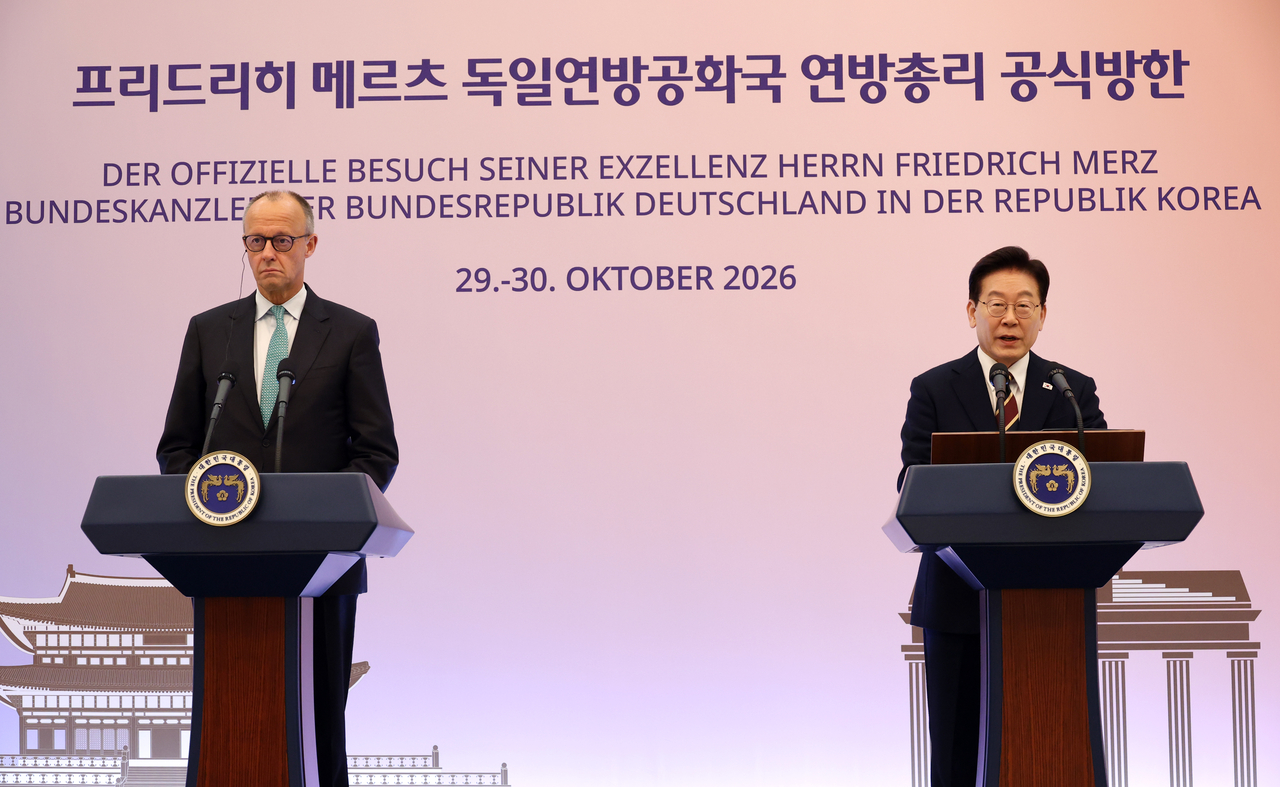
South Korea and Germany agreed to elevate their ties to an "enhanced strategic partnership," pledging to expand the scope of cooperation to advanced industries and future growth sectors while strengthening defense and security ties.
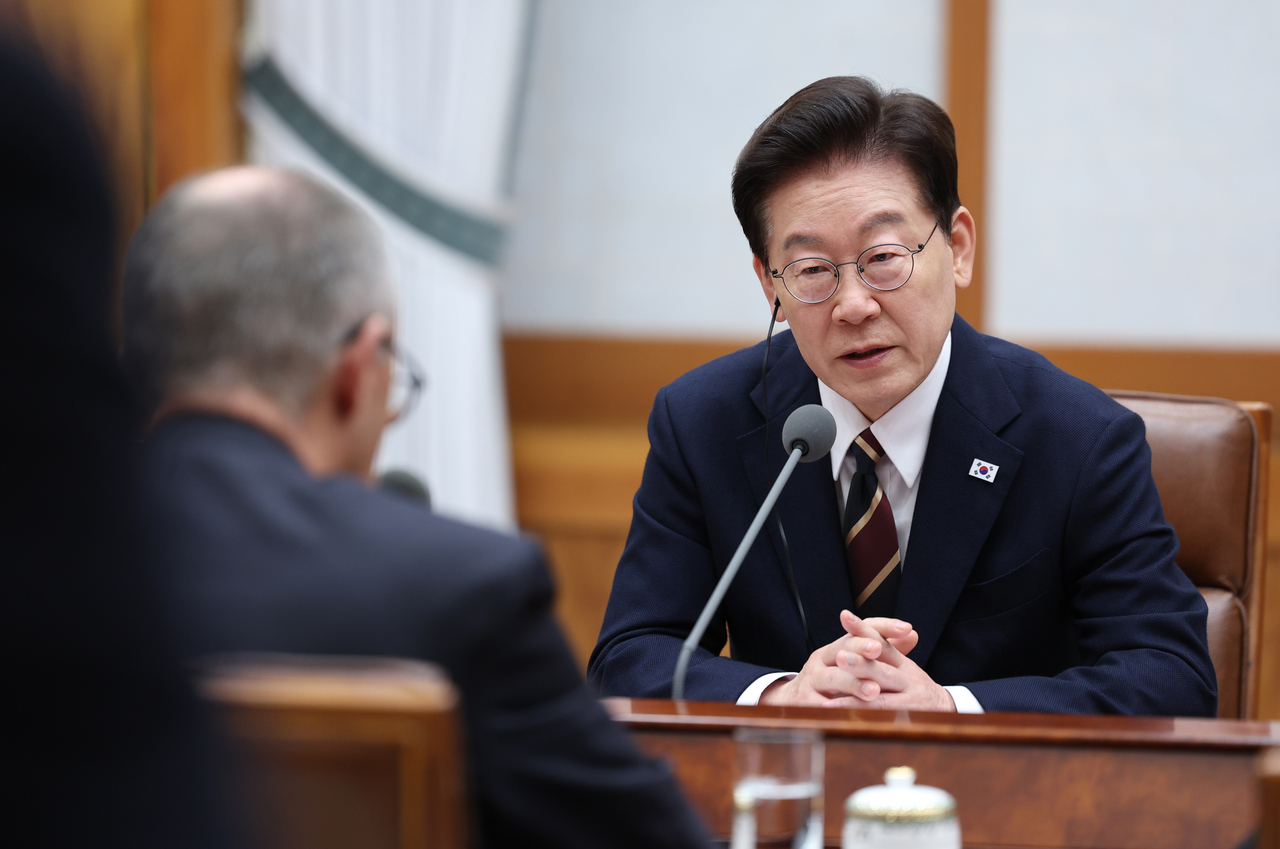
President Lee Jae Myung and German Chancellor Friedrich Merz outlined the expanded partnership in a joint statement issued after their summit at Cheong Wa Dae in Seoul on Thursday.
The two leaders noted that their meeting came "at a time of increased strategic convergence and mutual solidarity."
They also agreed to "significantly intensify their bilateral and multilateral cooperation, considering that the increase in global risks and challenges as well as shared opportunities necessitates concerted action."
Speaking at a joint news conference, Lee underlined that “today's summit will be remembered as an important milestone in opening a new future for Korea-Germany relations.”
“Chancellor Merz and I have agreed to establish an enhanced strategic partnership between our two countries based on deep trust and cooperation,” Lee said.
“The joint statement adopted today reflects the firm and clear commitment of both countries to deepen cooperation across a wide range of areas, including politics, security, the economy, culture and people-to-people exchanges, and to strengthen future-oriented cooperation and strategic coordination.”
Practical, mutually beneficial defense industry cooperation
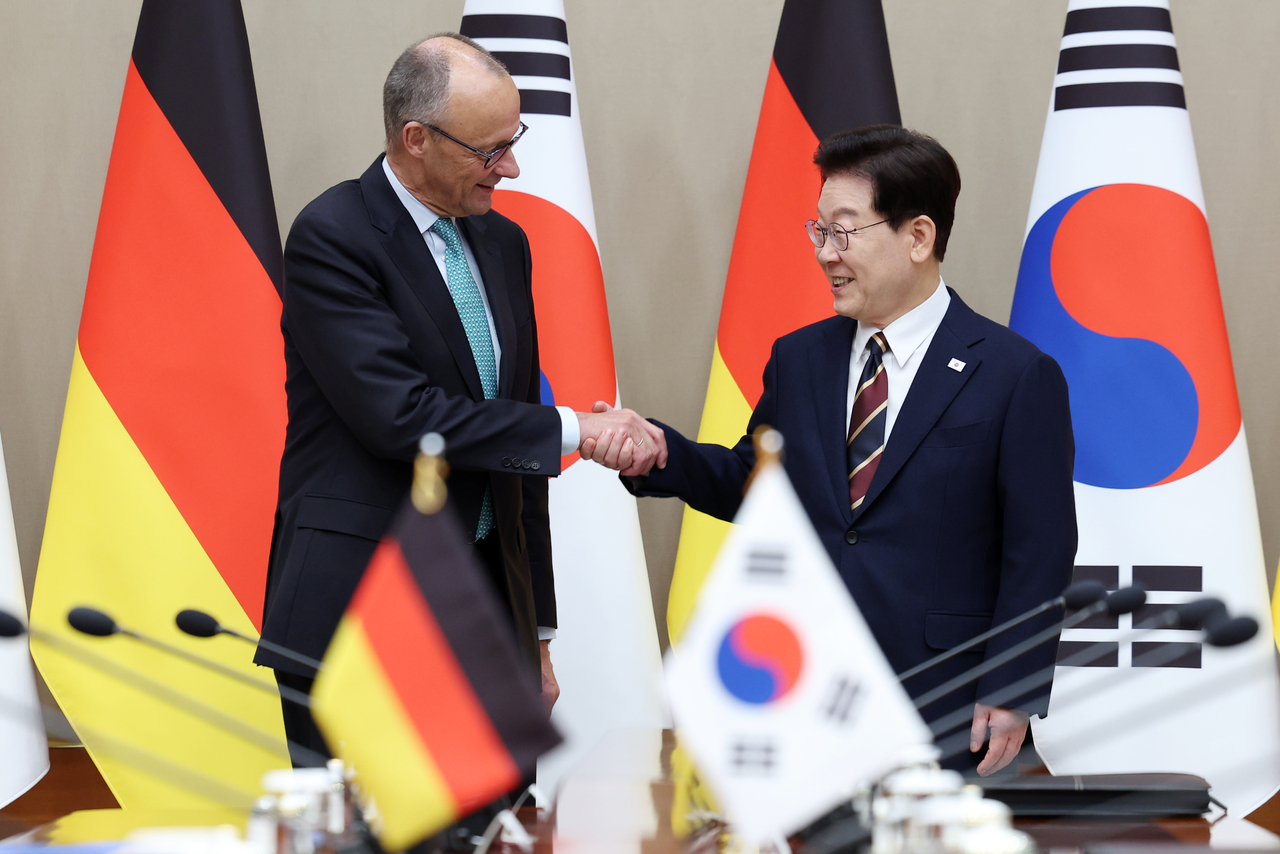
On defense, Lee said the countries had agreed to deepen defense and security cooperation, and to expand "practical, mutually beneficial cooperation" in the defense industry.
Seoul and Berlin also pledged to expedite an agreement on the exchange of classified military information.
“Our two countries will strengthen strategic communication between our respective defense authorities and work to swiftly conclude an Agreement on the Protection of Classified Military Information, thereby reinforcing the institutional foundation for defense and security cooperation,” Lee said.
The joint statement called for regular military exchanges, closer cooperation on training and greater information sharing between the two countries. Lee highlighted growing interest among South Korean defense manufacturers in establishing long-term partnerships with German companies.
“I also conveyed that Korean defense companies have a strong interest in establishing long-term partnerships with Germany, the world’s third-largest economy and Europe’s largest, through joint investments and joint development,” Lee said.
“We will actively seek opportunities for mutually beneficial cooperation between defense companies, building on the advanced defense technologies and industrial capabilities of Korea and Germany,” he added.
Strategic coordination on global issues
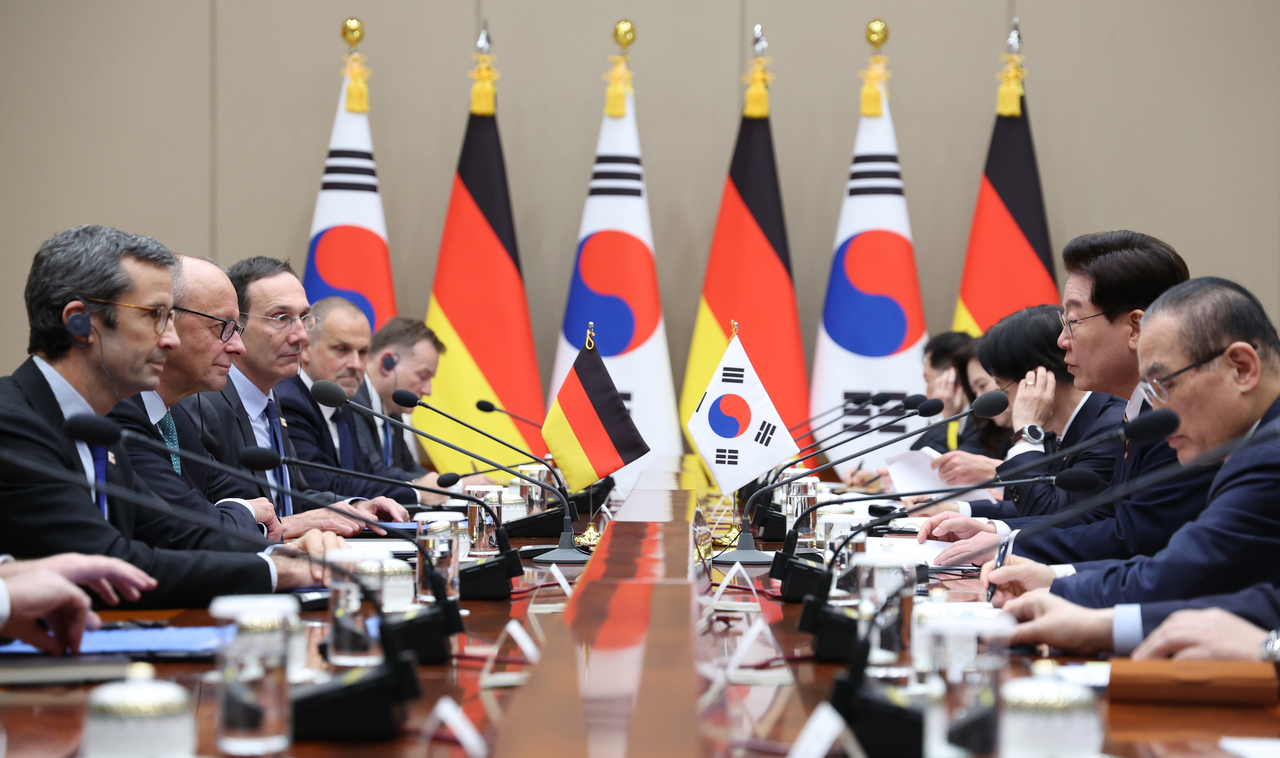
Beyond bilateral defense ties, Lee said the two leaders agreed to "strengthen strategic coordination on major issues amid growing global economic and security uncertainties."
The two leaders acknowledged the increasingly close links between security in Northeast Asia and Europe and pledged to work together to promote peace and stability in both regions in the joint statement.
The two leaders discussed peace and stability on the Korean Peninsula, referring to the two countries' shared experience of national division.
“Drawing on Germany’s own painful experience of division, Chancellor Merz has expressed a deep, unwavering understanding of our efforts to resume dialogue and establish a peace regime on the Korean Peninsula,” Lee said.
"Moreover, our two nations have agreed to continue cooperating steadfastly to realize peace and stability on the Korean Peninsula."
Speaking at the joint press conference, Merz said he plans to visit the Demilitarized Zone separating the two Koreas on Friday, saying, “We know all too well how painful it is to live in a divided country.”
The two leaders additionally exchanged views on Russia's war in Ukraine, developments in the Middle East, the international free trade system and climate change, committing to closer cooperation in addressing shared global challenges, according to Lee.
Expanded high-tech partnership, closer chip ties
Lee underlined that Seoul and Berlin had agreed to “strengthen strategic cooperation in the economic and industrial sectors and broaden the scope of cooperation to advanced industries and future growth engines.”
“Through the Framework for an Economic and High-tech Partnership, bilateral cooperation, which has centered on trade and investment, will expand into the industrial and advanced technology sectors,” Lee said.
South Korea's Ministry of Trade, Industry and Resources and Germany's Federal Ministry for Economic Affairs and Energy are set to sign the Joint Declaration of Intent on a Framework for an Economic and High-tech Partnership on Friday morning.
The agreement aims to strengthen bilateral cooperation in trade, industry, future technologies and innovation, including automobiles, batteries, industrial artificial intelligence, smart manufacturing, advanced energy systems and robotics.
In their joint statement, the leaders described the two countries as "trusted partners with complementary strengths in the semiconductor industry," pledging to deepen cooperation through a semiconductor ecosystem partnership that is expected to be concluded in the near future
Speaking at the news conference, Lee said he had sought Germany's support to ensure that South Korean companies receive the same treatment as those in European Union member states under the bloc's proposed Industrial Accelerator Act.
The two sides agreed to renew their energy partnership agreement, expanding policy and technology exchanges on renewable energy and power grids, as well as joint research aimed at advancing the energy transition and ensuring a stable supply of clean energy.
They signed a protocol amending their double taxation agreement, which Lee said would provide a "fairer and more transparent environment" for bilateral investment and economic cooperation.
The summit coincided with Merz's visit to Seoul for the 19th Asia-Pacific Conference of German Business, which is being held in the South Korean capital for the first time since 2007.
In their joint statement, the leaders called the conference "a cornerstone of bilateral and regional engagement," saying its location in Seoul reflected South Korea's "geopolitical weight, technological edge and role as a trusted anchor for German industries in the Indo-Pacific."
dagyumji@heraldcorp.com