From a 320 million won duvet to silk pajamas priced like couture, luxury now reaches all the way to bedtime

For most people, a good night's sleep is about little more than a decent mattress. For the very wealthy, it has become something closer to a collection.
In a world where people are always reachable and constantly moving from one task to the next, the ability to fully switch off has become a rare commodity. That has turned sleep into a luxury all of its own, with the biggest spending focused on the most intimate layers of the bedroom: what goes on the bed and what is worn in it.
At the top of the bedding market is eiderdown, the fine down that eider ducks pluck from their own breasts to line their nests. In Iceland, it is collected by hand only after the ducklings have hatched and left the nest, so just a small amount is harvested each year. Supply has been shrinking, and that scarcity has steadily pushed its value higher.
Crown Goose, a bespoke bedding brand, builds its top line around the material. The brand says its eiderdown bedding is used in the bedrooms of European royals and Hollywood's biggest stars, and that eiderdown offers the highest warmth of any duvet filling available.
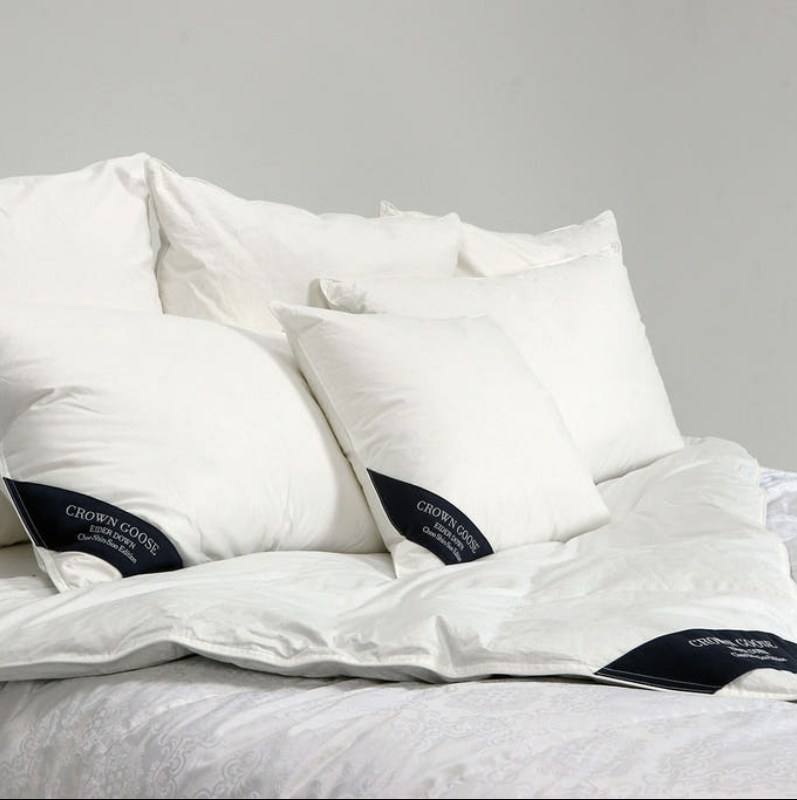
Each piece uses 100 percent eiderdown gathered from around 65 nests, according to the brand. The fabrics are hand-selected, and the bedding is made in collaboration with artisans around the world, including pleating specialists, jewelers, embroiderers and royal tailors.
A Crown Goose bespoke bedding set costs about 30 million won ($21,000). Its Choo Shin-soo edition, called Blue Horizon and finished in German luxury silk, is priced at 320 million won.
What is worn to bed has followed the same trajectory.
Part of the appeal is practical. Temperature has a large effect on sleep quality and breathable sleepwear fabric is one way to help the body regulate its temperature through the night. Silk, the material of choice at the top of the market, is valued in the luxury segment for its smooth feel and its ability to help regulate temperature.
The category has also drawn some of the biggest names in luxury. The global luxury sleepwear market was valued at about $13.7 billion in 2024 and is projected to reach about $22.2 billion by 2032, according to market research firm Credence Research. The firm also says that LVMH, Kering and Richemont are expanding their portfolios into luxury sleepwear.
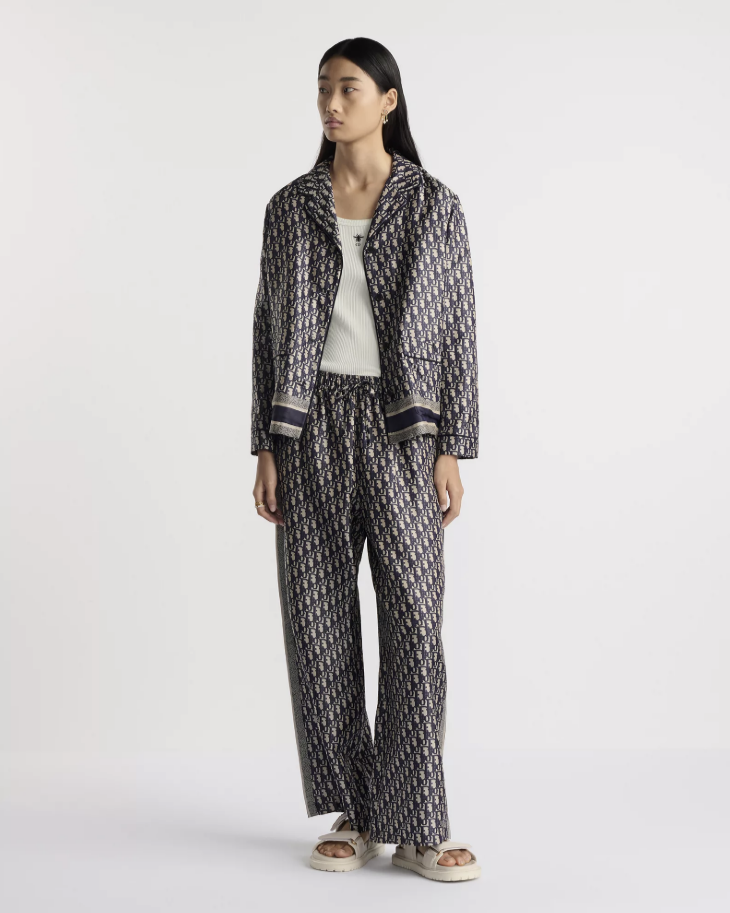
Dior's Dior Chez Moi pajama shirt, in silk twill covered in the house's signature blue Dior Oblique motif, costs 4.2 million won. The matching pants are 3.6 million won, bringing the set to 7.8 million won. Made in Italy from 100 percent silk, the shirt features piping, horn buttons, two front pockets and a contrast hem bearing the Christian Dior signature on the back.
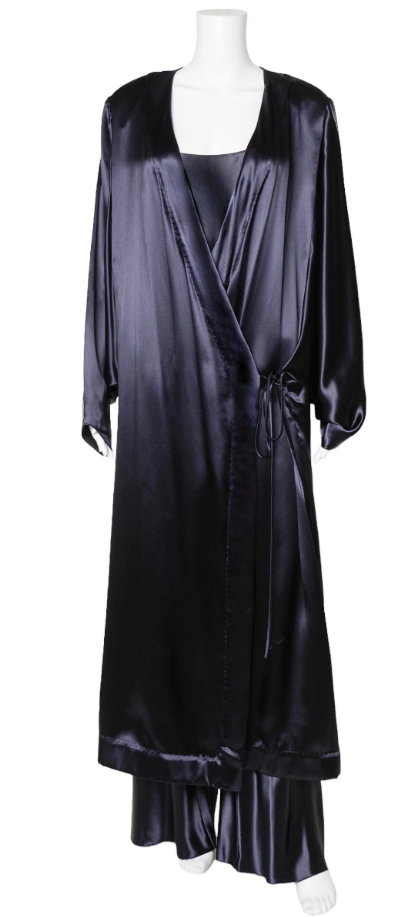
The Row, the luxury label founded by Mary-Kate and Ashley Olsen, has offered a limited-edition three-piece set in navy satin at $3,400. The set pairs a robe with three-quarter-length batwing kimono sleeves, whipstitch detailing, shoulder pads and a tie closure with a thin-strapped scoop-neck top and loose trousers with an elastic waist.
For those who can afford it, the last hours of the day are worth dressing for.
This series looks at the latest lifestyles of the ultrarich. — Ed.