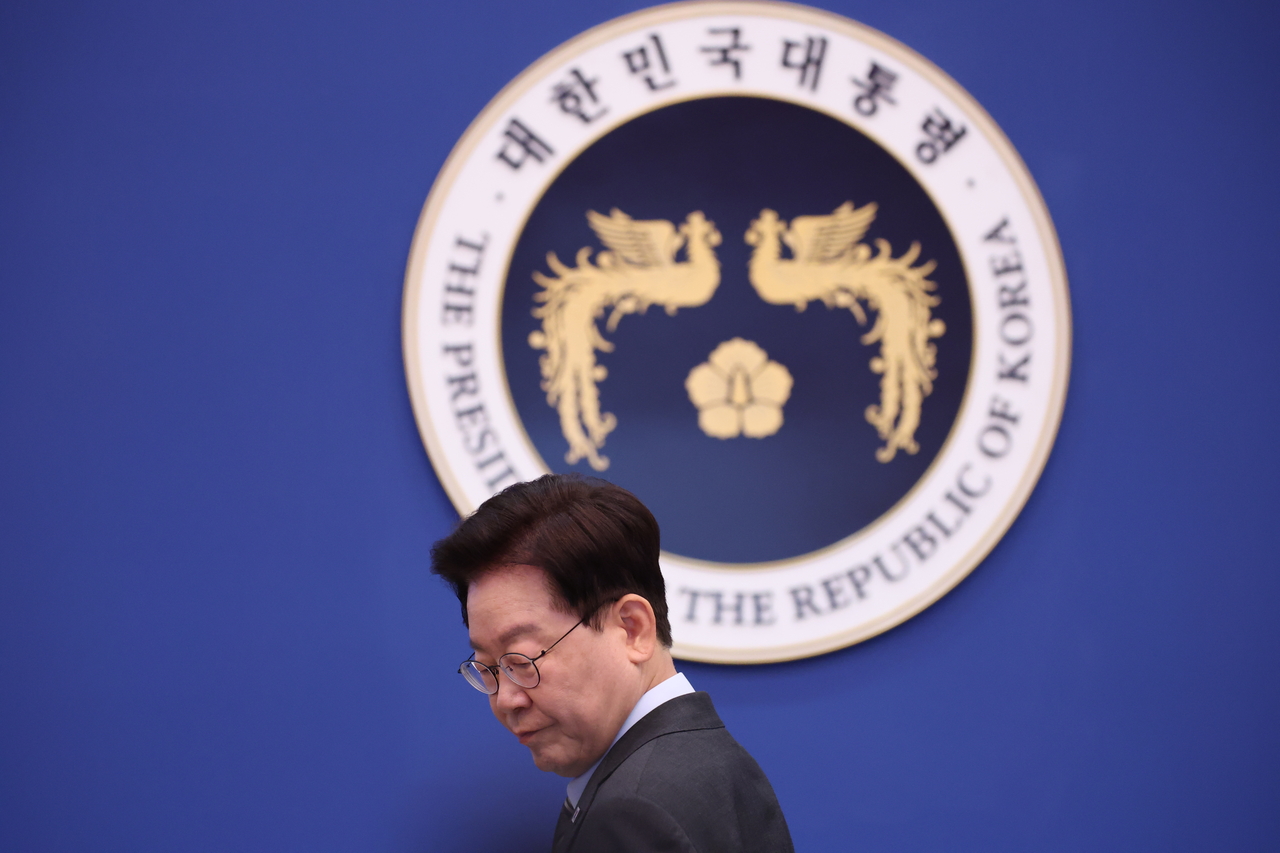
President Lee Jae Myung said Wednesday that his administration will closely examine local governments' benefits for multicultural families that go beyond ensuring equal opportunities and support.
“Policies that give preferential treatment to multicultural families in Seoul and other local jurisdictions have become an issue,” Lee wrote on X, formerly Twitter.
Multicultural families are defined as households formed by a Korean national and an individual from a different cultural background.
“We will thoroughly examine whether there is a compelling need to give multicultural families preferential treatment beyond ensuring that they are not disadvantaged, or whether such preferential policies should be abolished,” Lee wrote.
Lee said the review could include "consultations with local governments and possible revisions to enforcement decrees."
Lee's remarks came in response to a post on an online forum questioning the admission priorities and fee discounts offered to multicultural families at publicly operated postpartum care centers.
The post questioned why mothers from multicultural families were placed in the same admission priority category as recipients of national merit benefits, including veterans, and ahead of mothers giving birth to twins. It also challenged a reported 70 percent reduction in postpartum care fees for multicultural households.
“Thank you for the good point,” Lee wrote on X in response to the post.
The exchange brought renewed attention to how South Korea distributes public benefits among different groups, particularly in services where eligibility, fee reductions and access can vary by municipality.
The president's comments came amid a separate controversy over his remarks about foreign workers' contributions to South Korea's economy.
During a Cabinet meeting Tuesday, Lee questioned their economic contributions, saying that foreign workers sent much of their earnings overseas. His remarks drew criticism from migrant rights advocates, who stressed the workers' vital role in agriculture and local economies.
Lee later defended his comments, saying he had been comparing the economic contributions of foreign and Korean workers, not dismissing those of foreign workers.
He said that hiring more Korean workers, even with government wage subsidies, would help address unemployment and stimulate domestic demand.
dagyumji@heraldcorp.com