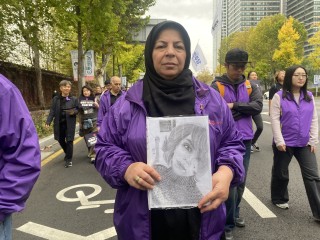
Migrant rights group challenges Lee's claims, cites foreign workers' contributions to struggling rural economies
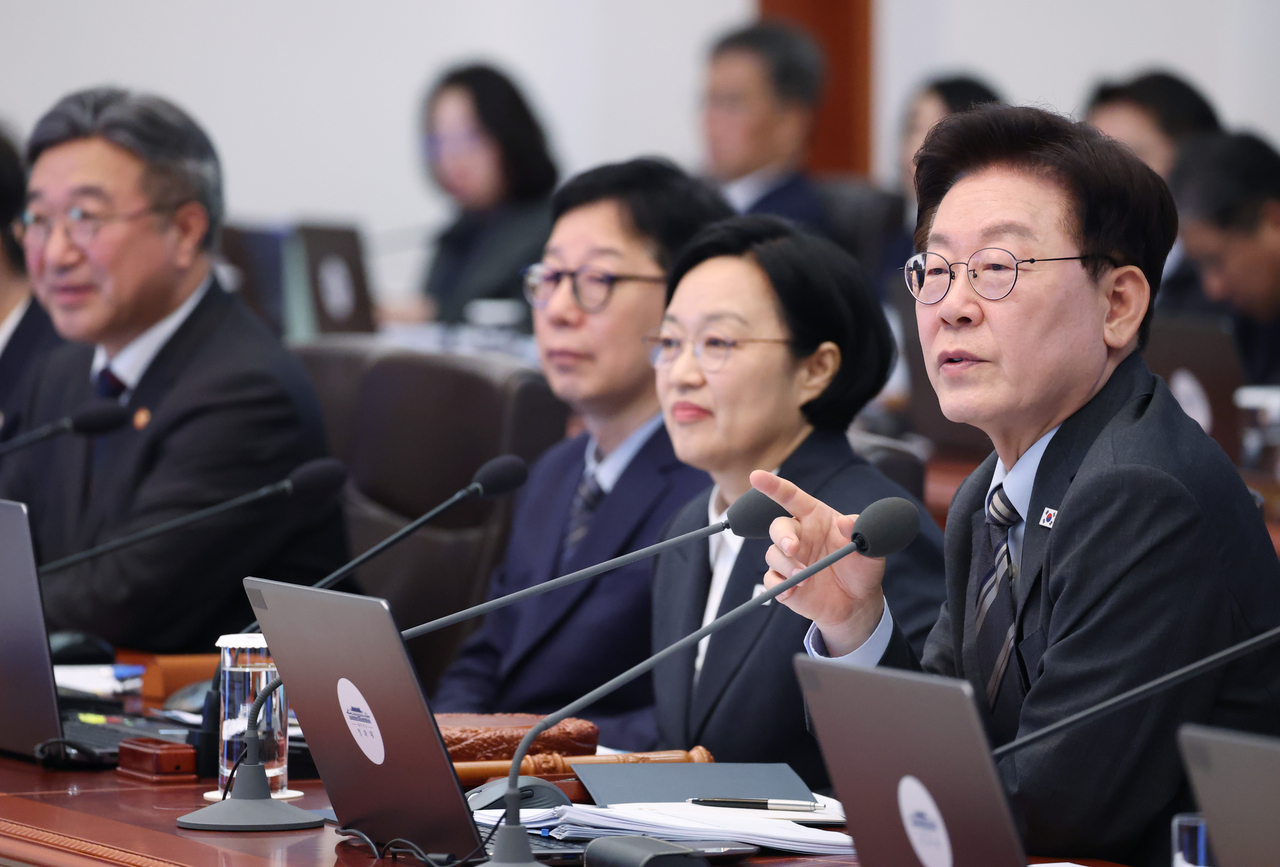
President Lee Jae Myung on Wednesday defended his recent remarks on migrant workers, saying that his intention was to emphasize the need to prioritize hiring Korean workers to address the country's "serious unemployment problem."
His explanation came amid criticism of comments he made at a Cabinet meeting on Tuesday, when he questioned foreign workers' contributions to the South Korean economy, saying that they send their earnings overseas.
The comments sparked a backlash from migrant rights advocates, who said that foreign workers were essential to Korea's agricultural sector, which faces persistent labor shortages, and that they helped support local economies through their spending in rural communities threatened by depopulation.
"Foreign workers who send money overseas do contribute to the domestic economy, but not as much as Korean workers in terms of addressing unemployment, boosting consumption and stimulating domestic demand," Lee wrote Tuesday night on X. "We should therefore seek ways to increase the hiring of domestic workers by providing wage subsidies."
During the Cabinet meeting earlier that day, Lee commented about foreign workers' contributions to the economy while discussing labor shortages in the agricultural sector.
"We need to keep agriculture, forestry, livestock farming and fisheries alive for reasons of national security. But the problem is that these sectors continue to face labor shortages," Lee said. "Even if we bring in foreign workers, they don't contribute much to the national economy because they send all their earnings back home."
Lee then suggested that the government consider providing wage subsidies to encourage more Koreans to take up agricultural jobs, particularly seasonal work during the summer.
In his Tuesday X post, Lee defended his remarks as a comparison of foreign and Korean workers' economic contributions.
“It is excessive to criticize my remarks on the assumption that I said foreign workers do not contribute to the economy, when the context clearly shows that I was making a comparison, saying they do contribute, but not as much as Korean workers,” Lee wrote.
"Given the serious unemployment problem in our country, we should increase the hiring of Korean workers, who contribute more to the domestic economy, rather than employing foreign workers, even if it means providing government financial support for job creation," he wrote.
Lee also took issue with a report by the Hankyoreh newspaper, arguing that its headline had misrepresented his remarks by omitting the word "much" from his statement that foreign workers do not contribute much to the national economy.
"I have demanded a correction and an apology from the Hankyoreh newspaper," Lee wrote in his second X post on the matter Wednesday.
Lee had first demanded a correction and an apology in a post late Tuesday. After the newspaper revised its headline to include the word "much," he again pressed the issue in a third post Wednesday morning, calling on the paper to explain the change and apologize.
Migrant worker advocacy groups push back
Migrant worker advocacy groups in Korea have pushed back against Lee's remarks.
The Alliance for Migrant Workers' Equal Rights "strongly condemned the remarks as hateful."
"Even if the intention was to discuss ways to encourage Korean workers to enter the agricultural sector, it is unacceptable for the president to make hateful remarks about migrant workers," the group said in a statement Wednesday.
The Yongin-based migrant rights organization 1218 For All said in a statement Tuesday that Lee's remarks showed a lack of understanding of the broader economy and the migrant labor market.
"In particular, the view that treats migrant workers' remittances as a problem is shortsighted, ignoring the realities of rural communities and the structure of economic circulation," the statement read.
The group added that South Korea's farming and fishing communities were in a desperate situation, unable to secure enough workers during harvest seasons without foreign seasonal workers.
In April, the Ministry of Agriculture, Food and Rural Affairs, for instance, announced that the government had approved a record 93,503 foreign seasonal worker positions for the first half of this year to help farms and fisheries cope with labor shortages during peak planting and harvest seasons.
The group also stressed that sending earnings home was a fundamental right recognized by the international community, including the United Nations.
"While migrant workers earn wages in South Korea, they also serve as key consumers in local markets in rural communities threatened by depopulation, spending on rent, food and other daily necessities," the statement said.
According to the government's 2025 Survey on Immigrants' Living Conditions and Employment, living expenses accounted for the largest share of foreign nationals' total income at 37.3 percent, followed by domestic and overseas remittances at 25.5 percent, savings at 15.4 percent and housing costs at 11.9 percent.
"Portraying them as though they were the main culprits behind the outflow of national wealth completely erases their contributions to rural communities," it added.
dagyumji@heraldcorp.com