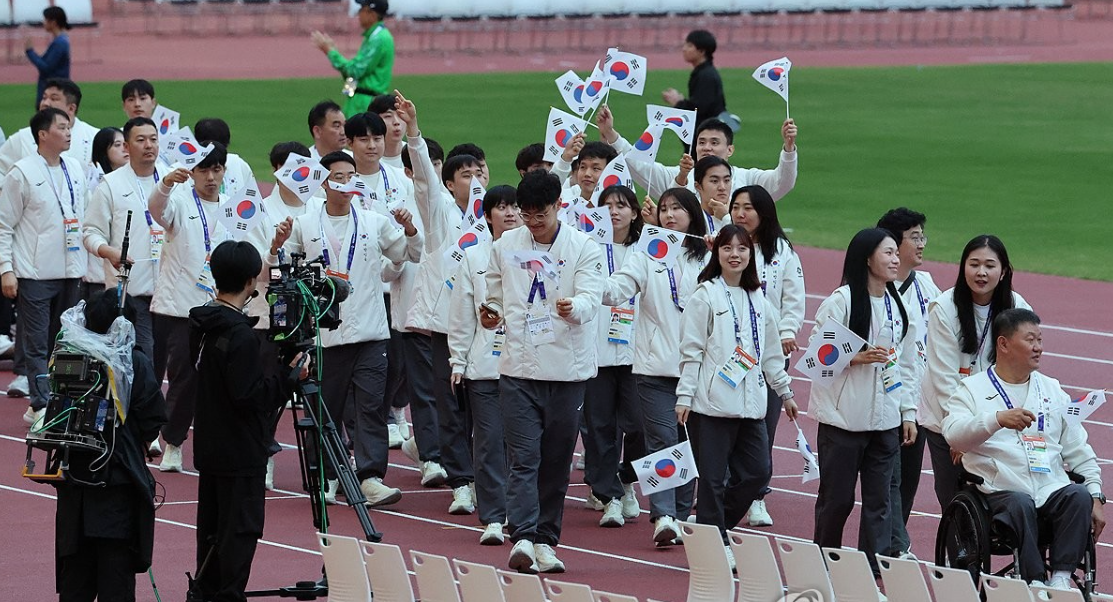
South Korea surpassed its pre-tournament goal at the 2026 Aichi-Nagoya Asian Para Games, winning 29 gold medals and finishing fifth overall.
The delegation collected 29 gold, 38 silver and 33 bronze medals. It reached 100 total medals with a silver in the mixed team sabre fencing event on the final day.
South Korea had set a target of at least 21 gold medals and sixth place overall, lower than its goal at the 2022 Hangzhou Asian Para Games, where it finished fourth with 30 golds. Lawn bowls and Go, which produced six gold medals in Hangzhou, were not included this time.
Among sports contested at both Games, South Korea increased its gold medal haul from 24 to 28.
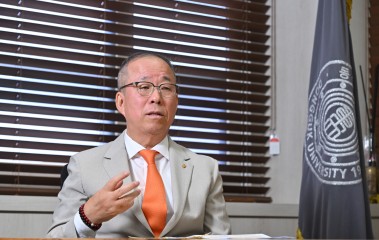
"We achieved better-than-expected results in table tennis and cycling," Korea Paralympic Committee President Jung Jin-wan said at a news conference in Nagoya. "First-time participants and young athletes also won medals."
Table tennis, traditionally one of South Korea's strongest sports, produced 12 gold medals, surpassing the nine won in Hangzhou and setting a national record for the most table tennis golds at a single Asian Para Games.
Kim Hyun-wook of the Gyeonggi Para Sports Association and Yoon Ji-yu of Seongnam City Hall each won three gold medals. Seo Su-yeon of Gwangju City Hall, Kim Gi-tae of Seoul City Hall, Jang Young-jin of Seongnam City Hall and Lee Mi-gyu of the Ulsan Para Sports Association each won two.
South Korea also benefited from a strategy of analyzing opponents and forming competitive doubles teams.
Cycling delivered seven gold medals, three more than in Hangzhou. Asian Para Games newcomer Park Hyun-mi won two golds with pilot Kim Chae-yeon, while Lee Do-yeon swept the women's individual road time trial and road race.
Track athlete Jang Min-ho, 29, of Anyang City Hall won two gold medals in his Asian Para Games debut, setting an Asian record of 10.48 seconds in the men's 100 meters T13 and a world record of 46.24 seconds in the 400 meters.
Jang, who competed in the mixed and men's 1,600-meter relays at last month's Aichi-Nagoya Asian Games, became the first South Korean athlete to compete at both the Asian Games and Asian Para Games.
South Korea's wheelchair rugby team also produced a major upset, beating world No. 1 Japan 53-50 in the mixed final to win the country's first Asian Para Games gold medal in the sport.
Wheelchair fencer Cho Eun-hye defeated Thailand's Saysunee Jana, a three-time gold medalist at the Paris Paralympics, 15-14 in the women's individual epee B final to earn South Korea's first Asian Para Games fencing gold.
In archery, Kim Ok-geum and Park Hong-jo won the W1 mixed team title, while Kwak Geon-hwi took gold in the men's individual recurve event.
Shooting and boccia, however, fell short of their gold-medal targets.
South Korea had aimed for seven shooting golds but won three, along with six silvers and six bronzes.
Boccia, which produced two gold medals in Hangzhou, ended with one silver and one bronze. It was the first time since the Asian Para Games began in 2010 that South Korea failed to win a boccia gold.
Judo, taekwondo and wheelchair tennis also failed to retain the gold medals they won in Hangzhou.
China dominated the medal table with 207 gold, 117 silver and 111 bronze medals. Host Japan finished second with 64 golds, 60 silvers and 62 bronzes, followed by Uzbekistan with 45 golds, 49 silvers and 51 bronzes.
The gold-medal gap between South Korea and Japan widened from 12 in Hangzhou to 35. Uzbekistan jumped from eighth in Hangzhou to third, while India, which had finished one gold behind South Korea in Hangzhou, moved ahead this time with 30 gold, 35 silver and 49 bronze medals to place fourth.
South Korea now faces the task of extending its strength beyond its traditional medal-producing sports as rival countries continue to improve.
"We will closely analyze what needs to be maintained, improved and strengthened after the Games," Jung said. "We will work to produce even better results at the 2028 Los Angeles Paralympics."
(This article was produced with the assistance of AI. — Ed.)