Piknic hosts the first Korean solo show of American photographer, whose hazy, haunted images redefined fashion photography
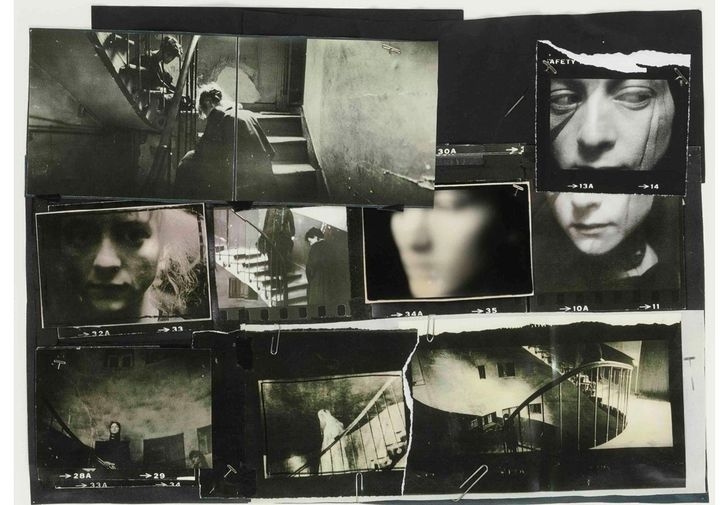
A specter haunts Deborah Turbeville’s photographs — the specter of a glamour in decay. Grainy and washed out in dusky grays, her pictures look like they came straight out of a dead stranger’s photo album, rather than the glossy magazines they were made for. The models are her ghosts: wan, remote figures who gaze past the camera and seem out of place wherever they stand.
Ghosts, by nature, belong nowhere in particular, which is to say they could just as easily be anywhere. The rooms they haunt might call to mind anything from an Alain Resnais film to a Chekhov play to a long-shuttered European spa resort, often all at once. What they invoke is less a specific time or place than an eerie sense of deja vu — what we might now simply call vibes.
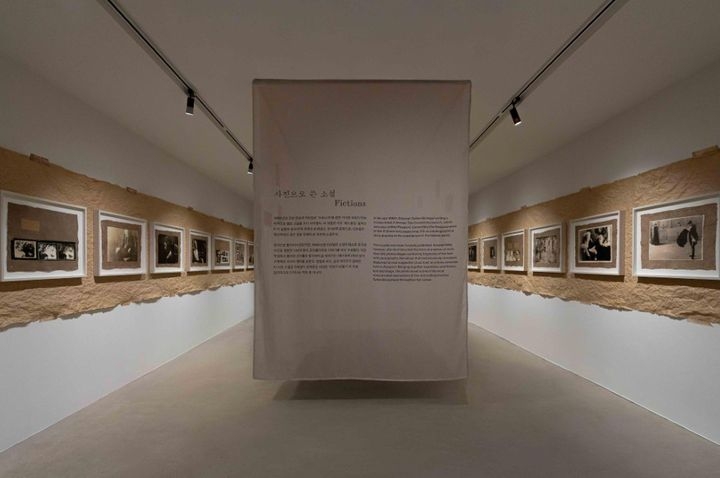
Hence the title of Turbeville’s first solo exhibition in Korea, “Atmosphere," which opened Friday at Piknic in central Seoul. Organized with MUUS Collection, a New York-based photography archive that acquired her work in 2020, the show is a trove of some 200 pieces, 102 of them originals, including vintage prints and collages. Together they make the case that the power of an image lies less in what it depicts than in what it conjures.
Photography was something of a second act for Turbeville. After working as a fashion editor at Harper's Bazaar and Mademoiselle, she started taking pictures in her mid-30s. Her work appeared in 1970s fashion magazines alongside the likes of Helmut Newton and Guy Bourdin, whose slick, sexualized provocations she wanted no part of.
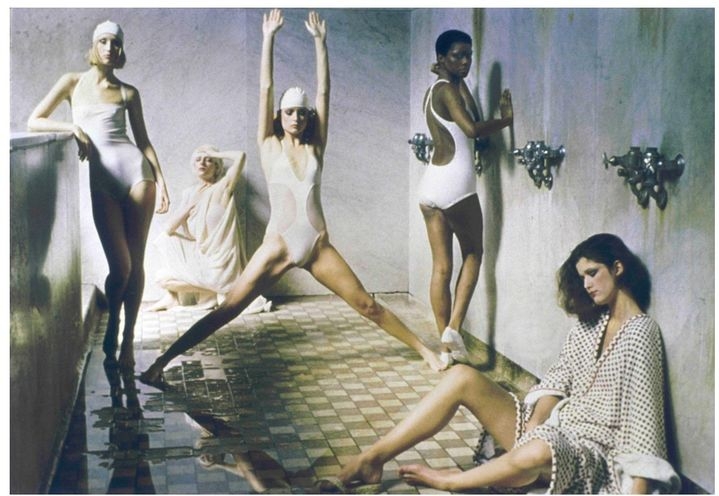
In 1975, Turbeville took five models in swimsuits to a condemned public bathhouse in New York. She had them slouch against the peeling tiles and stare off in different directions, as if each were alone in the room. “Bathhouse," as the Vogue spread was called, left readers aghast. Today, it is remembered as a touchstone of the era.
The Seoul exhibition charts the experiments and departures that followed. "Maquillage" (1975), a make-believe magazine pieced together from torn photos and handwritten scraps, is fashion publishing with nothing to sell. For "Unseen Versailles" (1981), which was commissioned by Jacqueline Kennedy Onassis, Turbeville eschewed the gilded splendor of the palace, pointing her camera at sheet-draped furniture and worn-down statues instead.
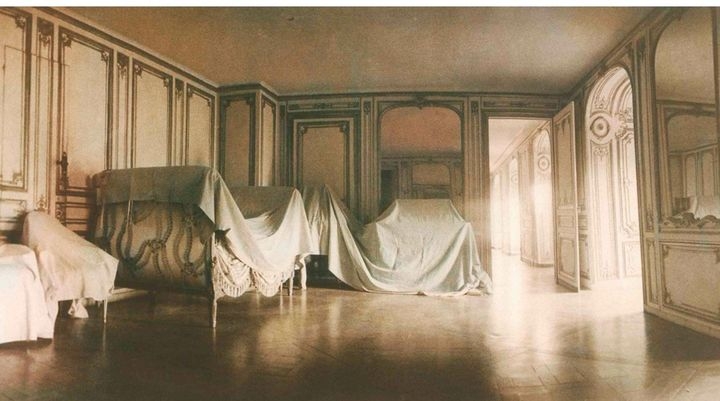
Works of fiction fed her pictures as much as fashion did. In her 1997 book “Studio St. Petersburg," pictures of ballet dancers share the page with passages from Alexander Pushkin and Anna Akhmatova. “Passport" turns a novel she never published into some 130 collages of photos and text.
Whereas Marcel Proust went in search of lost time, Turbeville was perhaps after a past that never existed at all. The artist once said she wanted to capture "people in today's world with the atmosphere of the past reflected in their faces," and the show works best as a place to stop by and soak up the mood, feeling nostalgic for something you don't remember.
"Deborah Turbeville: Atmosphere" is at Piknic until Feb. 28, 2027.
moonkihoon@heraldcorp.com