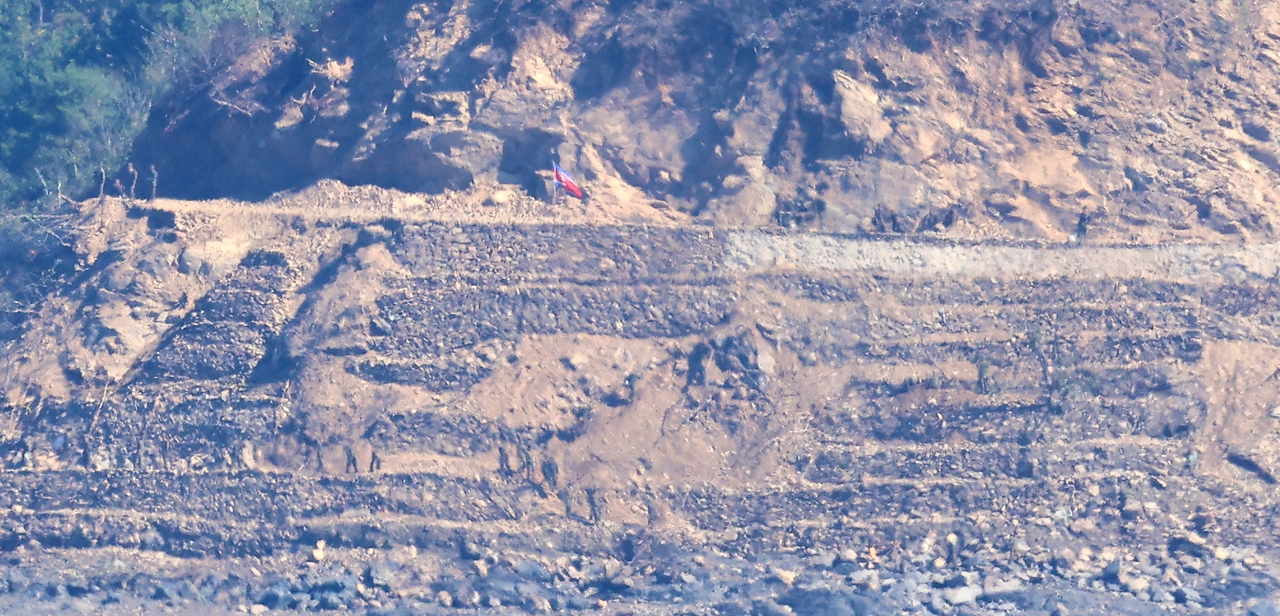
North Korea has planted an estimated 960,000 land mines along the inter-Korean border since 2024, according to multiple lawmakers Friday, a move seen as part of its border fortification work after Pyongyang declared a "two hostile states" policy toward Seoul.
The South Korean military has reported the estimate to the National Assembly, lawmakers affiliated with the parliamentary intelligence and defense committees told Yonhap News Agency.
North Korea has stepped up border reinforcements since April 2024, after its leader Kim Jong-un declared relations with Seoul as "two states hostile to each other" in late 2023.
The South's military has since detected increasing movements of North Korean troops installing barbed-wire fences, laying mines and erecting anti-tank barriers along the Military Demarcation Line, the inter-Korean border line that sits inside the Demilitarized Zone.
North Korean troops have moved close to or even crossed the MDL on numerous occasions, prompting the South's military to blare warning broadcasts or fire warning shots in line with operational standards.
Tensions have heightened along the border following the Sept. 21 land mine explosion that injured three South Korean soldiers.
Seoul has concluded Pyongyang was behind the mine blast after its investigation found the North's antipersonnel mines were the cause of the explosion.
Pyongyang has vehemently denied responsibility, accusing Seoul of fabricating the probe to pin the blame on the regime, and threatened to resume anti-Seoul loudspeaker broadcasts and deploy tactical weapons along the border.
Some military experts have estimated that more than 2 million land mines are planted along the DMZ, including those planted by the South Korean forces.
Unification Minister Chung Dong-young provided a similar figure during a parliamentary audit earlier this month. (Yonhap)