Financial markets remain relatively stable despite recent volatility, US Fed rate hike
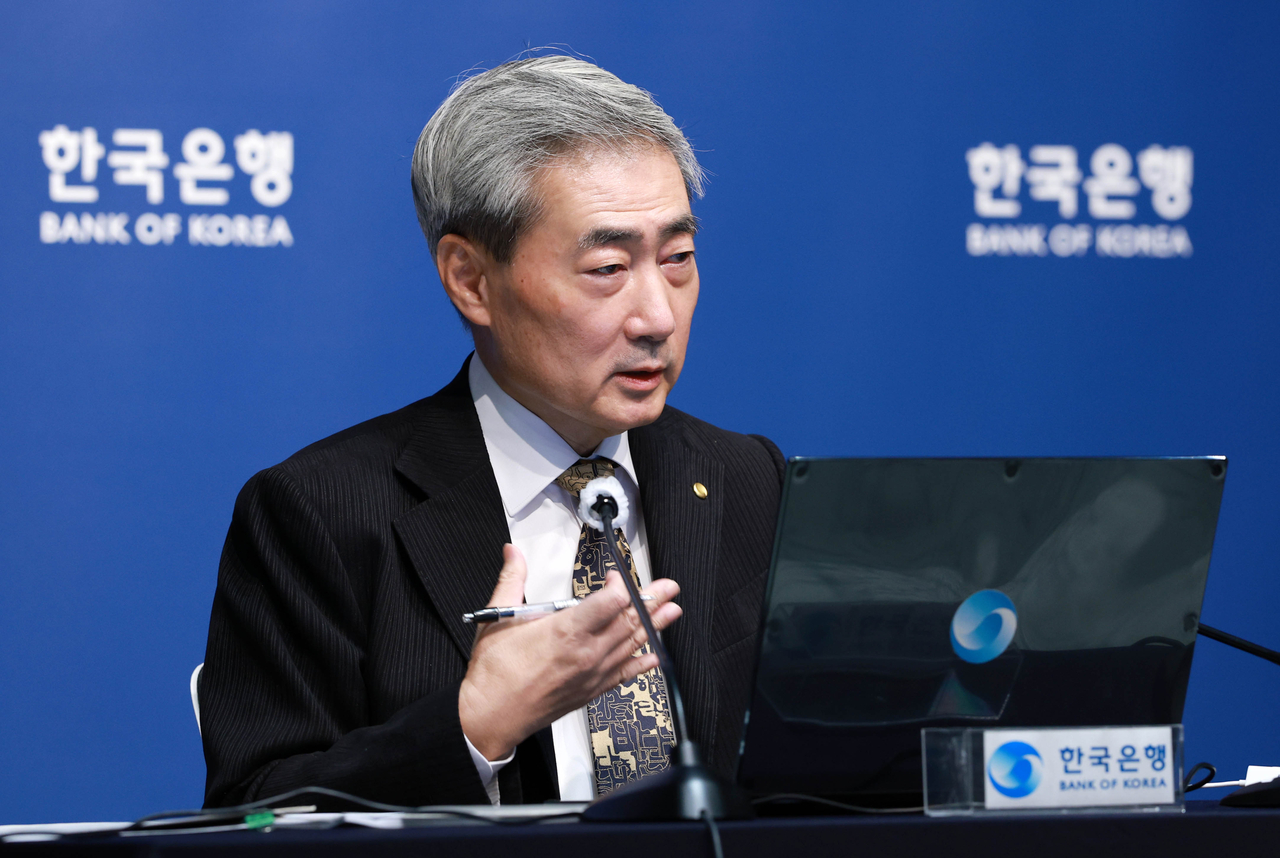
The Bank of Korea held its key interest rate at 3 percent Thursday, pausing after two consecutive hikes but keeping the door open to further tightening as stronger-than-expected growth and persistent inflation complicate its policy outlook.
The Monetary Policy Board unanimously voted to leave the rate unchanged after raising it by 25 basis points in both July and August.
"We believe it is necessary to maintain the current restrictive stance, as growth and inflation have been stronger than expected," BOK Gov. Shin Hyun-song said at a press conference. "We will continue to respond until inflation converges sustainably toward the target."
Shin said the earlier rate increases had begun to curb housing market pressures, giving policymakers time to assess their impact before deciding whether further action is needed.
"The preemptive moves have helped slow home price increases and gains in the financial vulnerability index," he said.
He added that Korean financial markets had remained relatively stable despite recent volatility and the US Federal Reserve's rate hike in September.
The BOK will review third-quarter economic growth and October inflation figures before its next policy decision. Shin stressed that the unanimous hold did not signal an end to the tightening cycle.
Chip boom lifts growth
Shin said stronger semiconductor exports and investment were likely to push economic growth above the BOK's August forecasts of 3.3 percent this year and 2.9 percent next year.
Korea's customs-cleared exports are expected to reach $1 trillion this year, while the current account surplus could exceed $450 billion. The surplus totaled $279.2 billion in the first eight months, nearly quadruple the $69.67 billion recorded a year earlier.
Although consumer spending temporarily weakened amid stock market corrections and an automobile industry strike, Shin said the broader economic recovery remained intact.
Inflation keeps pressure on
Inflation remains the central bank's main concern, with consumer prices rising 2.9 percent on-year in September. That marked a slowdown from August's 3.1 percent but remained well above the BOK's 2 percent target.
Higher oil prices, driven partly by the prolonged Middle East conflict, are adding pressure. Brent crude approached $112 a barrel Tuesday, its highest price in five months.
The BOK expects headline inflation to average 2.7 percent this year and core inflation, which excludes food and energy, to reach 2.5 percent, broadly in line with its August projections.
For 2027, the bank forecast headline inflation of 2.3 percent and core inflation of 2.5 percent. Shin warned that core inflation could exceed the earlier estimate, with overall inflation potentially taking until around 2028 to return to the 2 percent target.
Other indicators point to continued price pressure. Consumer inflation expectations remained at 2.7 percent for a third straight month, while producer prices jumped 7.7 percent on-year in September, potentially feeding into consumer prices in the coming months.
Shin acknowledged that the government's oil price cap had helped contain inflation but warned that keeping it in place too long could distort prices, discourage energy conservation and strain public finances.
Won rebounds, but remains weak
Shin said the won remained relatively weak by historical standards despite recovering from its sharp depreciation earlier this year.
The currency's effective exchange rate, measured by the Bank for International Settlements, stood at around 101. It strengthened from roughly 89 at the end of August, when the dollar traded near 1,380 won.
Shin emphasized the importance of exchange rate stability, particularly for lower-income households.
"Exchange rate predictability is very important," he said, adding that a 10 percent appreciation of the won could increase the purchasing power of the lowest-income households by more than 0.4 percent and help narrow inequality.
He characterized the won's sharp depreciation in early summer as exceptional, saying its subsequent rebound largely reflected a reversal of those unusual conditions.
ch0221@heraldcorp.com