His strategy centers on attracting robotics and AI firms to Suseo, expanding the MICE district around Samseong and speeding up apartment reconstruction
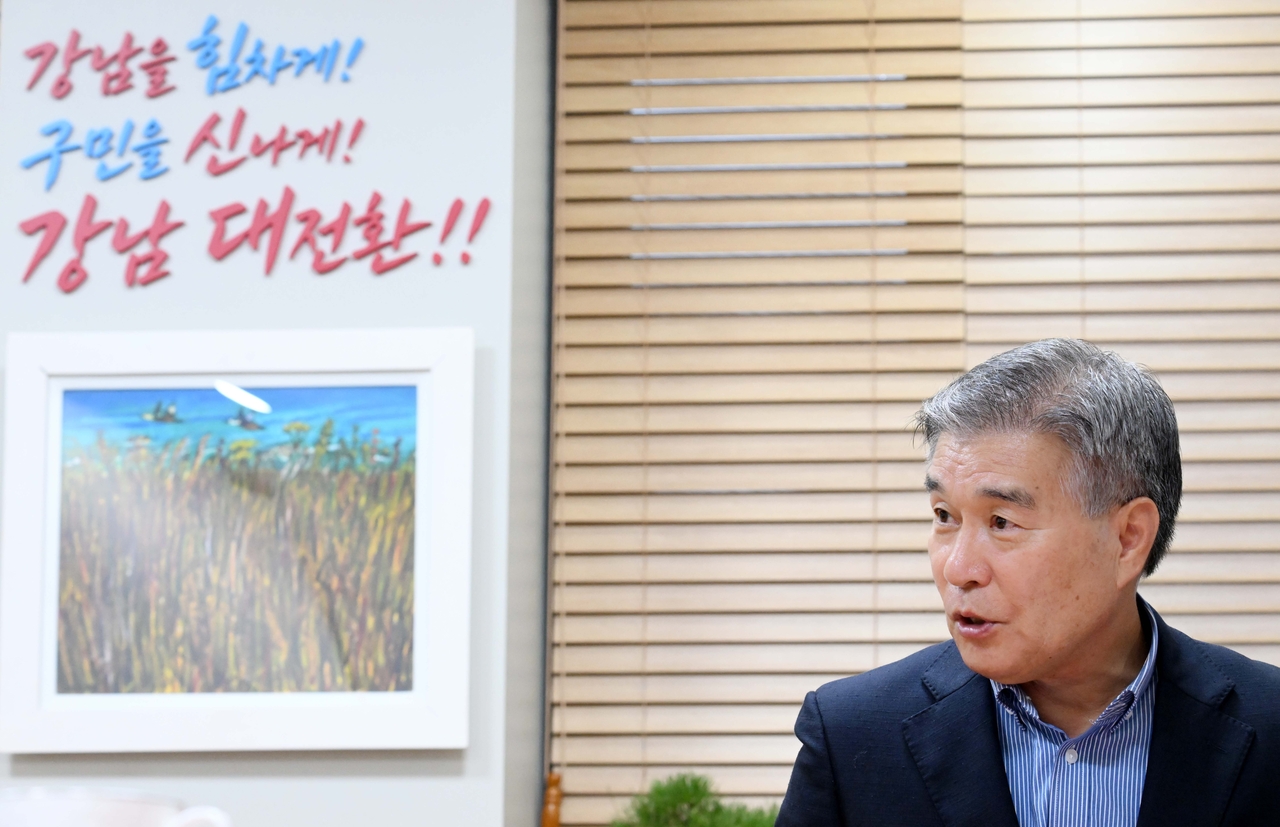
Gangnam-gu Mayor Kim Hyeon-ki is building on the district’s established strengths to drive its next phase of growth.
Three months into his four-year term, Kim is pursuing what he calls a “major transformation of Gangnam.” His strategy draws on the district’s existing assets while giving its neighborhoods clearer roles in its future development.
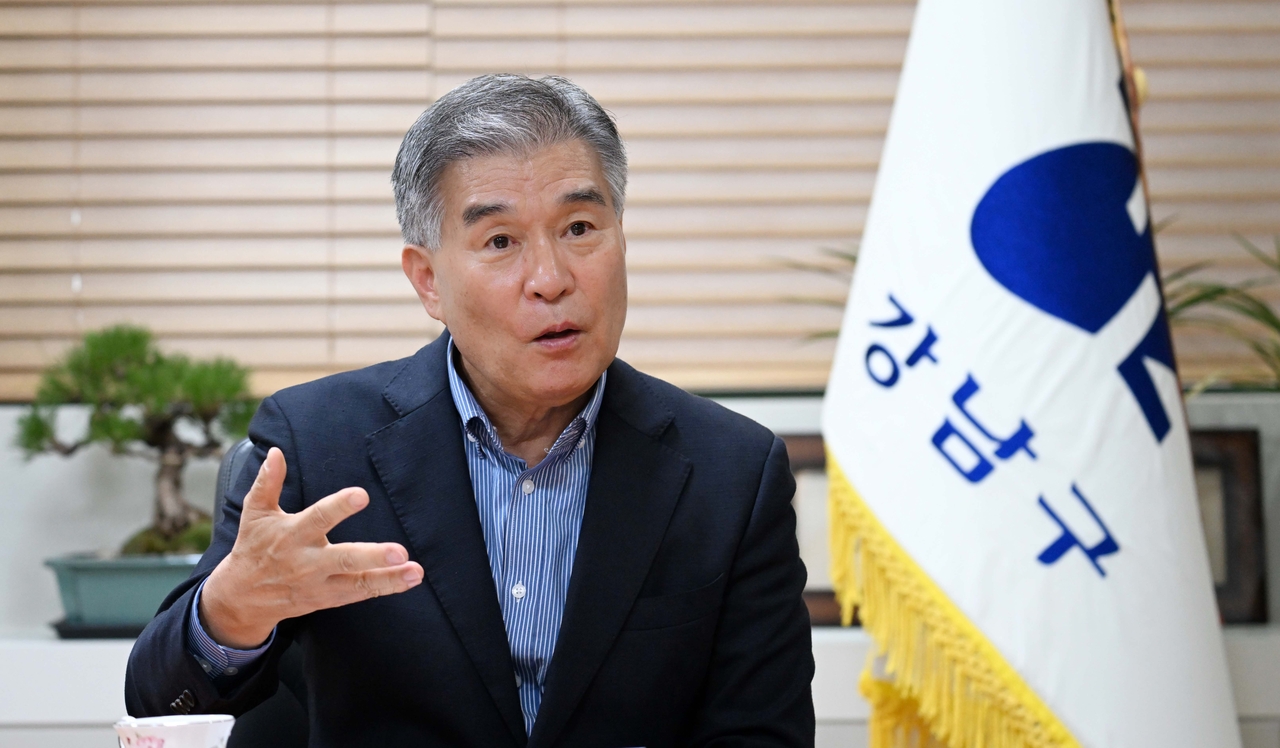
“Gangnam’s infrastructure, particularly its buildings and residential properties, has aged,” Kim said in a recent interview with The Korea Herald at his office.
“For Gangnam to make a new leap forward, we need a clear new direction and the administrative effort to support it.”
Established as a separate district in 1975, Gangnam is now home to around 550,000 residents. Psy’s “Gangnam Style” brought the district’s name to audiences worldwide. Kim wants to build on that global recognition with a broader vision for Gangnam’s future.
Building Gangnam’s next growth engines
Kim’s development strategy has three geographical pillars: robotics and artificial intelligence around Suseo; meetings, incentives, conventions and exhibitions, or MICE, around Samseong Station; and Korean cultural industries in Cheongdam, Sinsa and Nonhyeon.
“The focus is on making use of the resources and assets Gangnam already has,” Kim said.
His MICE strategy centers on COEX and major projects around Samseong Station, including an underground transit hub beneath Yeongdong-daero and Hyundai Motor Group’s Global Business Complex. Both are under construction and expected to be completed around 2030.
The projects are part of a broader international business and convention district extending to the Jamsil Sports Complex in neighboring Songpa-gu, Kim said.
“Samseong-dong, particularly Samseong Station, will be at the center of the MICE district,” he said, citing an estimated 590 trillion won in economic impact from the broader development.
Further south, Kim sees Suseo’s rail connections as a foundation for attracting technology businesses and researchers and positioning the area as a hub for robotics and AI.
“The area around Suseo Station is a gateway to Gangnam and southeastern Seoul,” he said.
“It already has four rail lines: the SRT, GTX-A, Suin-Bundang Line and subway Line No. 3. The Suseo-Gwangju Line, connecting Suseo with Gwangju in Gyeonggi Province, will also be added.”
The Gangnam Robot Plus Test Field, which opened in 2024, provides an existing research and testing base. Spanning 5,950 square meters across two buildings, it houses robots, laboratories and equipment for projects involving collaborative robots, manufacturing technology and safety certification.
Additional facilities are planned as part of Seoul’s Suseo robotics cluster project. A robotics venture town and the Seoul Robot Tech Center are set to be built by 2030, according to the Seoul Metropolitan Government.
“This is not just talk,” Kim said. “We have already put in place the foundations for a cluster where young people looking to launch robotics startups can gather.”
Kim also wants Gangnam to host AMD’s planned AI Center of Excellence in Korea. He said the district’s residential, educational and lifestyle infrastructure could help attract international researchers.
“Those researchers should be able to enjoy and make use of all the infrastructure Gangnam offers,” he said. “We also have an international school in Gaepo-dong.”
Google plans to open its first overseas AI Campus in Seoul this year. The 1,980-square-meter campus near Samseong Station is expected to support cooperation between Google and Korean researchers and startups.
“Preparations for Google’s AI Campus are progressing well,” Kim said.
In Cheongdam, Sinsa and Nonhyeon, Kim wants to build on the concentration of music, fashion, food, beauty and medical services.
“Dosan-daero is, in a sense, a symbolic street for Gangnam’s Korean cultural content,” he said. “K-pop, fashion and medical tourism are all there.”
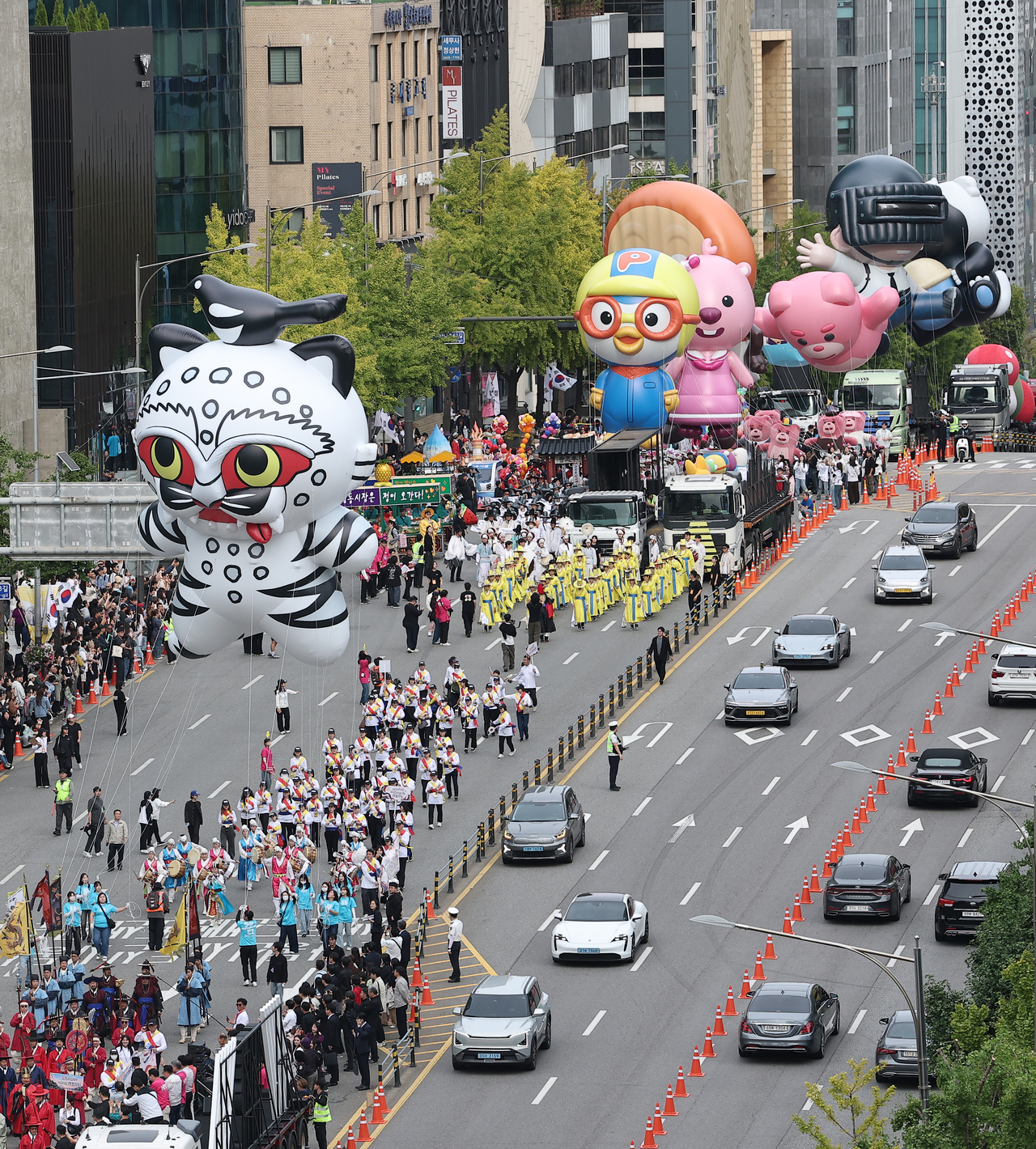
The 2026 Gangnam Festival, held Oct. 3-5 along Dosan-daero, featured K-pop performances, a concert headlined by Psy, food vendors and a large-scale residents’ parade. The district described the event as an unprecedented effort to bring a major festival to the heart of Gangnam.
“We estimate that around 30 percent of festivalgoers were foreign nationals,” Kim said.
Medical tourism is another part of Kim’s strategy. Gangnam’s medical institutions treated 650,958 foreign patients in 2025, up 72.6 percent from a year earlier, according to the district office.
Kim said private providers already have their own networks for attracting patients, while the district can help coordinate services beyond individual clinics.
“The public sector should support areas that private providers find difficult to handle on their own,” he said. “Connecting medical tourism with hotels and other accommodation providers will be particularly important.”
Renewing aging homes, cutting red tape
Kim’s plans to renew Gangnam also include rebuilding its aging apartment complexes. One of his first actions after taking office was to approve a task force to speed up reconstruction.
“My goal is to shorten administrative procedures within Gangnam-gu’s authority as much as possible,” Kim said. “We are cutting processing times for approvals to establish reconstruction associations and preparatory committees by nearly half.”
Eunma Apartment, a longstanding symbol of delayed reconstruction in Seoul, is one example. Kim said its project implementation plan received approval in 27 days, compared with the standard 60-day processing period.
“Previously, applications were sent to each department and their opinions were collected afterward,” he said. “I told them to bring everyone together.”
The district also dispatches an expert support team to mediate disagreements among residents, which Kim said can become an obstacle even when administrative procedures move forward.
“If conflicts among association members are simply left alone, they can drag on indefinitely,” he said. “When we actively explain the issues and help people understand them, they can be resolved more quickly.”
Kim said his confidence came from observing reconstruction projects in Gaepo during his years as a Seoul city councilor.
“I watched the process at each site. I know those stages very well,” he said.
Asked what he hopes to achieve over his four-year term, Kim returned to the ambition connecting his industrial and housing policies.
“Gangnam is showing its age after more than 50 years,” he said. “I would be happy simply to be remembered as having turned that around and laid the groundwork for a new leap forward.”
yunapark@heraldcorp.com