School-age suicide rates hit a record high in 2025 even as the national rate fell, highlighting the pressures young people face and the barriers that keep them from getting help
How a society dies can reveal how it lives. From childbirth to suicide, cancer and dementia, this series examines what mortality trends tell us about South Korea today. This is the second installment of Behind the Numbers, focusing on deaths by suicide. — Ed.
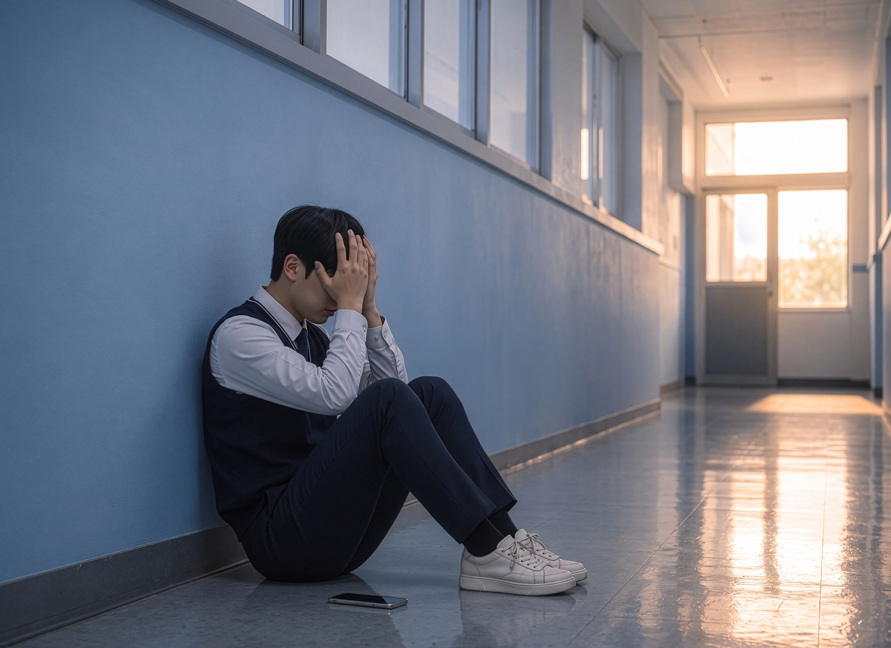
In June last year, three teenage girls from the same high school were found dead together at an apartment complex in Busan.
They had reportedly shared worries about school, career choices and what awaited them in their final year of high school.
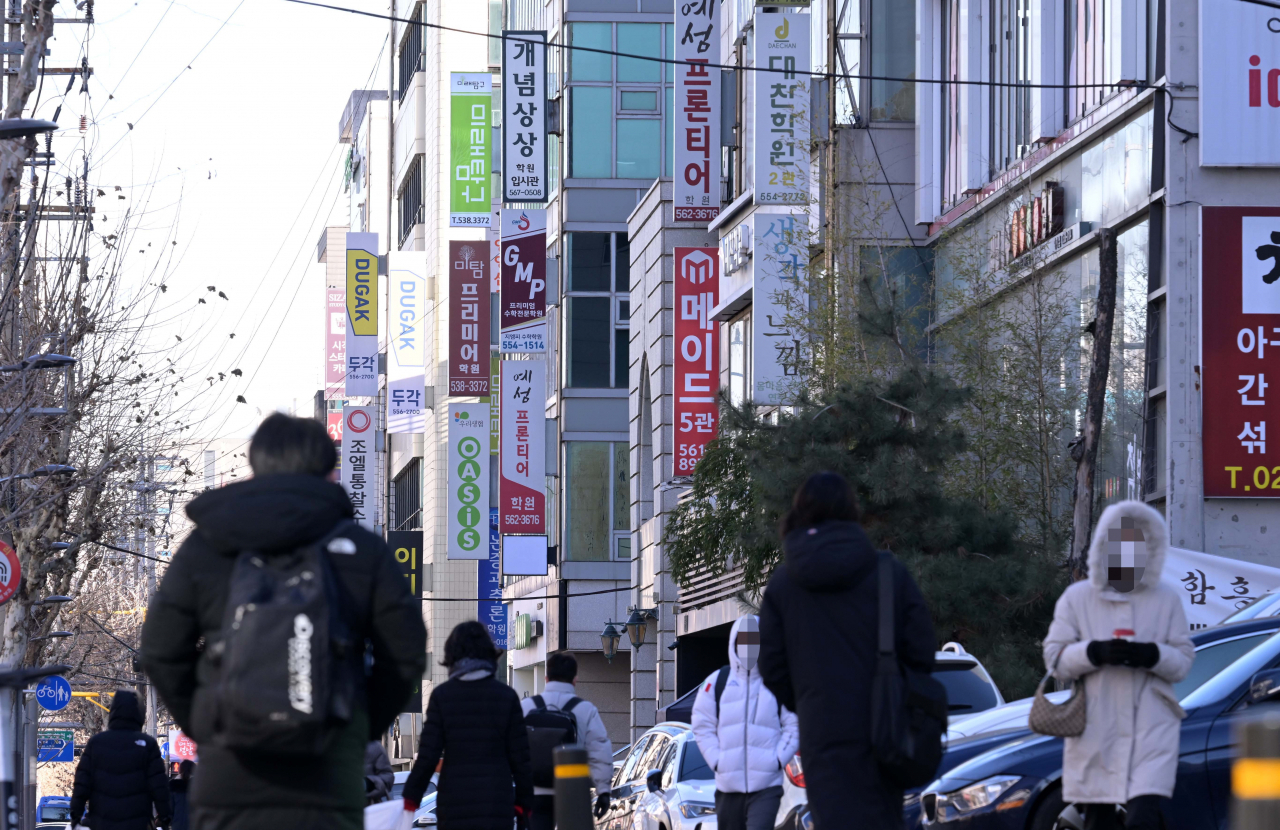
Before the month was over, another high school student was found dead at a private cram school in Yeongdeungpo-gu, Seoul.
The cases were not connected, and the circumstances surrounding each death were different. Yet they are part of a broader trend in South Korea: More teenagers are taking their own lives, even as the country shows signs of making progress in its long-running fight to curb suicide.
South Korea recorded 14,144 suicide deaths in 2025, down 728 from 14,872 the previous year, according to cause-of-death statistics released by Statistics Korea on Sept. 22. The suicide rate fell 4.7 percent, from 29.1 deaths to 27.8 deaths per 100,000 people.
The decline came after two consecutive years of increases, with the number of suicide deaths rising from 12,906 in 2022 to 13,978 in 2023 and 14,872 in 2024, the highest level in six years.
Teenagers were the only age group to see an increase. The suicide rate among those aged 10 to 19 rose 7.5 percent year-on-year to 8.6 deaths per 100,000, the highest since the country began compiling the data in 1983.
The rate fell for all other age groups, from people in their 20s to those aged 80 and older. The steepest decline was among people in their 60s, whose rate dropped from 31.9 to 29 per 100,000, followed by those in their 70s, from 35.6 to 32.9. The rate among people aged 80 and older remained the highest of any age group, at 52.6, down from 53.3.
In 2025, there were 244 school-age suicides. 6 were in elementary school
South Korea recorded 244 school-age suicides in 2025. Of them, six were elementary school students, 92 were middle school students and 146 were in high school.
Family problems were the most frequently cited factor, accounting for 77 cases, according to Ministry of Education data. Psychiatric issues followed with 58 cases, along with academic and career concerns in 54 cases and interpersonal problems in 38. The cause remained undetermined in 79 cases.
But experts caution that teenage suicide rarely has a single cause. Depression and anxiety can intersect with academic pressure, family conflict, peer relationships, school violence and financial difficulties. Some warn that social media may amplify the pressures teenagers already face.
“Adolescence is a period when peer acceptance and a sense of belonging are particularly important, as young people are still developing their identities and perceptions of their appearance,” the National Youth Policy Institute said in a report.
“Social media can intensify these vulnerabilities through visible measures of popularity, such as likes and follower counts, constant comparisons over appearance, academic performance and wealth, and experiences of exclusion or ridicule in group chats.”
Signs of distress, but barriers to help
Experts say many teenagers who die by suicide exhibit warning signs beforehand, but the signs do not always lead to timely help.
A recent study led by Hong Hyun-ju, a professor of psychiatry at Hallym University College of Medicine, examined 36 elementary, middle and high school students who died by suicide between 2015 and 2021. It found that 29 students, or 81 percent, had shown verbal, behavioral or emotional warning signs before their deaths.
Verbal signs were the most common, observed in 69.4 percent of the cases, followed by behavioral and emotional changes. These included expressions of wanting to die or feeling worthless, as well as noticeable mood swings.
Of the 36 students, 35 had been diagnosed with a mental health condition such as depression, yet only three had regularly received medication.
The study pointed to stigma and negative perceptions surrounding mental illness as barriers that can keep teenagers from seeking or continuing treatment.
"Some of them reached out to teachers or parents for help, but their concerns were brushed aside or they didn’t get the help they needed. After going through that, they ended up trying to deal with their problems on their own,” Hong told a local news outlet.
"We need psychological autopsies to better understand the suicide risk factors that aren’t always visible. We also need to teach young people how to recognize and express their emotions, and how to work through problems in healthy ways instead of avoiding them."
Amid the continued rise in teenage suicides, the government earlier this month unveiled a set of measures aimed at halving the suicide rate among teenagers, from 8 deaths per 100,000 in 2024 to 4.2 by 2035.
Under the plan, the Education Ministry will expand the number of emergency mental health teams that visit schools from 56 in 2025 to 100 by 2030.
It has also increased funding for its student mental health voucher program from 8 billion won ($5.97 million) to 10 billion won this year, expanding support beyond medical treatment to include counseling.
Experts say the response needs to go beyond suicide prevention itself, calling for broader mental health programs in schools that can reach teenagers before they arrive at a crisis point.
"Programs for students already struggling with self harm or mental health issues are important, of course. But mental health shouldn’t only become a priority once a student is already in crisis," said Kwon Se-won, head of policy research at the Korea Foundation for Suicide Prevention.
"Building emotional resilience is especially important for young people today, as they navigate constant social pressures both offline and online. Schools need to give all students time to look after their mental well-being and create a culture that values it alongside academic achievement."
If you’re thinking about self-harm or suicide, dial the Suicide Prevention Hotline at 109, available 24 hours a day, seven days a week. Please request a translator for English-language services. — Ed.
cjh@heraldcorp.com