Bonghwa hopes to turn shared heritage into cultural and tourism hub, after descendants of a Vietnamese royal family's move there centuries ago
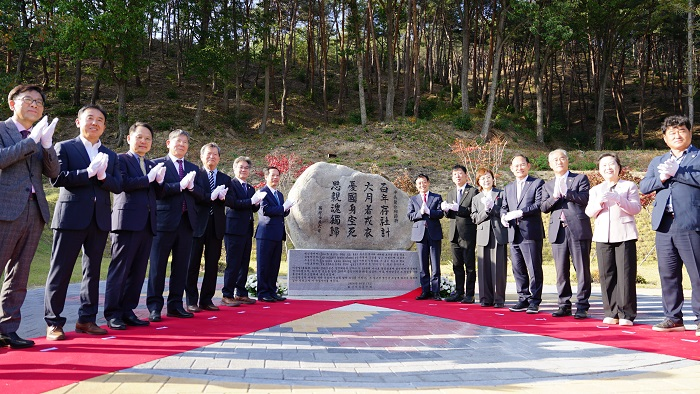
Some 800 people gathered Saturday at Chunghyodang, a centuries-old building tucked away in the mountains of eastern South Korea, where conversations could be heard in Korean, Vietnamese and occasionally English.
They had come to commemorate an unlikely historical connection: The arrival of a Vietnamese prince on the Korean Peninsula 800 years ago and the Korean clan descended from him.
“We are gathered here to retrace the historic relationship between Korea and Vietnam that spans over 800 years,” Bonghwa Mayor Choi Gi-young said at the ceremony marking the anniversary of Vietnamese Prince Ly Long Tuong’s arrival in Goryeo in 1226.
The gathering took place in Bonghwa, North Gyeongsang Province, a rural county of some 28,000 residents, and was attended by dignatries from Korea and Vietnam.
The county is an ancestral home of the Hwasan Lee clan, whose members trace their lineage to Ly Long Tuong, known in Korea as Lee Yong-sang. Although only about a dozen clan members remain in Bonghwa today, their ancestors’ history has become the centerpiece of a major local development project.
Chunghyodang, where Saturday’s ceremony was held, is a historic building associated with the clan. It honors Lee Jang-bal, a 13th-generation descendant of the Vietnamese prince who died at 19 while fighting Japanese invaders during the 1592-98 Imjin War.
A Vietnamese prince’s journey to Goryeo
The story of the Hwasan Lee clan begins with the collapse of Vietnam’s Ly dynasty, which ruled from 1009 to 1225.
Ly Long Tuong was born in 1174 as the seventh son of Emperor Ly Anh Tong. Following the emperor’s death, the throne eventually passed to Ly Long Tuong’s nephew, Ly Hue Tong, in 1210.
The dynasty’s fortunes deteriorated as Tran Thu Do, an influential political figure with ties to the royal family, consolidated power. In 1225, the Ly dynasty came to an end, giving way to the Tran dynasty.
As members of the former ruling family faced persecution, Ly Long Tuong is believed to have fled Vietnam to escape the political turmoil.
Although surviving official records from the Goryeo era make no mention of the Vietnamese prince, genealogical records preserved by the Hwasan Lee clan offer an account of his journey and settlement on the Korean Peninsula.
According to those accounts, Ly departed from the Than Phu estuary aboard one of three large ships, sailing through the South China Sea and waters near Taiwan before reaching Hwasan in Hwanghae Province, now part of North Korea, in 1226.
Goryeo King Gojong is said to have granted him refuge, allowing the prince and his followers to settle in the region.
According to an inscription in Ongjin, Hwanghae Province, and accounts preserved by the clan, Ly helped build defensive fortifications and led local resistance against Mongol forces in 1253, reportedly holding out for five months.
The clan’s connection to Bonghwa dates to Ly’s descendants. According to clan records, his second son, Lee Il-chung, was appointed to a government post in Andong and moved to the region.
Members of the clan lived in Bonghwa for centuries before gradually dispersing across the country.
According to Statistics Korea’s 2015 census, the latest available official count by ancestral clan, South Korea had 1,237 members of the Hwasan Lee clan — 616 men and 621 women.
Descendants reconnect with their ancestral homeland

Although the clan’s roots in Vietnam date back eight centuries, its descendants have maintained a connection with their ancestral homeland in modern times.
In the mid 1990s, the Vietnamese government invited senior members of the Hwasan Lee clan to visit Vietnam, where they were welcomed by Do Muoi, then-general secretary of the Communist Party of Vietnam.
Vietnam also extended special privileges to members of the clan seeking to settle in the country, including rights related to immigration, taxation and business activities comparable to those enjoyed by Vietnamese citizens.
In 2009, a senior member of the Hwasan Lee clan was given Vietnamese citizenship under a special presidential order, according to local media reports.
The relationship has since extended beyond the clan itself, with Bonghwa seeking to develop its historical connection to Vietnam into a broader platform for cultural exchange.
From centuries-old heritage to culture and toursim zone
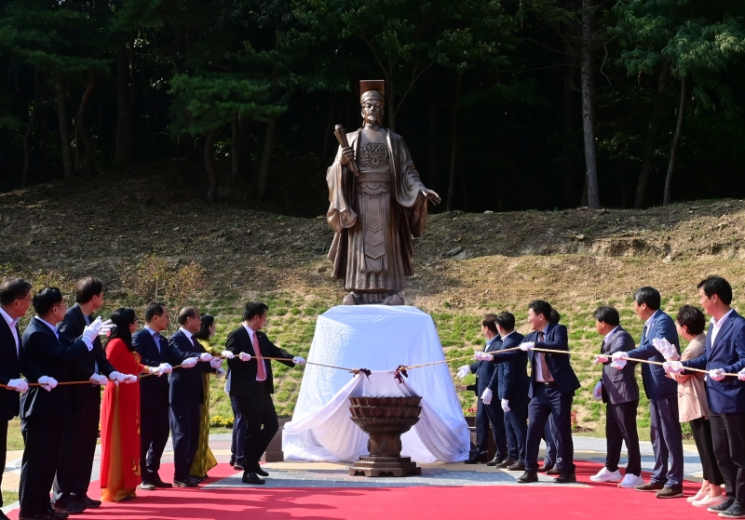
In August, the Ministry of SMEs and Startups designated part of Bonghwa as the K-Vietnam Valley Special Zone, giving the county a framework to turn its historical ties with Vietnam into a new source of tourism and local economic growth.
Under the plan, Bonghwa will pursue eight development projects worth a combined 347.6 billion won ($232 million) between 2026 and 2030.
The projects cover approximately 877,000 square meters, where the county plans to establish a cultural and tourism complex centered on the shared history of Korea and Vietnam.
The K-Vietnam Valley development will be divided into three areas dedicated to history and culture, cultural exchange, and leisure activities.
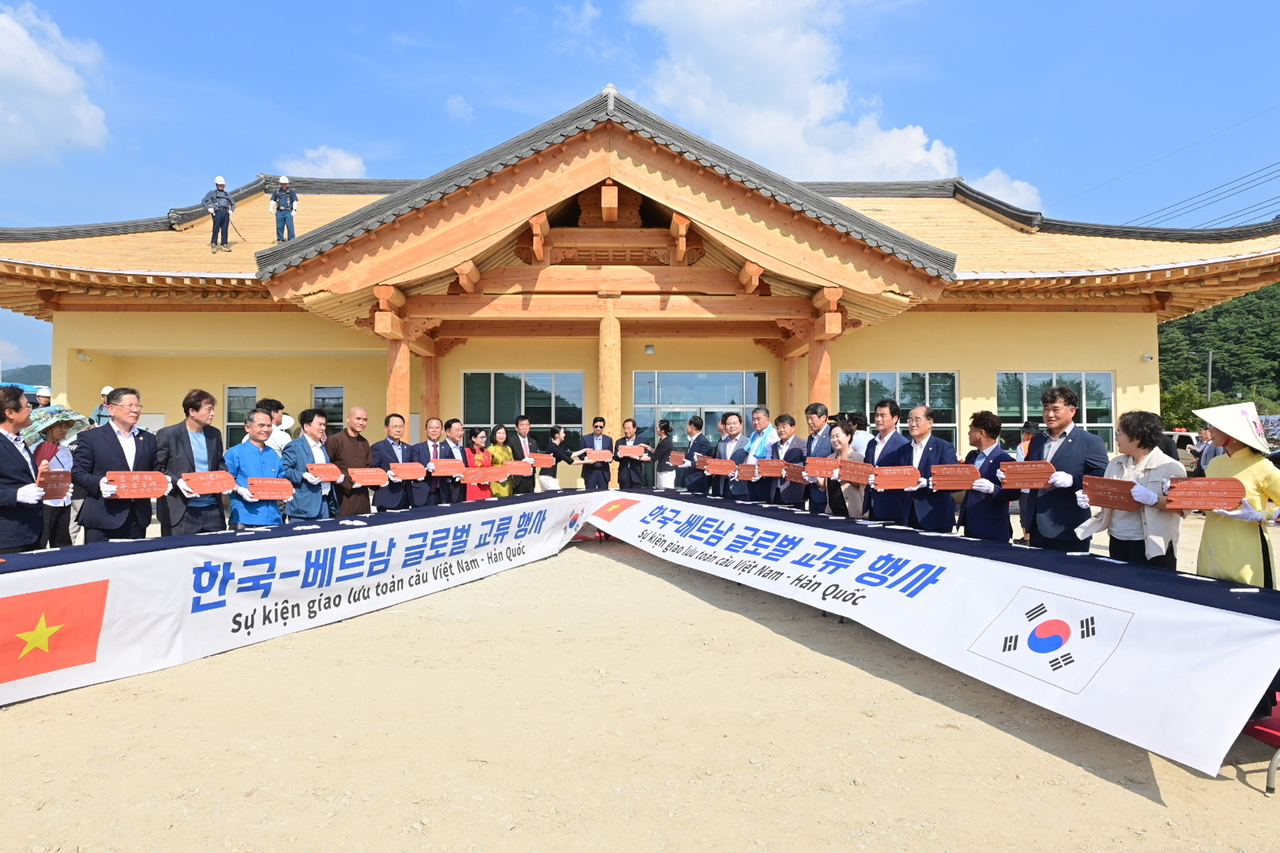
Planned facilities include a Vietnamese cultural center, a Korea-Vietnam history experience center, a cultural street and accommodations for visitors.
The broader development program also includes tourism facilities around a local reservoir, smart farming projects and other recreational infrastructure aimed at attracting visitors and stimulating the local economy.
The special-zone designation also allows Bonghwa to benefit from regulatory exemptions covering immigration, land use and housing, intended to facilitate development and attract foreign residents and workers.
“The designation has laid the institutional groundwork for linking the 800-year relationship between Korea and Vietnam to Bonghwa’s future,” Choi said.
seungku99@heraldcorp.com