Critics warn that reliance on idol casting could further squeeze newcomers out of an increasingly competitive market

K-pop stars are taking over the small screen, a trend industry experts warn could further squeeze opportunities for aspiring actors as South Korea’s domestic drama market continues to contract.
One of the latest examples is Itzy member Yuna, who made her small-screen acting debut earlier in the year with a cameo in “Undercover Miss Hong.” The hit black comedy briefly featured Yuna as the rebellious younger sister of Park Shin-hye’s character. Shortly after her cameo, she landed her first supporting role in “My Bias, My Boss,” a mid-sized tvN rom-com playing Yoon Cho-i — an A-list actress who falls in love with a fellow superstar.
Fellow Itzy member Ryujin also made her small-screen acting debut in July, appearing as herself in a cameo that drew buzz for its role in the series’ climactic twist — her character’s encounter with the protagonist sets off a supernatural body swap, leaving the two characters inhabiting each other’s bodies.
Ryujin is reportedly considering roles in several upcoming films, including the thriller “Shaving” and the comedy “Teen Cop.” She is also confirmed to lead in the independent film “Night on Earth.”

TvN's "100 Days of Deception," which premiered Saturday, features GOT7's Jinyoung as its male lead opposite Hallyu star Kim Yoo-jung, having him pose as an adopted son of a Japanese man during the Japanese occupation. The role marks his return to the small screen six months after “Still Shining,” in which he played the male lead in the JTBC romance drama.
Miyeon of I-dle is preparing for her first leading role in “Cheongdam International High School: Royal Camp," the latest installment in the popular “Cheongdam International High School” franchise. Currently in production, the series is slated for release next year.
The original series — whose first two seasons premiered in 2023 and 2025 — revolves around fierce power struggles among students at Cheongdam International High School, an elite institution coveted by the privileged.
The upcoming spin-off shifts the rivalry to a camp where students compete for admission to the prestigious school. Miyeon will star as Cha Se-mi, the school’s new queen bee.

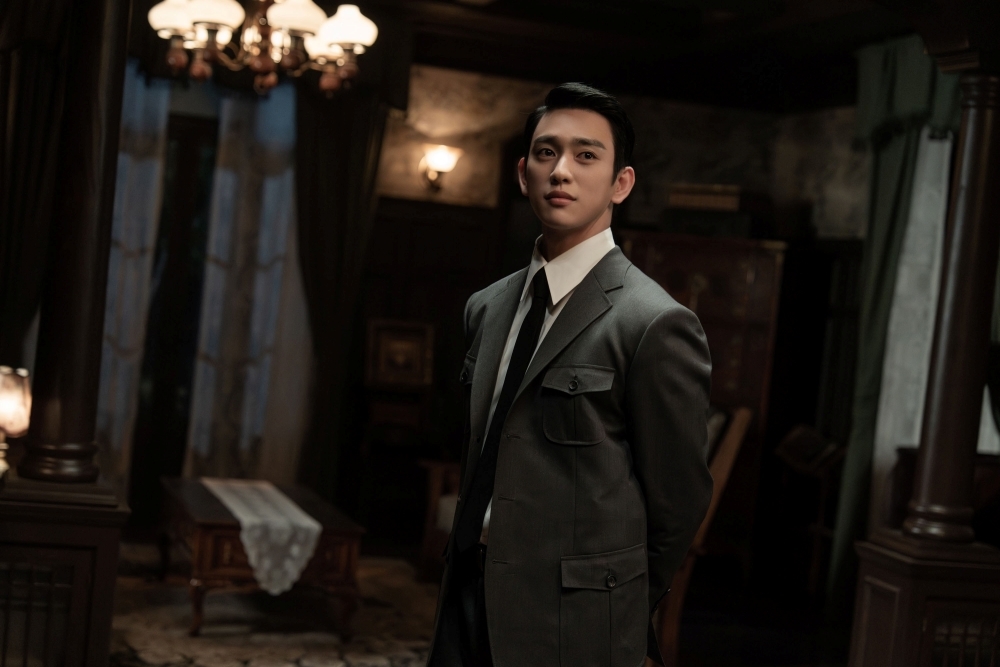
The growing roster of K-pop stars entering scripted television reflects a broader industry shift.
“When producing K-dramas these days, companies often place much greater emphasis on global audiences than on the domestic market, particularly in Southeast Asia and other parts of Asia," said Kim Bong-seok, a pop culture critic.
"K-pop idols already have name recognition, so casting them can be much more advantageous from a production standpoint," added Kim.
That commercial appeal, however, could come at a cost to actors who lack the built-in fan bases of established idols.
“The problem is that mid-tier actors, in particular, could increasingly find themselves being replaced by K-pop idols,” Kim said.
To prevent the industry from becoming increasingly concentrated around commercially recognizable names, Kim argued that Korea needs a more diverse production ecosystem.
“We need a wider range of independent films to be made,” he said.
“Rather than focusing support solely on projects and genres that are likely to sell well, there should be greater investment in mid-budget and independent productions, including government support.”
Another pop culture critic, Ha Jae-geun, pointed to a more fundamental challenge facing aspiring actors: the shrinking number of productions available to them.
“With the overall number of K-drama productions shrinking, the position of newcomers who have trained specifically to become actors is likely to weaken further if idols enter the market and claim a share of those opportunities,” Ha said.
He added that the growing difficulty of producing successful dramas has made scripted content an increasingly risky investment for broadcasters, prompting them to favor entertainment programs, which generally cost less to produce.
Reversing the decline in drama production, he argued, will require greater investment in K-drama projects to help expand the market.
According to findings announced by the Korean Association for Broadcasting & Telecommunication Studies in September, the number of domestic drama titles released annually declined by approximately 30 percent in two years, from 141 in 2022 to around 100 in 2024.
yoonseo.3348@heraldcorp.com

![[Graphic News] 6 in 10 people living alone feel lonely](https://wimg.heraldcorp.com/news/cms/2026/10/13/news-p.v1.20261013.78692699312346e2a2817fabedf14bb6_T1.gif?type=h&h=800)