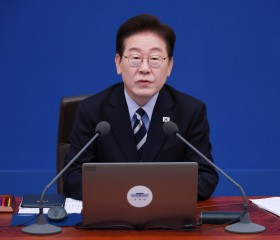
Lee stresses importance of managing ties with neighboring powers while rejecting 'submissive' diplomacy
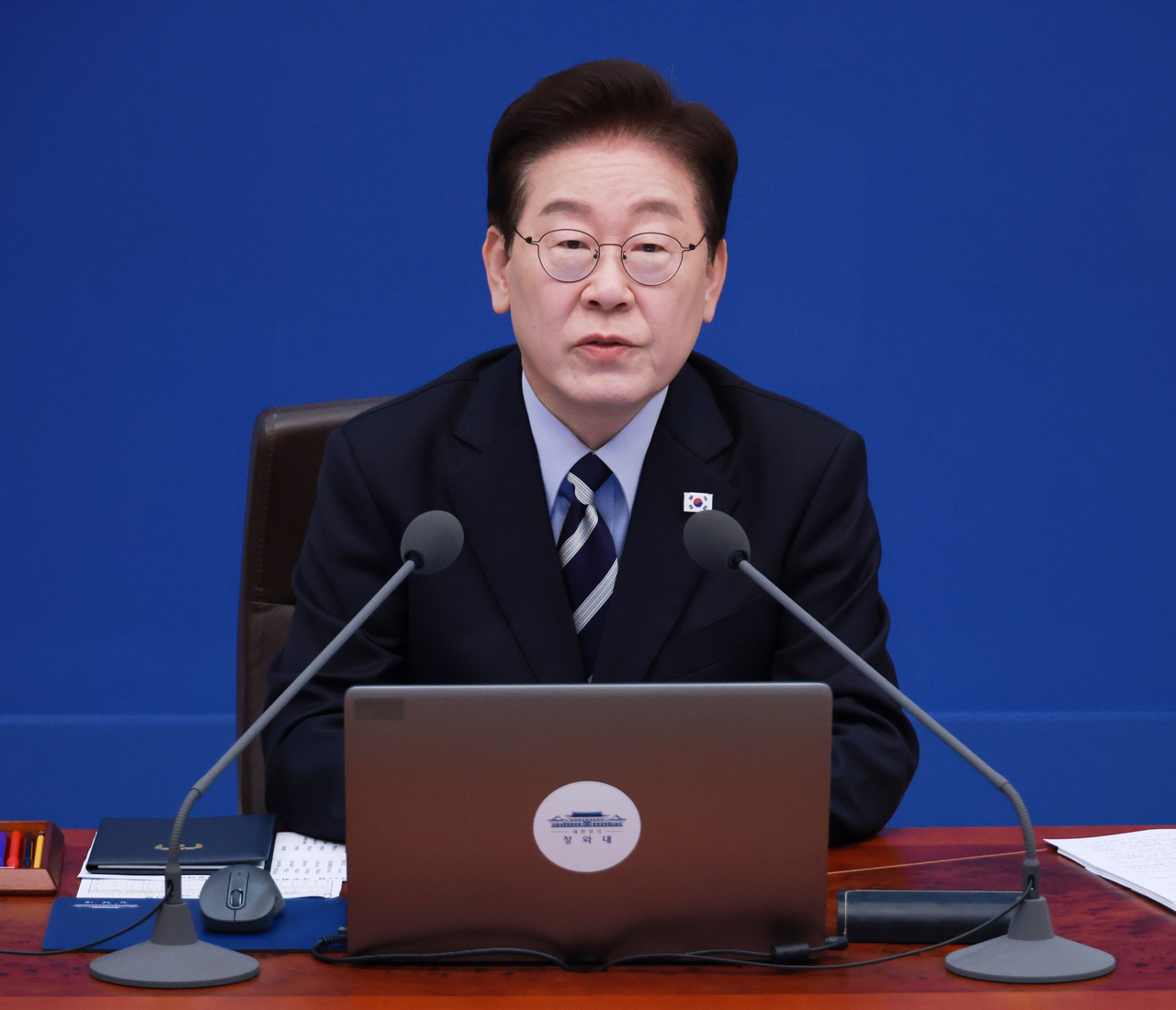
President Lee Jae Myung said Tuesday that South Korea should continue to strengthen its alliance with the US, adding that differences between nations are inevitable but should not be seen as a problem in themselves.
Lee stressed that such differences should be managed through dialogue and compromise without sacrificing South Korea's national interests, underscoring his administration's policy of "pragmatic diplomacy centered on national interests."
Lee’s remarks came as strains in intelligence cooperation between Seoul and Washington became a focus of controversy in South Korea during the National Assembly’s annual audit.
South Korea’s spy agency acknowledged a disruption in US intelligence sharing concerning North Korea’s nuclear activities. However, it rejected local media reports suggesting broader restrictions on intelligence cooperation, maintaining cooperation in other areas is unaffected.
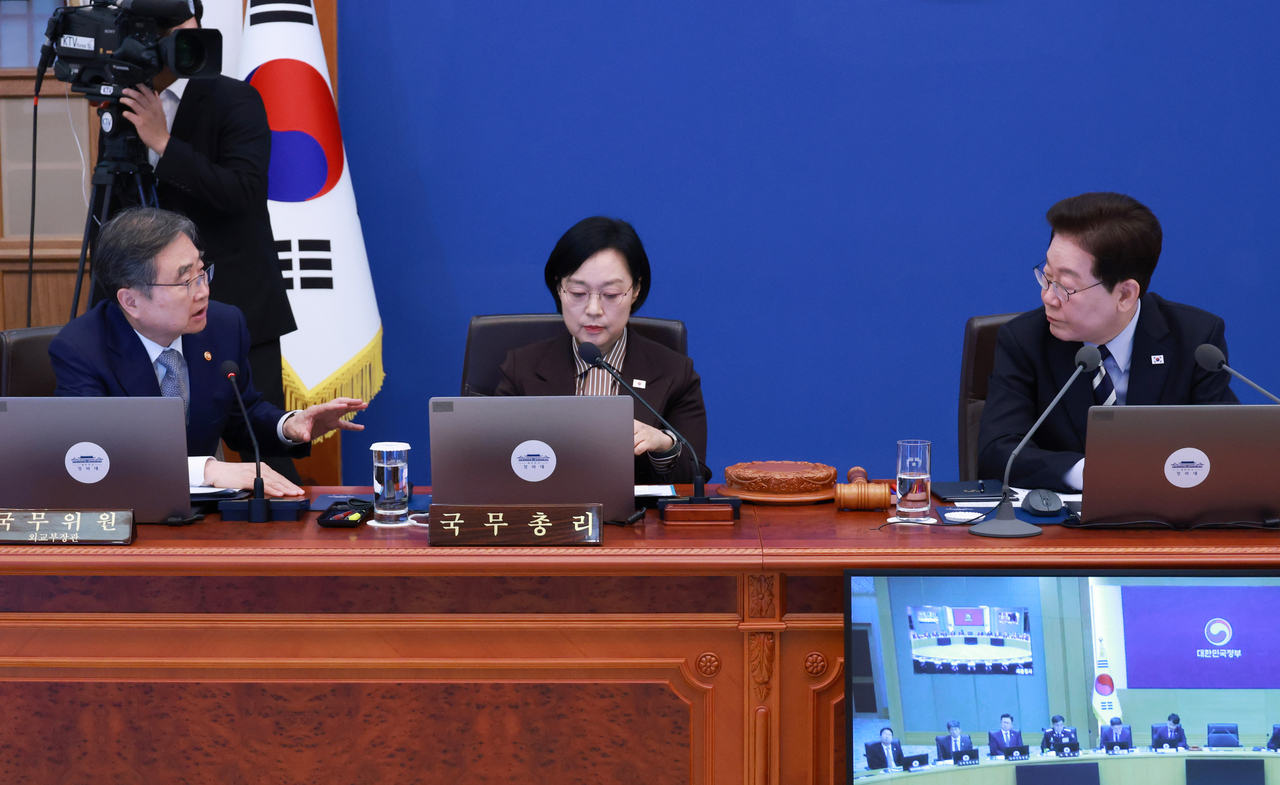
“There is one thing I would like to make clear: The Republic of Korea’s foreign policy is unequivocally one of pragmatic diplomacy centered on national interests,” Lee said in his opening remarks during a live-broadcast weekly Cabinet meeting.
“What matters most is the national interest of the Republic of Korea. The Republic of Korea is a sovereign, independent nation.”
Speaking at the Cabinet meeting, Lee did not directly address the difficulties in intelligence cooperation between Seoul and Washington, but his remarks highlighted his administration's broader diplomatic approach
Lee underlined that "we should avoid submissive or deferential attitudes in relations between countries."
"The relationship between the Republic of Korea and the US, and the alliance between our two countries, are extremely important. It can be described as a central pillar of our diplomacy. We should continue to strengthen and advance it," Lee said during the meeting.
"At the same time, managing relations with the major powers surrounding us remains important," Lee added, without naming specific countries.
Lee's reference to neighboring powers came amid reports from conservative media outlets and criticism from the main opposition People Power Party. Both have questioned whether National Intelligence Service Director Lee Jong-seok's perceived pro-China and pro-North Korea leanings have affected Washington's trust in Seoul's intelligence establishment.
A local newspaper on Tuesday also raised concerns about a trip to Russia earlier this year by the head of the Institute for National Security Strategy, a think tank affiliated with the NIS.
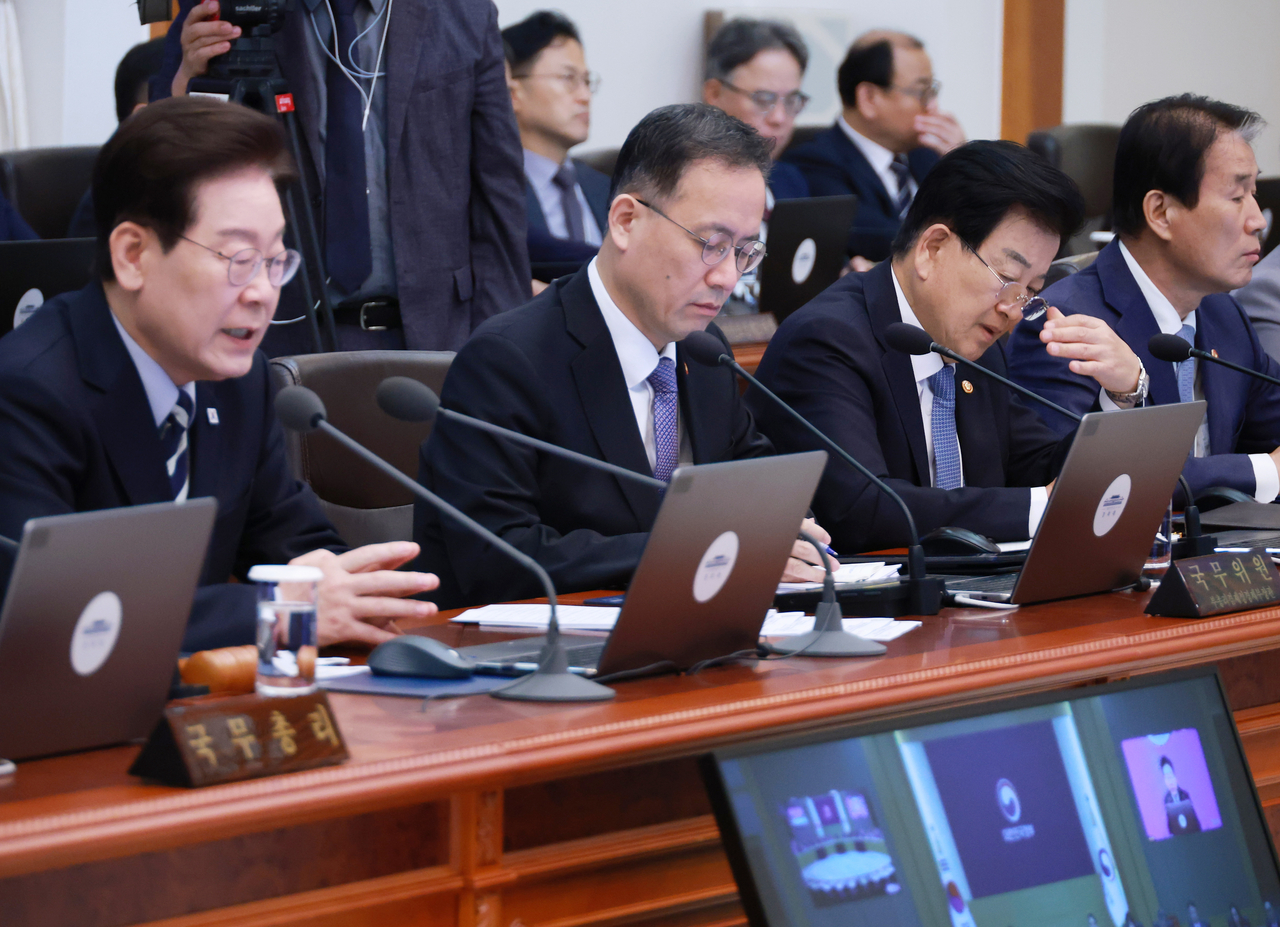
Lee tacitly acknowledges differences amid intelligence strains
Lee went on to note that disagreements between countries were inevitable and should not, in themselves, be regarded as evidence of a problem in their relationship.
"We need to minimize (disagreements) and ensure that they remain within manageable bounds," Lee said. "But we cannot take issue with the mere existence of disagreements. How can countries, each pursuing their own national interests, always see eye to eye?"
He maintained, however, that acknowledging differences did not mean accepting them without seeking common ground.
"We must constantly discuss, put forward our positions and make adjustments in pursuit of agreement," Lee said.
"When disagreements arise between countries, it is important to manage and resolve them through compromise, with a commitment to serving our government and the Republic of Korea."
Lee repeatedly highlighted his administration's commitment to seeking compromise with other countries without sacrificing South Korea's national interests.
As an example of efforts to defend South Korea's interests through difficult negotiations, Lee pointed to the government's investment negotiations with Washington, praising officials for securing what he described as a favorable outcome.
"If we are not careful, we could end up sacrificing our own national interests amid competition between countries to advance their respective interests," he said.
Lee's remarks came after South Korean Ambassador to the US Kang Kyung-wha said during a National Assembly audit of the embassy in Washington on Monday that difficulties in intelligence sharing were among the most challenging issues facing the allies. Kang acknowledged that US concerns over the matter had yet to be fully resolved.
The issue dates to March 6, when Unification Minister Chung Dong-young publicly identified Kusong as a North Korean uranium-enrichment site alongside Yongbyon and Kangson. Washington reportedly regarded the disclosure as involving classified intelligence shared with Seoul.
Kang said, however, that "communication between the two intelligence agencies has taken place, and progress has been made."
Russia ties key to Seoul's Arctic ambitions
Later in the Cabinet meeting, Lee underscored the importance of managing relations with Russia as South Korea seeks to develop an Arctic shipping route to Europe.
Much of the route passes through Russia's Exclusive Economic Zone or EEZ, making transit practically unfeasible without approval and cooperation from Russian authorities.
South Korea completed its first commercial round trip to Europe via the Arctic on Sunday. The government seeks to develop the route and turn the port of Busan into a global maritime hub.
"Managing relations with Russia is also important," Lee said. "International relations are constantly changing, and disputes and difficulties arise as we pursue our national interests. But ultimately, what matters is the Republic of Korea and its people."
Lee noted that the Arctic route could reduce the distance to Europe to two-thirds of the current route, significantly lowering shipping costs, while the period during which vessels can navigate the route continues to expand.
Lee also pointed to conflict in the Middle East that has disrupted passage through the Suez Canal. This has forced many Europe-bound vessels to bypass the Red Sea and take the longer route around South Africa's Cape of Good Hope.
Lee called developing the Arctic shipping route "a crucial task of great importance to our national interests," stressing that the Foreign Ministry would have a particularly important role.
"Even during a war, countries reach out to each other and talk. Diplomacy continues even during war, doesn't it?" Lee asked Foreign Minister Cho Hyun. "You engage in diplomacy even with enemy countries, don't you?"
After Cho answered in the affirmative, Lee said, "That is the principle of diplomacy. There are no permanent enemies and no permanent allies."
dagyumji@heraldcorp.com