President Lee Jae Myung on Wednesday marked the completion of South Korea’s decadeslong Aegis destroyer buildup by setting out the next steps for the country’s shipbuilding and defense industries.
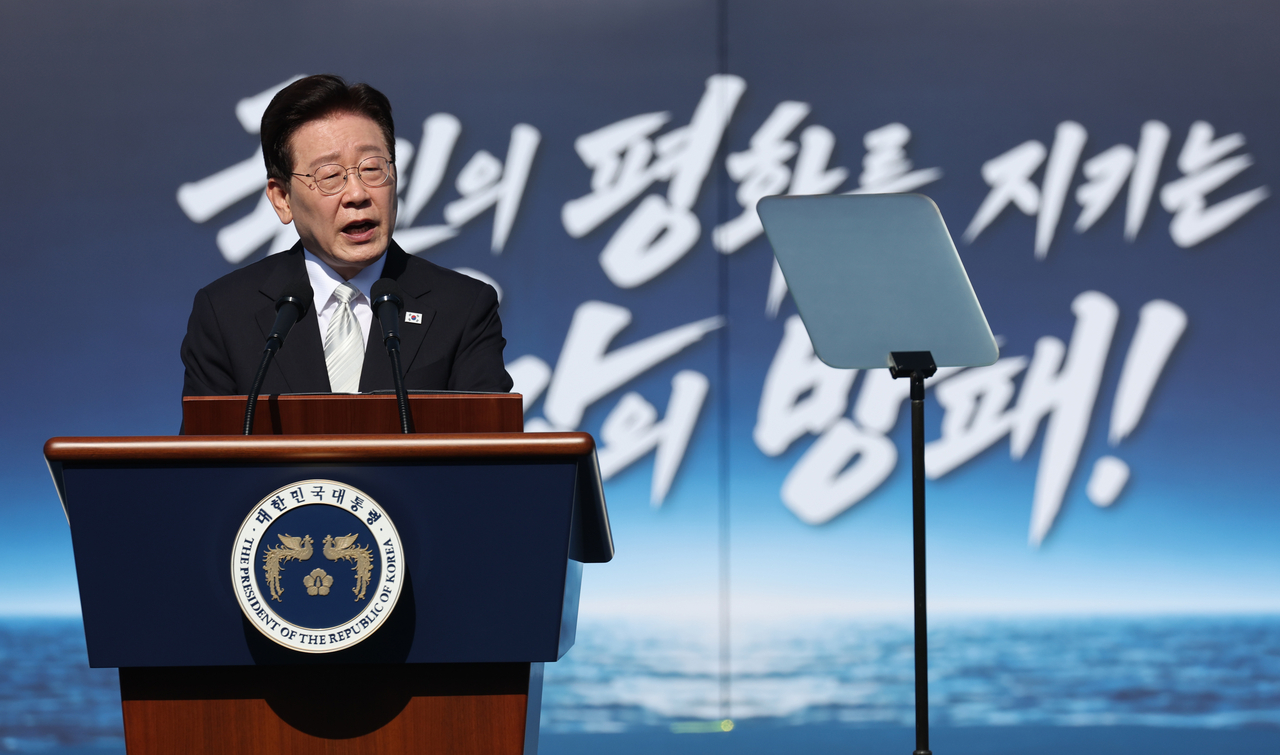
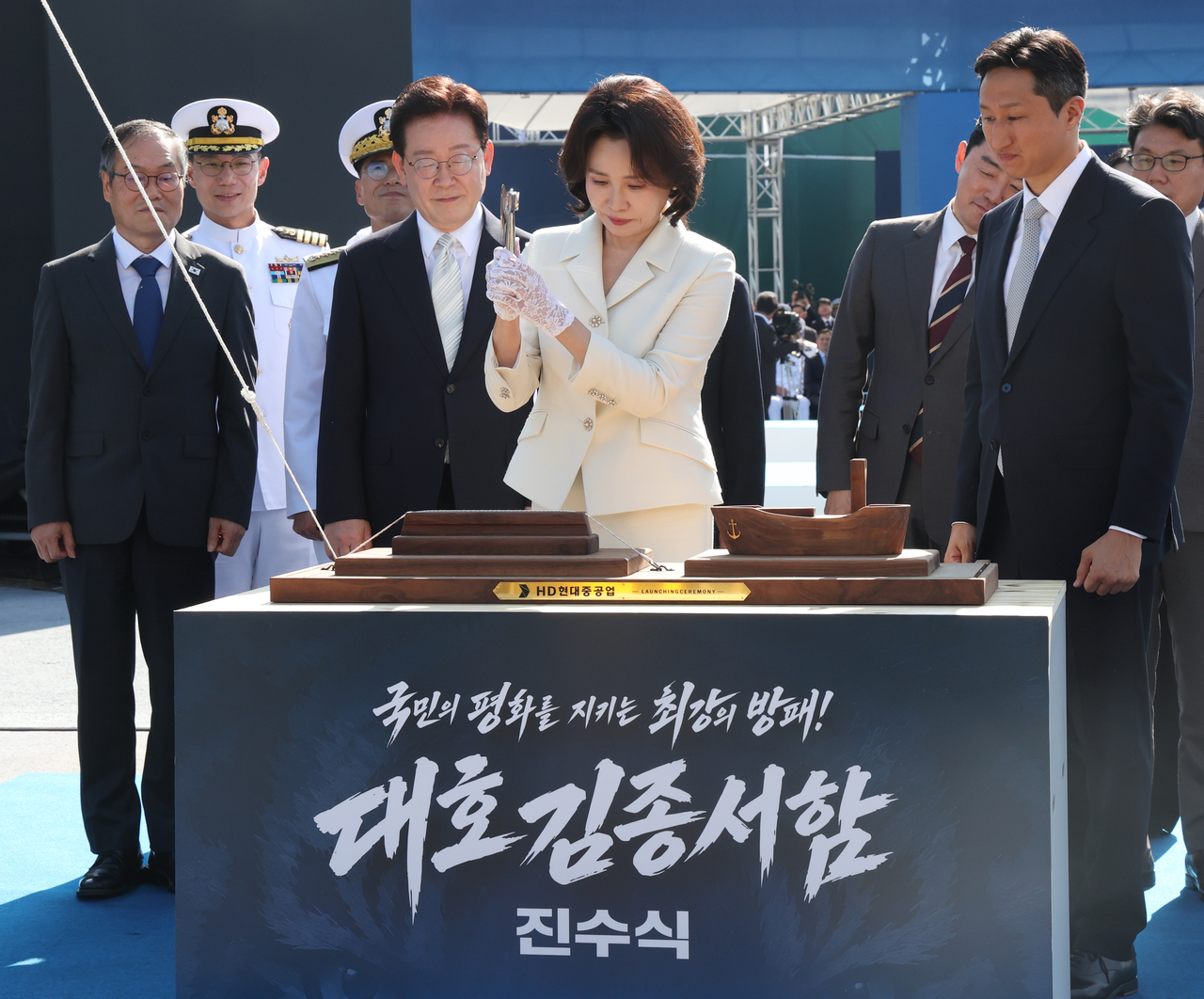
Presiding over the launch ceremony of the ROKS Daeho Kim Jong Seo in Ulsan, Lee also stressed the need to strengthen South Korea’s ability to defend itself with capabilities of its own across land, sea and air.
Built by HD Hyundai Heavy Industries, the vessel is the sixth and final ship in a 24-year program launched in 2002 to build six domestically developed Aegis destroyers, completing a fleet that strengthens South Korea’s defense self-reliance and sea-based response to missile threats.
In his congratulatory speech, Lee underlined that "self-reliant national defense is sovereignty."
"Security that depends on the strength of others is bound to be shaken when their circumstances or situation change. That is a reality we are already witnessing even at this very moment," Lee said. "Only when we are capable of defending ourselves can we determine our own future for ourselves."
Lee pledged to "press ahead to the end toward realizing self-reliant national defense with the resolve embodied in Daeho Kim Jong Seo."
The Daeho Kim Jong Seo is named after Kim Jong-seo, a 15th-century general who helped establish six frontier garrisons in Korea’s northern territories under King Sejong."Daeho," meaning "great tiger," was Kim’s sobriquet and was added to the ship’s name to evoke his reputation as a military commander associated with strong national defense.
The 8,200-ton Daeho Kim Jong Seo, the third Jeongjo the Great-class Aegis destroyer, measures 170 meters long and 21 meters wide. It is equipped with a domestically developed integrated sonar system and enhanced ballistic missile defense capabilities, including the ability to intercept incoming missiles, a capability not available on the older Sejong the Great-class destroyers.
Lee said the Navy would move to secure key capabilities for self-reliant defense, including nuclear-powered submarines and crewed-uncrewed fleet carriers.
Lee further touted South Korea’s shipbuilding capabilities, saying the industry had grown from humble beginnings to become a global leader capable of building everything from LNG carriers to Aegis destroyers.
"The government will not be satisfied with this. We will actively support our shipbuilding industry so that it can maintain its overwhelming technological edge and rise to even greater heights," Lee said. "We will also firmly establish the shipbuilding industry as a new growth engine that helps drive both the national economy and our regional economies."
Lee broadened the message to the defense industry, noting that an advanced warship such as the Daeho Kim Jong Seo depends not only on shipbuilding expertise, but also on sophisticated radar, weapons and software systems.
"The defense industry has not only safeguarded our security, but has now become a key driver of the Republic of Korea's economy," Lee said, using South Korea's official name.
Lee also said the government would "actively expand" opportunities for the military, academia and businesses to conduct joint research and investment, while streamlining complex procedures and expanding support so that new technologies can be fielded "as quickly as possible."
"The government will also actively support exports and overseas cooperation so that our defense technologies can reach global markets and become a new source of growth that supports the livelihoods of our people," Lee said.
The emphasis on shipbuilding comes as the industry takes on a growing role in South Korea-US economic and security cooperation under the Make American Shipbuilding Great Again initiative, which includes $150 billion in planned South Korean investment in the US shipbuilding sector.
dagyumji@heraldcorp.com