The ruling Democratic Party of Korea on Sunday launched a constitutional amendment task force after President Lee Jae Myung stated Friday that he had no intention of seeking a second term, regardless of changes to the Constitution.
In launching the task force, the Democratic Party called on the opposition to swiftly reach a consensus with it on the matter. The ruling party also set out a timeline for amending the constitution, under which a referendum would be held in the first half of next year.
But it is uncertain whether the parties can reach a consensus; the main opposition People Power Party vowed to resist all efforts for constitutional reform during Lee's term, which ends in 2030.
The opposition had claimed that Lee had failed to declare that a proposed amendment to ease a presidential term would not apply to himself, but Lee said he had no such plans during his news conference Friday.
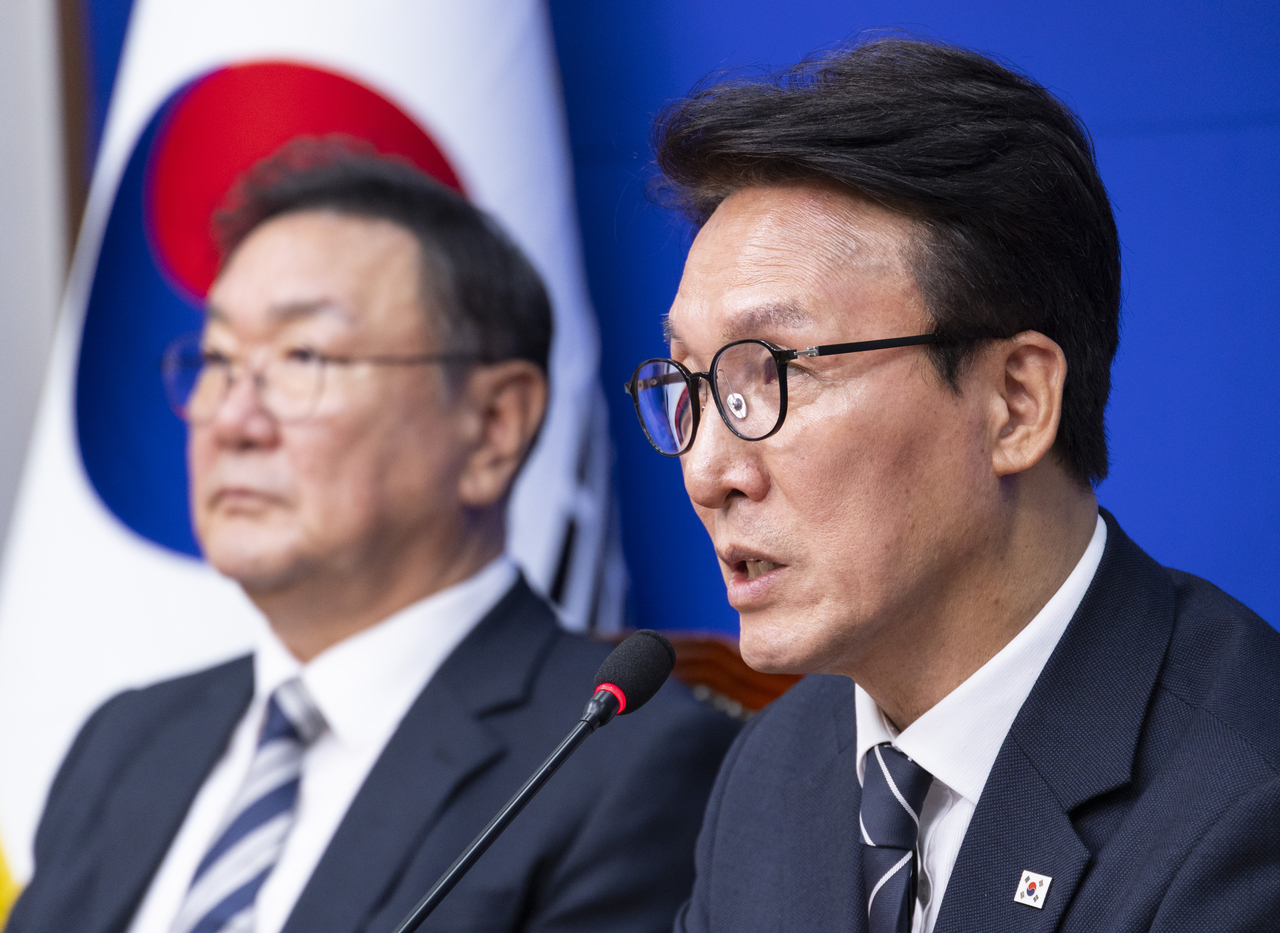
Democratic Party Chair Rep. Kim Min-seok urged the People Power Party to stop making groundless claims that Lee was seeking to extend his presidency. The current Constitution limits a presidency to a single five-year term, but the amendment considered by the Democratic Party would make it possible to serve two, four-year terms.
"The president ... has removed the concerns raised by the opposition party, which in fact never existed," Kim said.
"It was strange that (the opposition) repeatedly asked (the president) to declare that he would give up his intention to rerun, as if (their demand) implied there were some other motivations he was hiding," Kim said. "Instead of nitpicking, we should shift toward serious discussions on the constitutional amendment."
Kim suggested upholding the pro-democracy spirit displayed throughout contemporary Korean history by honoring the 1979 democratic protests in Busan and Masan, South Gyeongsang Province, as well as the 1980 Gwangju Democratic Uprising, in the Constitution's preamble.
In this vein, Kim called on the People Power Party to "remove forces who deny the spirit of the 1980 Gwangju Uprising," in an apparent reference to Rep. Lee Jin-sook of the People Power Party who was accused of hosting a far-right forum to disparage the Gwangju movement.
The amendment should also discuss a reform of the power structure "based on people's consensus."
Kim added the success of the constitutional amendment would pave the way for a Democratic Party win in the next presidential election.
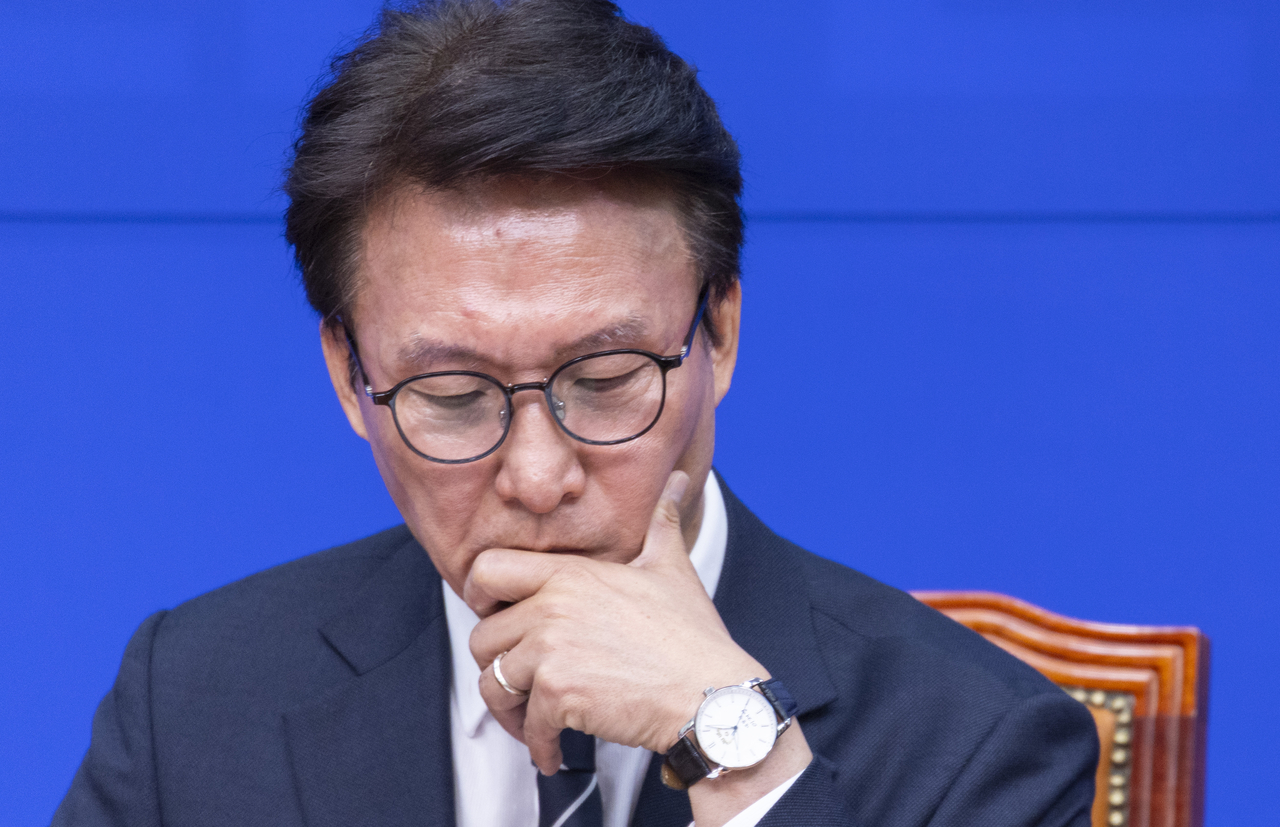
According to the ruling party, the party will come up with its own proposal for the constitutional amendment, and seek consensus from other parties by no later than April 2027. That proposal will be put to referendum by the end of the first half of 2027, in order to minimize the referendum's impact on the 2028 National Assembly election.
Five-term Democratic Party Rep. Kim Tae-nyeon, who leads the task force, said that it was desirable to put together all the agenda items raised ― including the power structure reform ― in next year's proposal.
In response to the Democratic Party's proposal, Rep. Choi Bo-yun, senior spokesperson of the People Power Party, told reporters Sunday that the party's stance on the matter remained unchanged.
"How many citizens would consider the issue of constitutional amendment resolved after (the president's) remarks? It is difficult to consider the matter settled with such highly ambiguous remarks," Choi said.
She also blamed the Democratic Party and the liberal president, who have a history of ramming through a range of contentious bills opposed by the People Power Party, for failing to reach bipartisan cooperation.
The Democratic Party's push to amend the Constitution for the first time since 1987 has been going on for some months, but has failed to gain traction due to opposition from the People Power Party
The opposition party claims that a constitutional amendment would lay the foundations for Lee seeking to extend his term as president. The conservatives have called on Lee to clearly state that any changes to the Constitution concerning presidential terms would not apply to himself.
Until Friday, Lee had refrained from making an explicit statement on the matter.
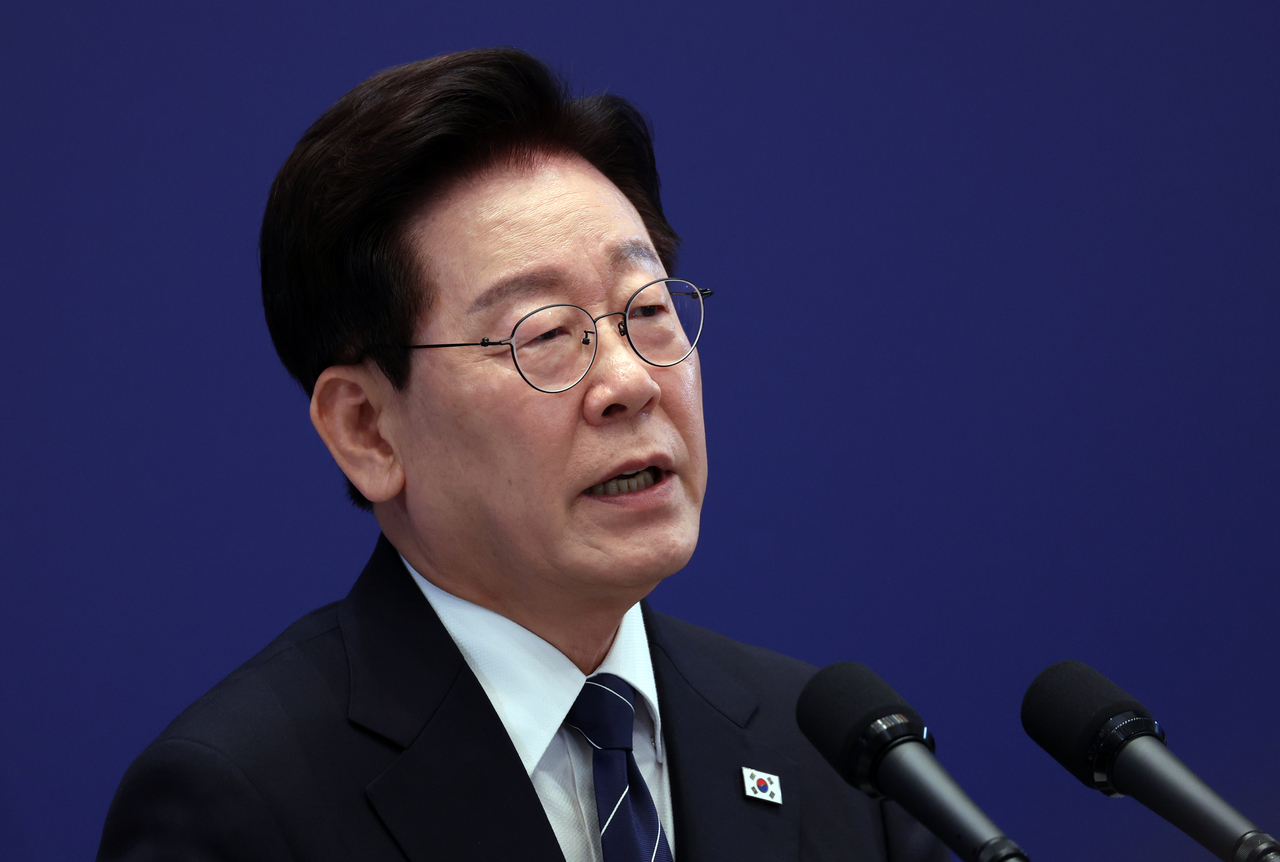
Lee then said that, if he pledges not to seek a second term, he would fall prey to a political maneuver intended to frame the situation as if he had been contemplating and later abandoning his intention to rerun.
"Nevertheless, I wish to state clearly once again that I absolutely have no intention to seek a second term," Lee said Friday.
Asked about the blueprint for the amendment, Lee said the president was not the right person to lay out the blueprint.
"Fundamentally, a constitutional amendment is a matter for the National Assembly and the people, not the president," Lee said. "I will actively cooperate once the National Assembly proceeds through consultations between ruling and opposition parties and gathers public opinion."
Rep. Jang Dong-hyeok, chair of the People Power Party, responded Friday that Lee had still stopped short of declaring that he would not run for president again.
"(The president) would eventually bring up a 'decision by the people' later on (to provide a ground to rerun), although he claimed he has no intention of seeking to run again. Ultimately, he still has not given up on the dream of a consecutive term," Jang said.
In South Korea, an amendment requires at least half of voters in favor in a referendum with at least half of all eligible South Korean voters participating. A referendum requires at least two-thirds of all lawmakers' votes in the National Assembly, which follows the public notice of the proposal from either the National Assembly or the president.
consnow@heraldcorp.com