Murata cuts mainstream output as customers rush to lock in long-term deals
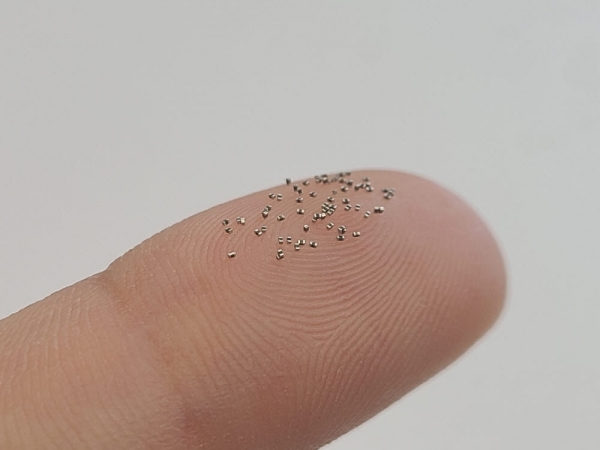
The artificial intelligence boom is tightening supplies of multilayer ceramic capacitors, as leading manufacturers shift production toward premium server components and away from mainstream parts used across consumer electronics.
The reallocation is creating an unusual imbalance: MLCC prices are rising even as demand for smartphones, PCs and other traditional electronics remains sluggish. Samsung Electro-Mechanics has begun raising prices, while customers are increasingly seeking long-term contracts to secure supply.
MLCCs are tiny components that regulate electrical current in electronic devices. AI servers require large numbers of higher-performance units capable of operating reliably under demanding conditions.
Murata Manufacturing, the world’s largest MLCC producer, has notified customers that it will discontinue selected part numbers across nine product series, industry sources said Thursday.
The affected products include general-purpose MLCCs used in consumer electronics and industrial equipment, as well as some automotive components. Customers can place final orders until March 2028, with shipments ending a year later.
Murata has described the decision as part of a portfolio review intended to free capacity for other products. Although the Japanese company has not said the capacity will be redirected specifically to AI servers, industry officials see the move as part of a broader shift toward higher-margin AI components.
“Murata and Samsung Electro-Mechanics are ultimately doing the same thing — making the products that generate better returns,” said an industry source familiar with Samsung Electro-Mechanics’ operations.
“It is similar to Samsung Electronics and SK hynix prioritizing high-bandwidth memory. AI servers are where demand is strongest, so suppliers want to put more capacity there.”
Market researcher TrendForce said Japanese and Korean manufacturers have been reallocating capacity from consumer-grade X5R MLCCs to higher-end X6S and X7R products used in AI applications.
The shift has pushed orders above suppliers’ capacity to fill them. In June, book-to-bill ratios reached 1.30 at Murata, 1.31 at Samsung Electro-Mechanics and 1.25 at Taiyo Yuden — their highest levels since the COVID-19 pandemic. A ratio above 1 indicates that new orders are outpacing shipments.
TrendForce described the market as a structural mismatch: demand for conventional electronics remains weak, but supplies of mainstream MLCCs are shrinking because top manufacturers are devoting more production lines to AI-related components.
“When leading makers move toward high-value products, output of general-purpose MLCCs inevitably falls,” another industry source said. “Those components are still needed in almost every electronic device, so lower supply leads to higher prices.”
TrendForce expects fourth-quarter prices for consumer-grade X5R products supplied to original equipment and design manufacturers to rise by an average of 25 percent to 30 percent. Prices for premium X6S products used in AI servers are projected to climb 10 percent to 20 percent.
The tighter market is also changing purchasing behavior.
“Customers are now coming to us asking for MLCCs,” the source familiar with Samsung Electro-Mechanics said. “Previously, they bought what they needed when they needed it. Now they are signing long-term agreements to guarantee annual supply.”
Prices are gradually increasing as customers compete to secure volume, the source added.
Murata’s product cuts, however, are unlikely to translate directly into additional orders for Samsung Electro-Mechanics because the discontinued parts are not among the product lines the Korean company is seeking to expand.
“The immediate benefit is limited,” the source said. “But when the world’s largest supplier makes this kind of move, it shows how much AI is reshaping the MLCC market.”
For Samsung Electro-Mechanics, the larger opportunity lies in premium AI-server products.
Earlier this month, the company signed a 1.07 trillion won ($774 million) contract to supply MLCCs for AI servers to a global customer throughout 2027 — its largest MLCC deal to date. The company now has long-term supply agreements with more than 10 global customers.
yeeun@heraldcorp.com