Tobias Meyer eyes deeper ties with Korean chipmakers and Hyundai as AI demand reshapes logistics
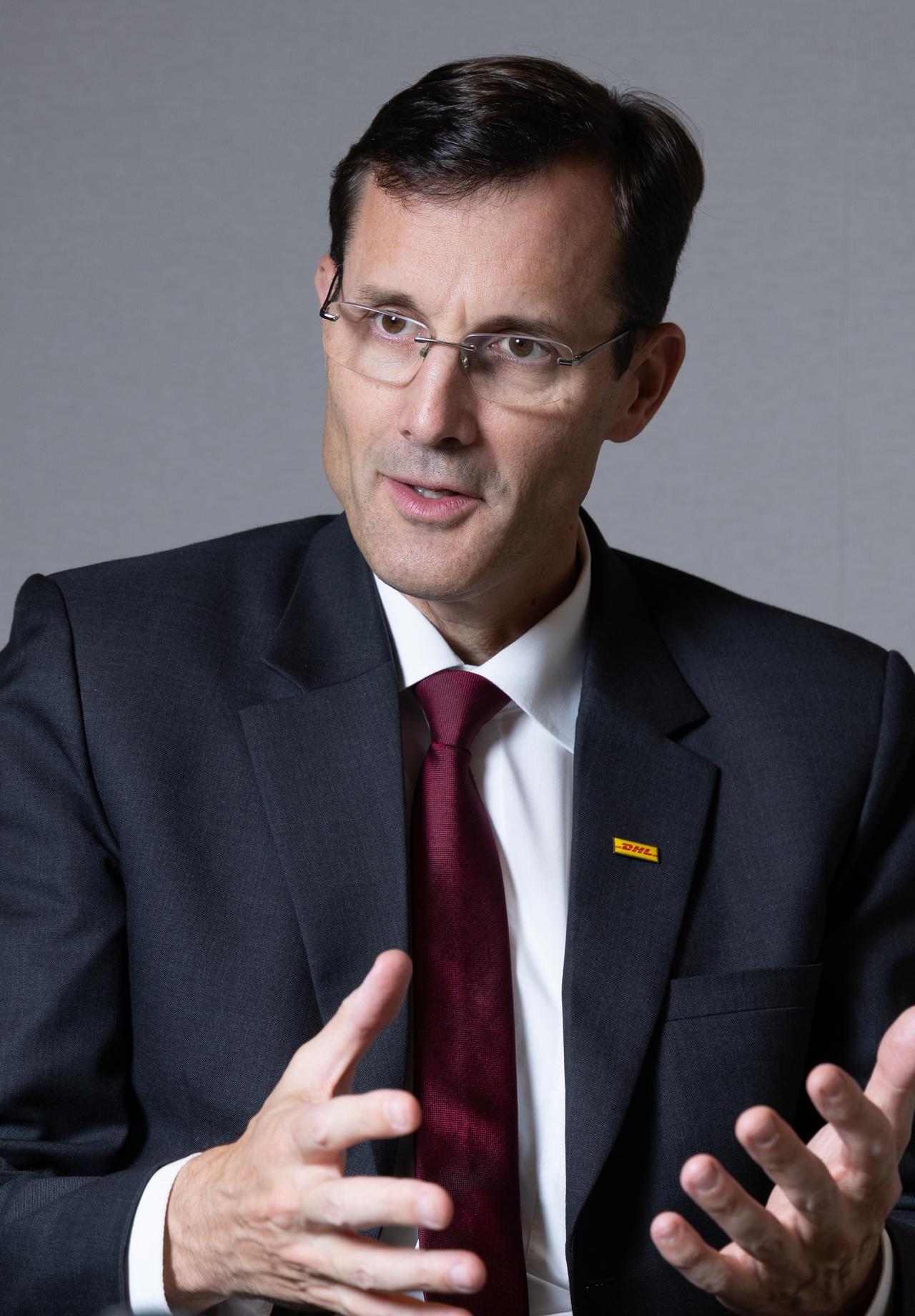
South Korea is emerging as a potential winner in the global supply chain shake-up, as demand for AI chips and efforts to reduce dependence on China reshape trade, according to DHL Group CEO Tobias Meyer.
Despite escalating tariffs and geopolitical tensions, Meyer said global trade continues to expand, with Korea's semiconductor strength putting it in a particularly favorable position.
"Korea is one of our Geographic Tailwind countries," Meyer said in an interview on the sidelines of the 2026 Asia-Pacific Conference of German Business in Seoul on Saturday, referring to markets DHL expects to benefit structurally as global manufacturers diversify their supply chains.
Korea's AI chip advantage
At the center of Korea's opportunity is its semiconductor industry, led by Samsung Electronics and SK hynix.
As AI investment drives demand for advanced chips and data centers, Meyer sees growing opportunities for DHL to expand beyond express delivery into more complex industrial logistics.
DHL already handles time-sensitive wafer samples and emergency spare parts in Korea. But its capabilities extend to inventory management, bulk air freight, advanced packaging transport and data center infrastructure logistics — areas where semiconductor manufacturers demand exceptional speed, security and precision.
The company also sees opportunities in batteries, electric vehicles and renewable energy.
Meyer said DHL wants to deepen its relationships with Korean industrial conglomerates, many of which have traditionally managed much of their logistics internally.
"Korean industrial companies have so far handled a lot of logistics in-house," he said. "As economies mature and companies focus on their core competencies and capital efficiency, they decide to outsource logistics."
"That is what we hope will increasingly happen in Korea — that we become a trusted partner also to large industrials that are vital to the Korean economy."
Hyundai ties go beyond delivery
DHL's growing relationship with Hyundai Motor Group offers another example of how logistics is evolving.
During his Seoul visit, Meyer met Hyundai Motor Group Executive Chairman Chung Euisun at a Korea-Germany state dinner Thursday, where robotics was among the topics discussed.
DHL has been deploying Stretch, an autonomous warehouse robot developed by Hyundai-owned Boston Dynamics, to automate the physically demanding task of unloading cartons from shipping containers.
"Our cooperation with Boston Dynamics has demonstrated that the Stretch robot is capable of handling standardized cartons efficiently. That is a major step forward," Meyer said.
The next challenge is handling more complicated cargo.
"Now we are working together to develop capabilities to handle mixed parcel streams — polybags, irregularly shaped items and objects that are more difficult for computer vision to recognize and grab."
The partnership also extends to electric vehicles. DHL, which operates some 60,000 electric delivery vehicles worldwide, is deploying Kia's purpose-built vehicles, including the PV5 electric van, in Korea as it works toward a fully electric local delivery fleet by 2030.
Asked about possible expansion of the Hyundai partnership in India, Meyer disclosed no specific plans but emphasized the country's growing importance as a manufacturing and logistics hub.
India is already DHL's largest Asia-Pacific market by warehouse footprint, he said.
Diversify, don't retreat
For Korean exporters navigating US tariffs, European regulations and geopolitical tensions with China, Meyer's advice is straightforward: Build flexibility into supply chains rather than betting everything on one location.
"My advice is to create optionality. Do not depend on a single supplier or a single mega-factory. Diversify your supply chain across multiple geographies," he said.
Operating factories across several countries may be more expensive, but Meyer argued that the added resilience is increasingly worth the cost as regulatory uncertainty becomes a permanent feature of global business.
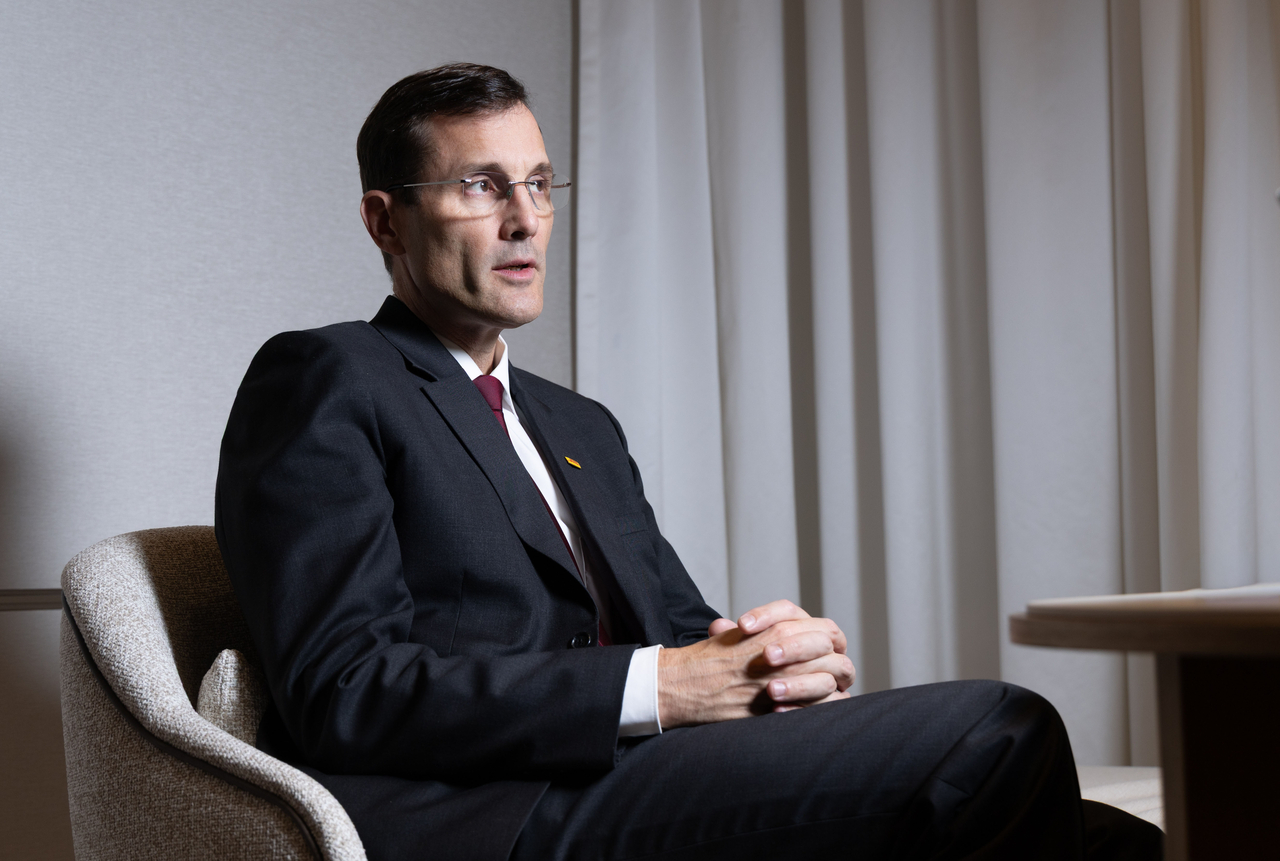
He also rejected the notion that protectionism is bringing globalization to an end.
"Fortunately, the world is not trading less. Trade expanded through 2025 and 2026," he said.
High-tech industries, in particular, remain dependent on international supply chains because the scale and specialization they require cannot easily be replicated within national borders.
"High-tech products require immense economies of scale that no single country can replicate domestically," Meyer said.
"As long as Korean firms build indispensable products with relentless quality, global trade will find them."
hyejin2@heraldcorp.com