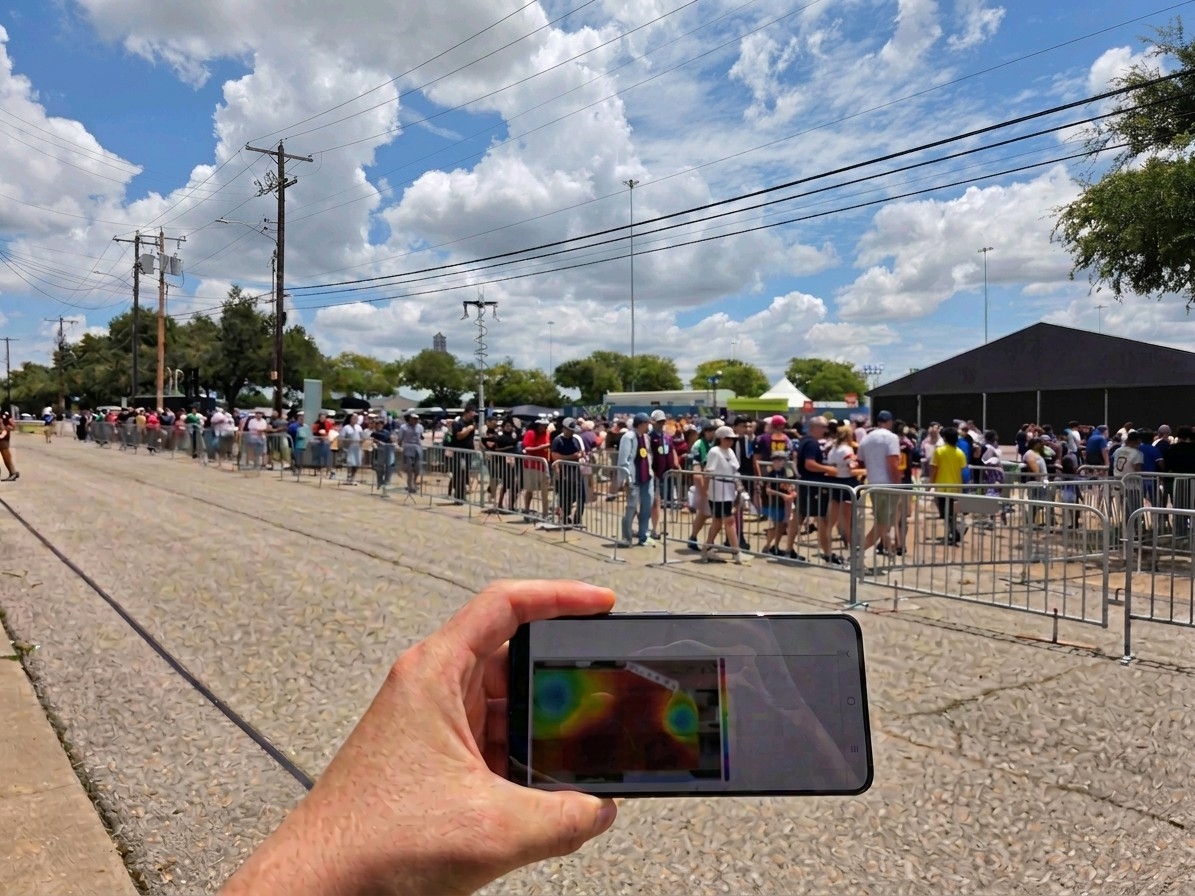
Samsung Electronics and Verizon have tested technology that turns mobile networks into real-time crowd sensors, demonstrating a potential 6G application in a live environment.
The companies deployed artificial intelligence-powered integrated sensing and communication, or ISAC, at a major international soccer fan event in Dallas in July. Samsung said it was the industry’s first AI-based ISAC field trial conducted over a virtualized radio access network.
ISAC is being developed as a key component of 6G, the next generation of mobile communications. The technology allows network infrastructure not only to transmit data, but also to detect movement and changes in its surroundings.
During the trial, a radio unit installed on Verizon’s portable Cell-On-Wheels network captured variations in signals transmitted by a commercial 5G device. Samsung’s edge-AI platform analyzed the data to estimate crowd density and visualize changes on a near-real-time heat map.
By identifying congested areas through wireless signals, the system could help event operators manage crowd movement, guide visitors toward less crowded facilities and deploy personnel and other resources more efficiently. Samsung said it could also detect potentially dangerous overcrowding and support public safety.
Because ISAC uses variations in existing wireless signals, it can add sensing capabilities to communications infrastructure without requiring separate cameras or dedicated sensing equipment.
Samsung carried out the trial using its commercial AI-powered virtualized radio access network and virtualized core network. These were integrated with an ISAC application through Network in a Server, the company’s edge-AI platform.
Known as NIS, the platform combines network functions with computing resources, including CPUs and graphics processing units, on a single server. This allows telecom operators to introduce new services without replacing existing network equipment or installing dedicated hardware.
“This successful ISAC trial underscores how Verizon’s early adoption of a software-driven, AI-powered vRAN laid a solid foundation and positioned the company at the forefront of the 6G journey,” said Seol Ji-yun, executive vice president and head of product strategy at Samsung Electronics’ Networks Business.
yejinlim@heraldcorp.com











