Australian ambassador, senior lawmaker and other officials stress power of language and cross-cultural communication at 55th Korea Herald English Speech Contest
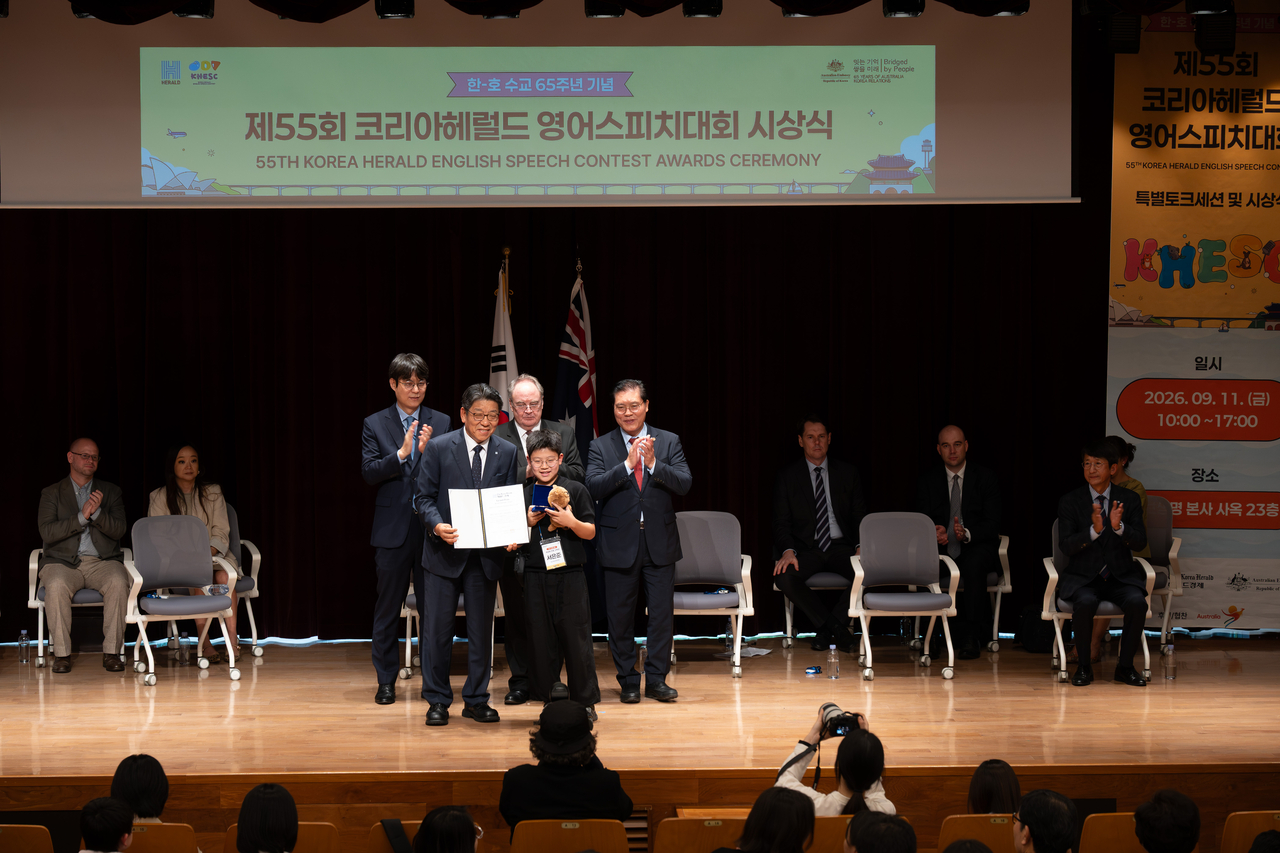
Four speakers at the 55th Korea Herald English Speech Contest on Friday struck a common theme in their congratulatory remarks: Communication across languages and cultures can connect people and nations, and the young contestants could one day help write the next chapter of Korea-Australia relations.
The event, co-hosted by Herald Media Group, publisher of The Korea Herald, and the Australian Embassy in Seoul, brought together about 600 kindergarten and elementary school students with the aim of fostering English proficiency, global communication skills and leadership.
Fifty students and five institutions were recognized for their outstanding performances.
Ahead of the awards ceremony, congratulatory remarks were delivered by People Power Party Rep. Song Seog-jun, chair of the National Assembly's Foreign Affairs and Unification Committee; Australian Ambassador to South Korea Jeffrey Robinson; Herald Media Group CEO Choi Jin-young; and Park Sung-il, deputy director-general for Asia and Pacific affairs at the Foreign Ministry.
Next chapter of ties rests with young people: Australian ambassador
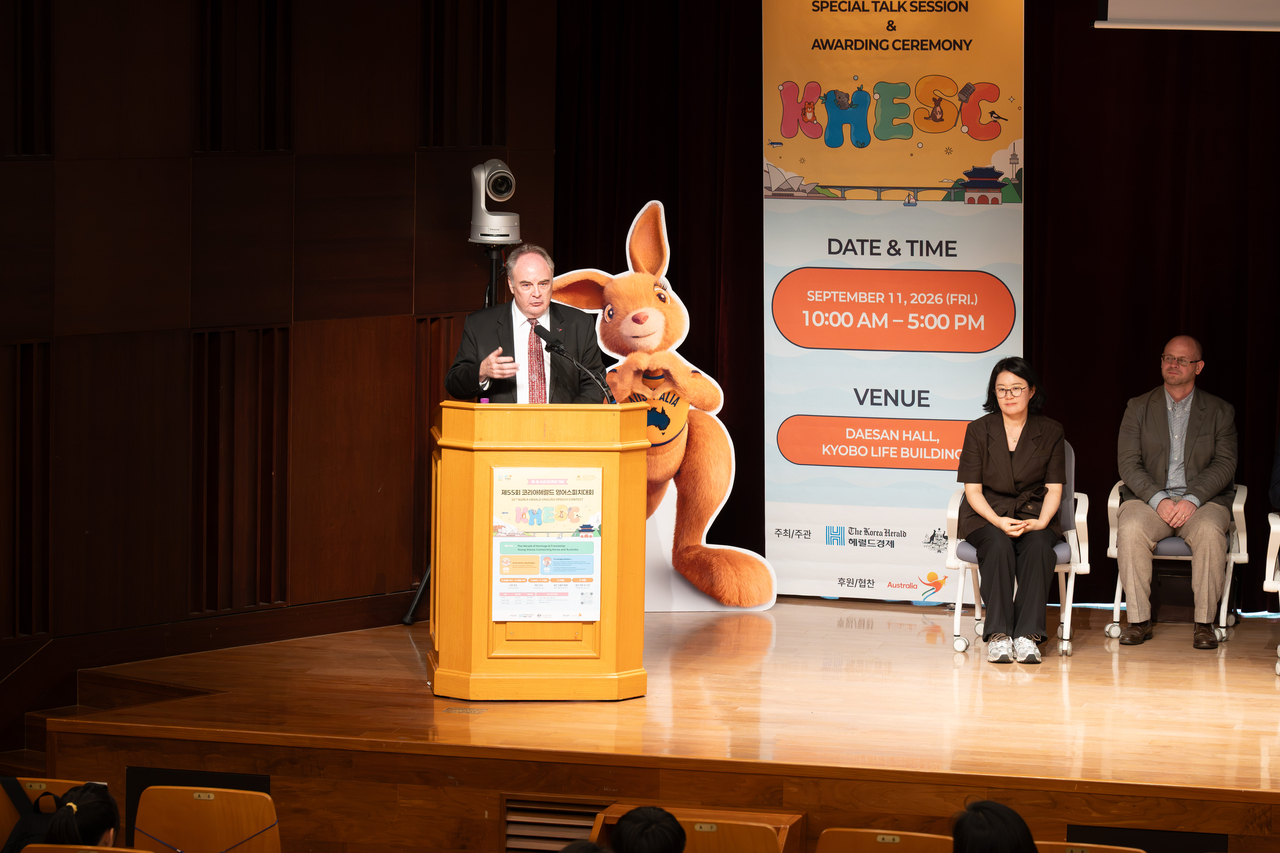
Australian Ambassador to South Korea Jeffrey Robinson said young people could play an important role in shaping the next chapter of Korea-Australia relations.
Robinson highlighted the significance of this year's event, held as Korea and Australia mark the 65th anniversary of diplomatic relations and five years since elevating their ties to a comprehensive strategic partnership.
"These milestones are a testament to the remarkable journey our nations have shared and to the strength of our cooperation across a wide range of fields, from trade and investment to defense, education, science and, of course, people-to-people exchanges," said Robinson.
He was particularly impressed by the creativity and passion of contestants, who shared their visions for how relations between the two countries could develop over the next 65 years. Their enthusiasm, he said, gave him confidence in the partnership's future.
"Among us today may be future diplomats, business leaders, policymakers, innovators and educators who will help shape Korea's future and further strengthen the ties between our two nations," Robinson said.
He also emphasized the value of the skills students developed through preparing for and participating in the competition.
"The skills you have developed through this experience, particularly the ability to communicate ideas clearly and persuasively across cultures, will serve you well throughout your lives and future careers," he said.
Cross-cultural communication key to future leadership: senior lawmaker
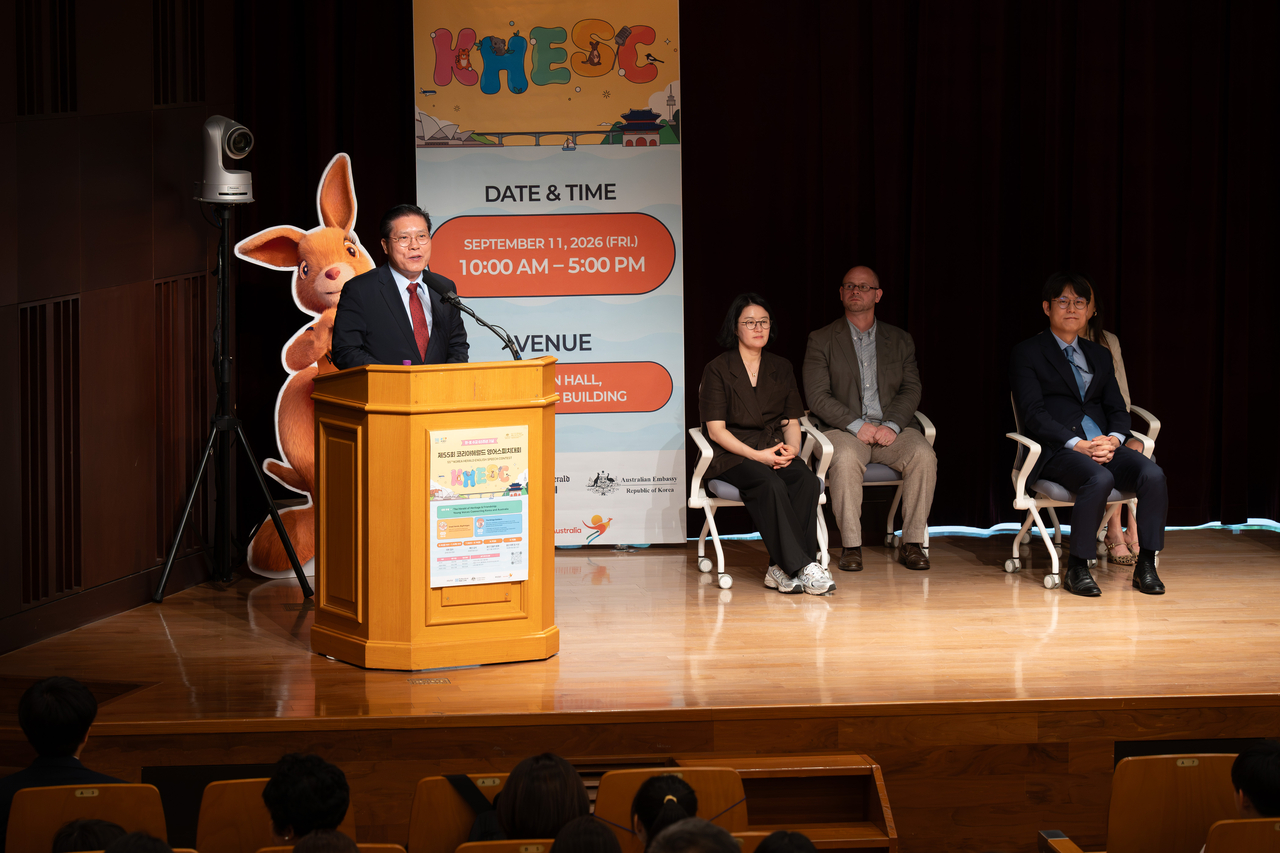
People Power Party Rep. Song Seog-jun urged contestants to develop their ability to communicate across cultures, saying the skill could help prepare them to become future leaders.
He told the kindergarten and elementary school students that diplomacy begins with understanding people from different countries and building relationships.
"Australia and Korea have long built a relationship based on cooperation, but in this emerging global order, I am confident that we will come together to play a central role rather than remain on the periphery," Song said.
"I hope you, too, will become central players in this new world order."
Seeking to make diplomacy more accessible to the young audience, Song said the concept need not be seen as something confined to governments or formal negotiations.
"The word 'diplomacy' sounds difficult, but it does not always have to be complicated," Song said. "When people from different countries talk to each other, learn about each other's cultures and become good friends, that is also an important part of diplomacy."
Speaking in English, he told the contestants that learning the language could give them more than linguistic proficiency.
"By sharing your ideas, understanding different cultures and values, and communicating with the world, you are developing the skills you'll need as future global leaders," he said.
Song described Korea and Australia as "good friends" that remain close at heart despite their geographic distance, noting that the two countries share values including freedom and democracy.
Young speakers take first steps as ‘child diplomats’: Foreign Ministry official
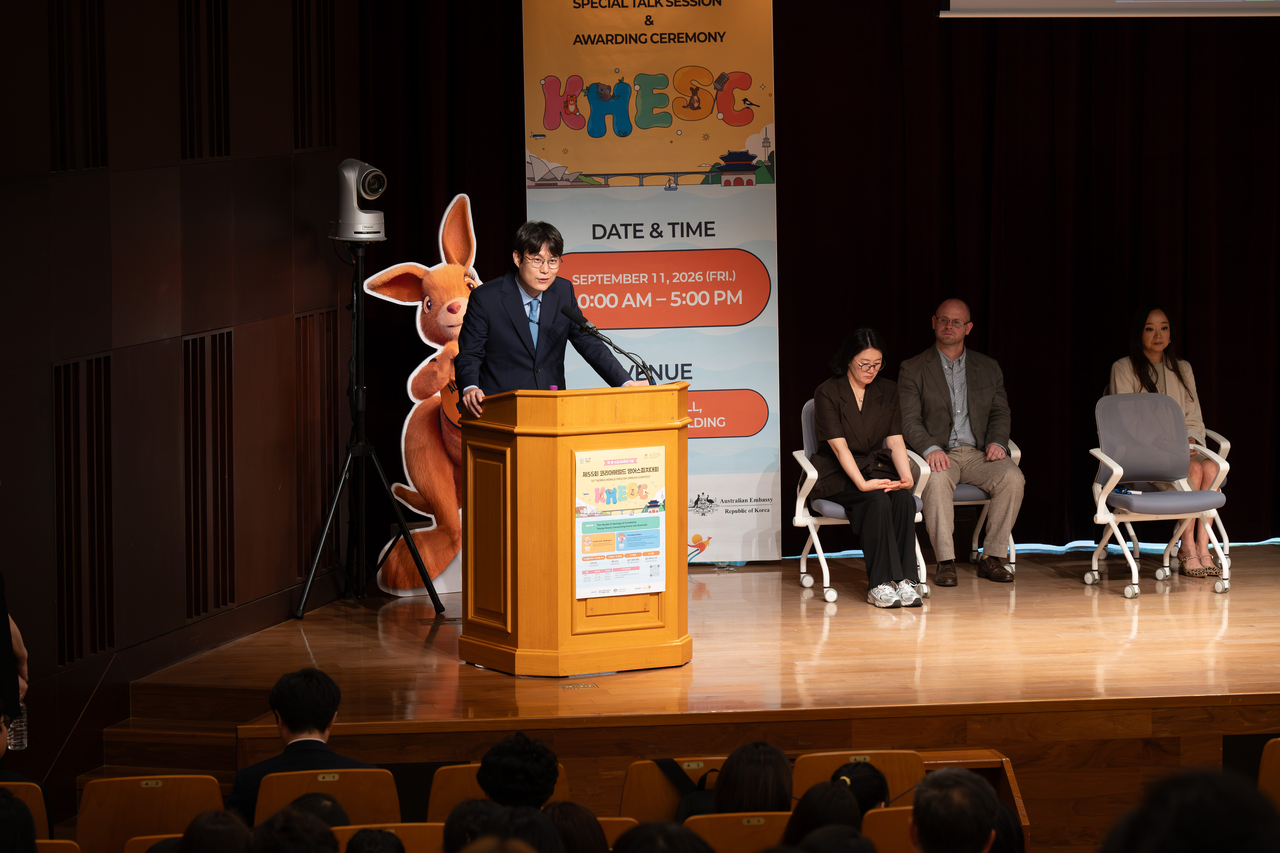
Diplomacy begins with everyday efforts to understand others, a senior Foreign Ministry official told young contestants at the contest.
Park Sung-il, deputy director-general for Asia and Pacific affairs at the Foreign Ministry, said the students’ speeches about Australia and the future of bilateral relations were an opportunity to practice diplomacy.
“What you did today is very special,” Park told the young audience.
“Thinking again about Australia, imagining the future of Korea-Australia relations and speaking confidently about how you think those relations should develop are all important. In that sense, you could say that you became ‘child diplomats’ today.”
Park said diplomacy is often portrayed in the media as something conducted by heads of state through high-level meetings. But diplomacy does not begin only with formal summits and negotiations. Everyday communication between people from different backgrounds also lays the groundwork for diplomacy, he said.
It starts with talking to others, being curious about what they think and learning to understand different cultures, he said.
“It’s just like in relationships between people,” Park said. “Making friends is the first step in diplomacy.”
Park drew a parallel with Korea and Australia, which have developed a close relationship since establishing diplomatic ties in 1961. Many Koreans travel to Australia to study, visit or live, while Australians have increasingly taken an interest in Korean culture, food and music, he noted.
Park encouraged the contestants to maintain their curiosity about other countries and cultures as they grow older.
"I am sure that some of you will go on to become diplomats, journalists, business people and artists who connect Korea with other countries in your respective fields," he said.
Language breaks barriers, expands possibility: Herald Media CEO
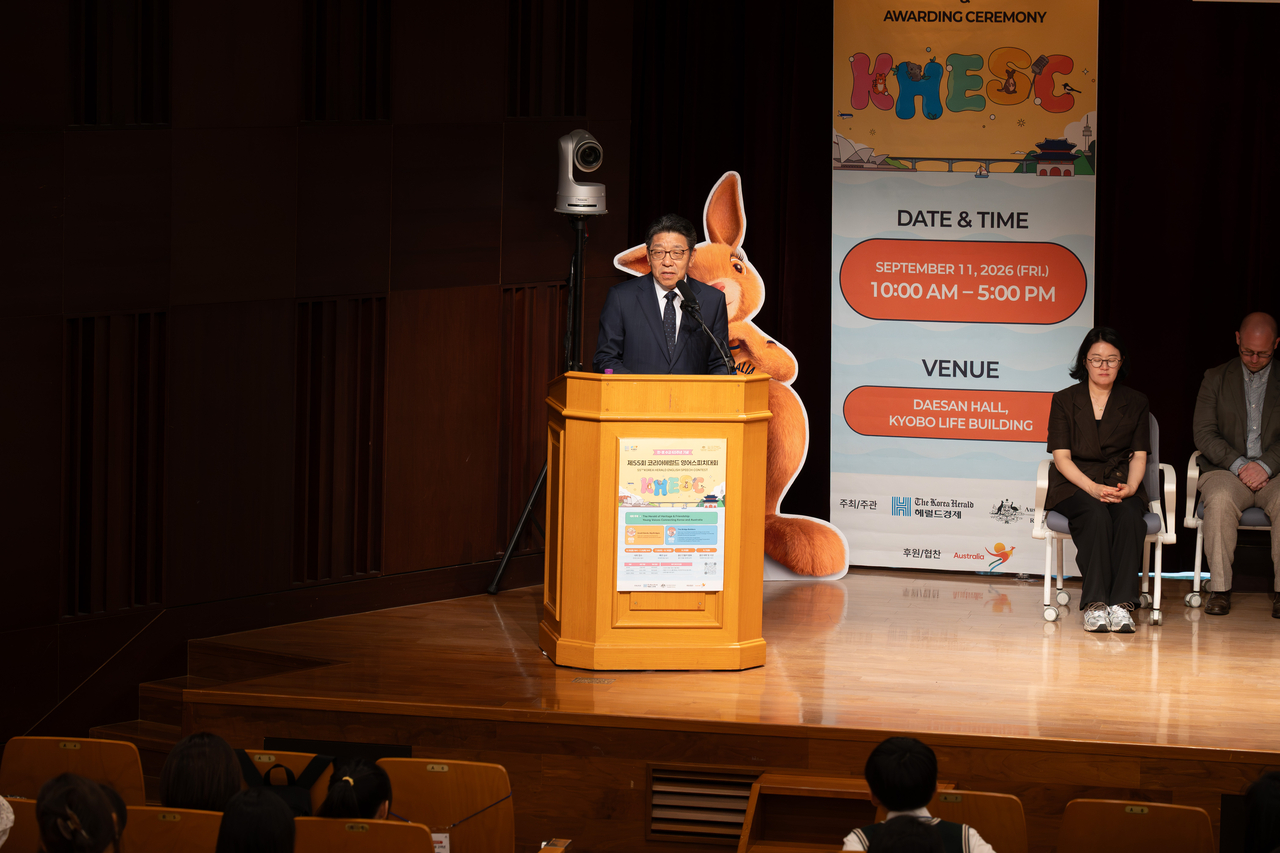
Herald Media Group CEO Choi Jin-young focused his remarks on the importance of language and the opportunities that learning languages can unlock.
Choi cited German philosopher Martin Heidegger's famous phrase, "Language is the house of being."
"Ultimately, language is a tool created by humans, but when something is given a name through language, it begins to take shape and meaning," Choi said.
"If you overcome linguistic barriers, there is no limit to what you can achieve," he added, likening language skill development to unlocking one's latent potential.
Choi also offered words of encouragement to students who did not receive prizes Friday, emphasizing the importance of perseverance.
He recalled seeing young people return after falling short in previous competitions, having made remarkable progress over the course of a year. He encouraged those who did not win Friday not to view the result as a setback, but as an experience that could motivate them to improve and try again.
"Don't think of it as something that should leave you hurt," Choi said. "Think of it as a valuable experience and an opportunity to grow, and find the courage to take on a new challenge."
seungku99@heraldcorp.com