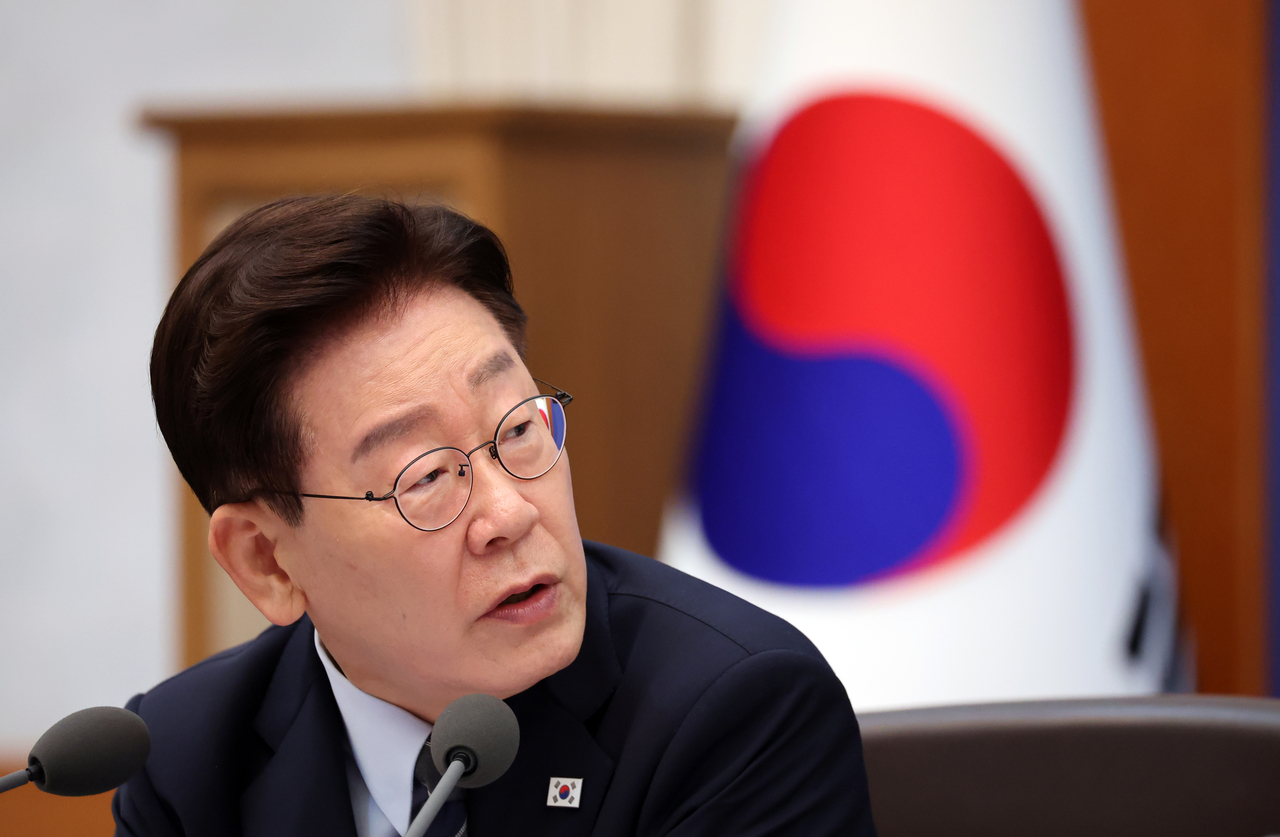
President Lee Jae Myung on Monday began a series of bilateral summits with the leaders of five Central Asian countries, starting with Uzbekistan, ahead of the inaugural Korea-Central Asia Summit.
The meetings with Kazakhstan, Kyrgyzstan, Tajikistan, Turkmenistan and Uzbekistan are part of Seoul’s broader push to deepen political and economic ties with Central Asia as the region’s strategic importance grows amid an increasingly uncertain international environment.
Lee’s summit Monday afternoon with Uzbek President Shavkat Mirziyoyev, on a state visit to South Korea, aimed to further develop the countries' "Special Strategic Partnership based on friendship and mutual trust," according to Cheong Wa Dae.
Uzbekistan is the only of the five Central Asian countries to have established a special strategic partnership with South Korea.
The two leaders were expected to seek to "further broaden the scope of cooperation in areas including transportation infrastructure, healthcare, responses to the climate crisis, critical mineral supply chains, artificial intelligence and digital transformation, and defense, while developing new engines of growth" for both countries, according to Cheong Wa Dae.
Central Asia’s most populous country, Uzbekistan is also an emerging market and a key partner for Seoul in transportation and infrastructure development.
The summit was expected to result in the exchange of 13 agreements and memorandums of understanding between government ministries and agencies in the presence of the two leaders, senior presidential spokesperson Kang Yu-jung further explained Monday in a press statement.
A state dinner attended by about 50 officials and other figures from both countries was set to follow later in the day.
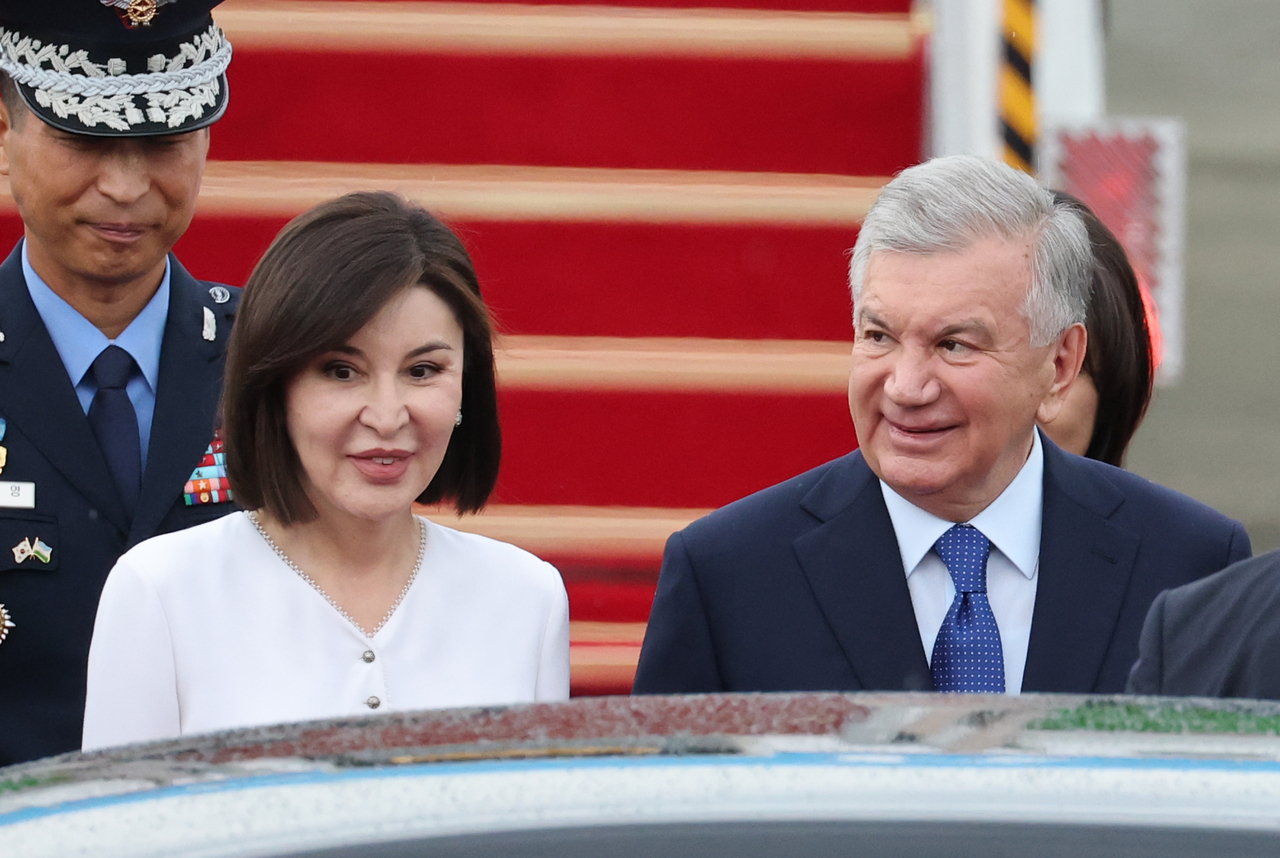
TThe meeting with Mirziyoyev comes ahead of Wednesday’s inaugural Korea-Central Asia Summit hosted by the South Korean government, marking its first multilateral summit with the five Central Asian countries.
"Through the summit, President Lee plans to elevate strategic cooperation with Central Asia, a region of growing strategic importance, to the leaders’ level," Kang said Monday.
Lee also aims to "lay the groundwork for mutually beneficial growth by linking the region’s development needs with Korea’s strategy to expand its supply chains and markets," Kang added.
The summit will pave the way to elevate the Korea-Central Asia Cooperation Forum — held annually at the ministerial level since 2007 — to an inaugural Korea-Central Asia Summit involving the leaders of all five regional states.
As a key outcome of the summit, South Korea and the five Central Asian countries plan to establish a sustainable framework for multilateral cooperation by setting out a mid- to long-term vision for cooperation by adopting the Seoul Declaration.
Cheong Wa Dae also plans to "build the foundation for a sustainable regional partnership, beyond one-off summit diplomacy to carry this forward into tangible outcomes in the implementation of the New Northern Policy and the diversification of diplomacy," according to Kang.
The New Northern Policy, first devised under the Moon Jae-in administration, aims to strengthen economic, logistical and diplomatic cooperation with countries across the Eurasian continent to create new growth engines for South Korea’s economy and broaden the country’s diplomatic horizons.
The summit is also expected to help "secure support from Central Asian countries on issues concerning the Korean Peninsula and strengthen cooperation in combating transnational crimes, including drug trafficking, terrorism and cybercrime, thereby enhancing the practical safety and security of the Korean people," Kang added.
Following the summit, Lee and the five Central Asian leaders will attend the Korea-Central Asia Business Summit, aimed at building networks among business communities and deepening practical cooperation across sectors.
On Monday morning, Lee met Asian Development Bank President Masato Kanda to discuss ways to translate the momentum from South Korea’s summit diplomacy with Central Asia into tangible projects through expanded cooperation with the ADB, according to Cheong Wa Dae.
Lee stressed the potential for greater cooperation between South Korea and the ADB in Central Asia, citing the region’s abundant natural resources and geographic advantages as key drivers of its growth potential, Kang explained in a separate statement about the meeting.
Kanda was visiting Seoul on the occasion of Lee’s summit with Mirziyoyev and the inaugural Korea-Central Asia Summit.
“President Lee proposed expanding cooperation between South Korea, which has strong technological and industrial capabilities, and the ADB, which has extensive project experience and a range of financing tools across Asia, to help stabilize critical mineral supply chains in Central Asia, including Uzbekistan,” Kang said.
“Kanda also said critical mineral supply chains are one of the ADB’s priority areas for support and expressed hope for closer cooperation with South Korea, given its industrial capabilities,” Kang added.
dagyumji@heraldcorp.com