Architect says project is heading toward complete cancellation after proposed compromises fail to resolve privacy concerns
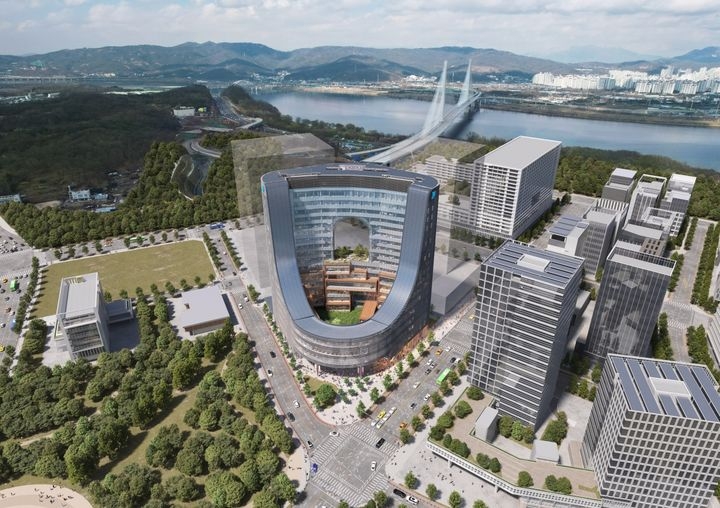
JYP Entertainment is moving toward scrapping plans for a new headquarters in eastern Seoul after a zoning change opened the way for a high-rise building to be constructed just 20 meters from the planned complex, potentially allowing outsiders to look down into spaces designed to protect artists’ privacy.
Architect Yoo Hyun-joon, a professor of architecture at Hongik University who designed the headquarters, said Thursday in an interview with a local media outlet that JYP Entertainment had informed him a day earlier of its position.
“It is heading toward a complete cancellation,” Yoo said.
JYP Entertainment, however, stopped short of confirming whether a final decision had been made, saying it was “discussing the matter from various angles.”
The development brings the K-pop company’s three-year headquarters project close to collapse after attempts to find a compromise with the Seoul Housing & Communities Development Corp., or SH, failed.
JYP Entertainment purchased a 10,675-square-meter site in Godeok Business Valley in Gangdong-gu, eastern Seoul, from SH for about 75.5 billion won ($56 million) in October 2023. It planned a 17-story headquarters with five basement levels and about 69,259 square meters of total floor space.
The complex was to include practice rooms and offices for artists and employees, an auditorium, an approximately 800-seat performance venue and cultural and recreational spaces for local residents and visitors. JYP Entertainment received a building permit in April and had been aiming to break ground in the second half of this year.

The dispute emerged after a 13,261-square-meter plot about 20 meters from the headquarters site was rezoned from parkland for development. The change allows construction of an 18- or 19-story building, which would be high enough to overlook JYP Entertainment’s planned complex.
That possibility conflicts with a key function of the headquarters’ architecture. The building was designed around an enclosed central courtyard, shielding artists and employees from outside view while giving them access to outdoor space. Part of the courtyard was also intended to be accessible to the public and connected with the neighboring park.
A high-rise next door would allow people on its upper floors to look down into the courtyard and other parts of the headquarters.
“Opening the first floor to citizens and ordinary citizens looking down from the 20th floor are different matters,” Yoo said in an earlier interview.
JYP Entertainment did not immediately opt to abandon the project after learning of the zoning change, according to Yoo. The company instead proposed several compromises to SH in an effort to proceed with construction.
“The first proposal was to sell the land with design guidelines allowing the same floor-area ratio but lowering the number of floors so that only buildings of six stories or lower could be built,” Yoo said. “Then, a plan to adjust the location of the park so that the new building would be farther away from JYP Entertainment’s new headquarters was also proposed, but neither method was accepted.”
SH has said it reduced green space under relevant regulations to secure funding for school facilities in the Godeok-Gangil district. Other green areas were difficult to reduce because they were designated for preservation, according to the public developer.
Yoo argued that the controversy goes beyond JYP Entertainment’s privacy concerns, questioning the decision to convert land originally designated as a public park into a development site.
“The fact that JYP Entertainment’s design is ruined should not become the key reason for restoring the park,” he said. “From an urban planning perspective, turning parkland that is essential for citizens into development land and selling it is itself the problem.”
jaaykim@heraldcorp.com