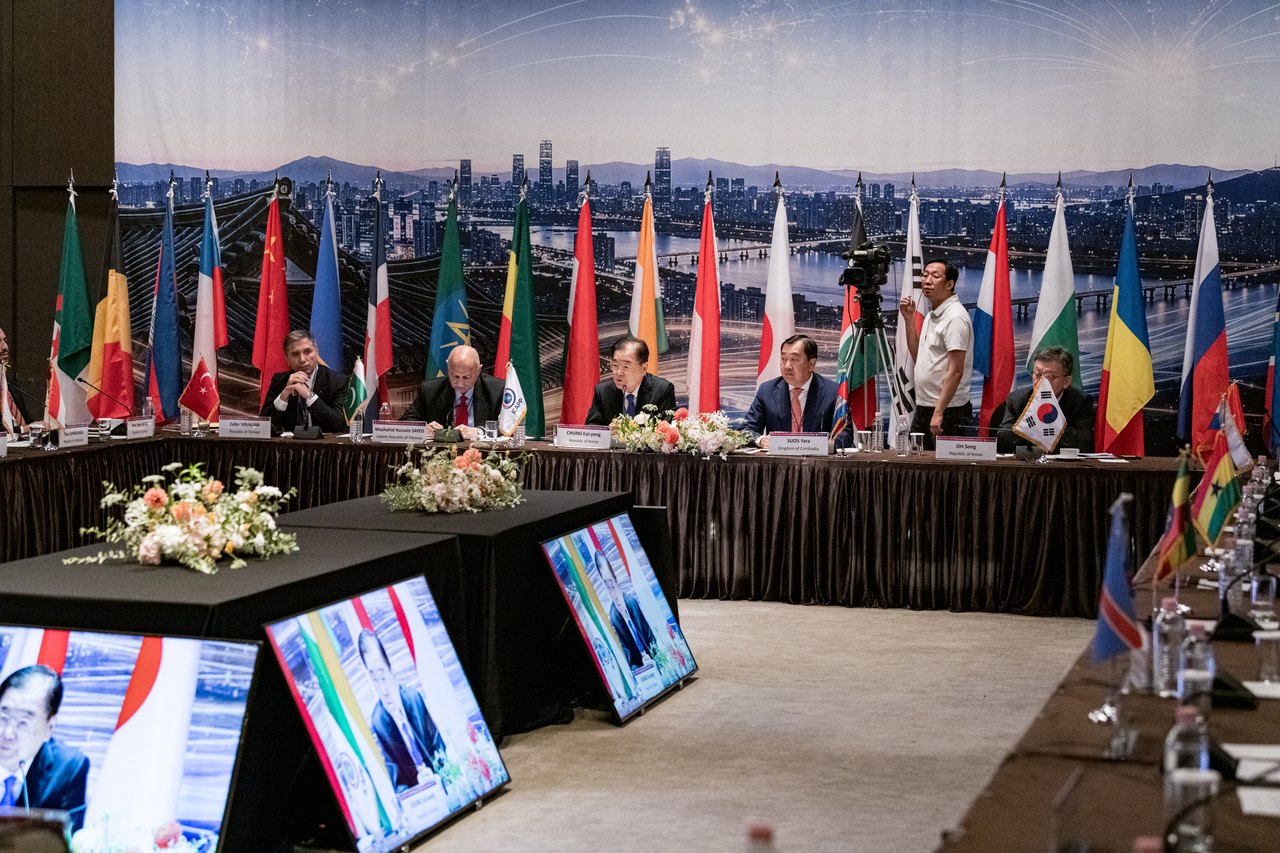
Political parties divided by geography and ideology came together in Seoul on Monday around a shared premise: Even as politics grows more fragmented and polarized, the challenges confronting societies are becoming increasingly interconnected and harder for any country to tackle alone.
Their answer was to launch the Inter-Continental Dialogue among Political Parties a new forum linking party networks across Asia, Africa, the Americas and Europe in an effort to sustain cooperation across ideological and regional divides.
That breadth was visible in the room. Political leaders came from neighboring Japan, Ghana and the Democratic Republic of the Congo in Africa, and from as far away as Paraguay and Chile, nearly 19,000 kilometers from Seoul.
Chung Eui-yong, chairperson of the Standing Committee of the International Conference of Asian Political Parties, stressed the importance of cross-continental political dialogue at a time of growing global uncertainty and division.
“We are not simply opening another international meeting. We are launching a new political platform, a global platform for dialogue and cooperation across continents and political traditions,” Chung, who was foreign minister and presidential national security adviser under the Moon Jae-in administration, said in his opening remarks.
“At a time when our societies are facing increasingly complex and interconnected challenges, the need for meaningful political dialogue has never been greater,” he added.
The inaugural meeting drew political leaders from 19 countries, with 15 represented in person and participants from China, India, Mexico and Russia joining online. Attendees included party chairs and vice chairs, lawmakers, parliamentary committee leaders, former ministers and other senior political figures.
They represented six major political party organizations and networks spanning four continents: ICAPP in Asia; the African Political Parties Initiative; the Permanent Conference of Political Parties of Latin America and the Caribbean and the Union of Latin American Parties in the Americas; and two political groups within the Parliamentary Assembly of the Council of Europe — the Group of the European People’s Party and the European Conservatives, Patriots & Affiliates.
“This diversity is not an obstacle to dialogue. It is precisely the reason that dialogue is necessary,” Chung said.
“The significance of this initiative will ultimately be measured not simply by the number or diversity of participants around this table, but by our ability to build trust, sustain dialogue and turn our conversations into meaningful action,” he added.
National Assembly Speaker Rep. Cho Jeong-sik echoed the need for greater cross-border political cooperation in welcoming remarks delivered by video.
“The reason we are meeting today is clear. The challenges humanity faces, from economic uncertainty and geopolitical tensions to climate change, no longer remain within national borders or continents,” Cho said. “No country has all the answers on its own.”
‘Unique responsibility’
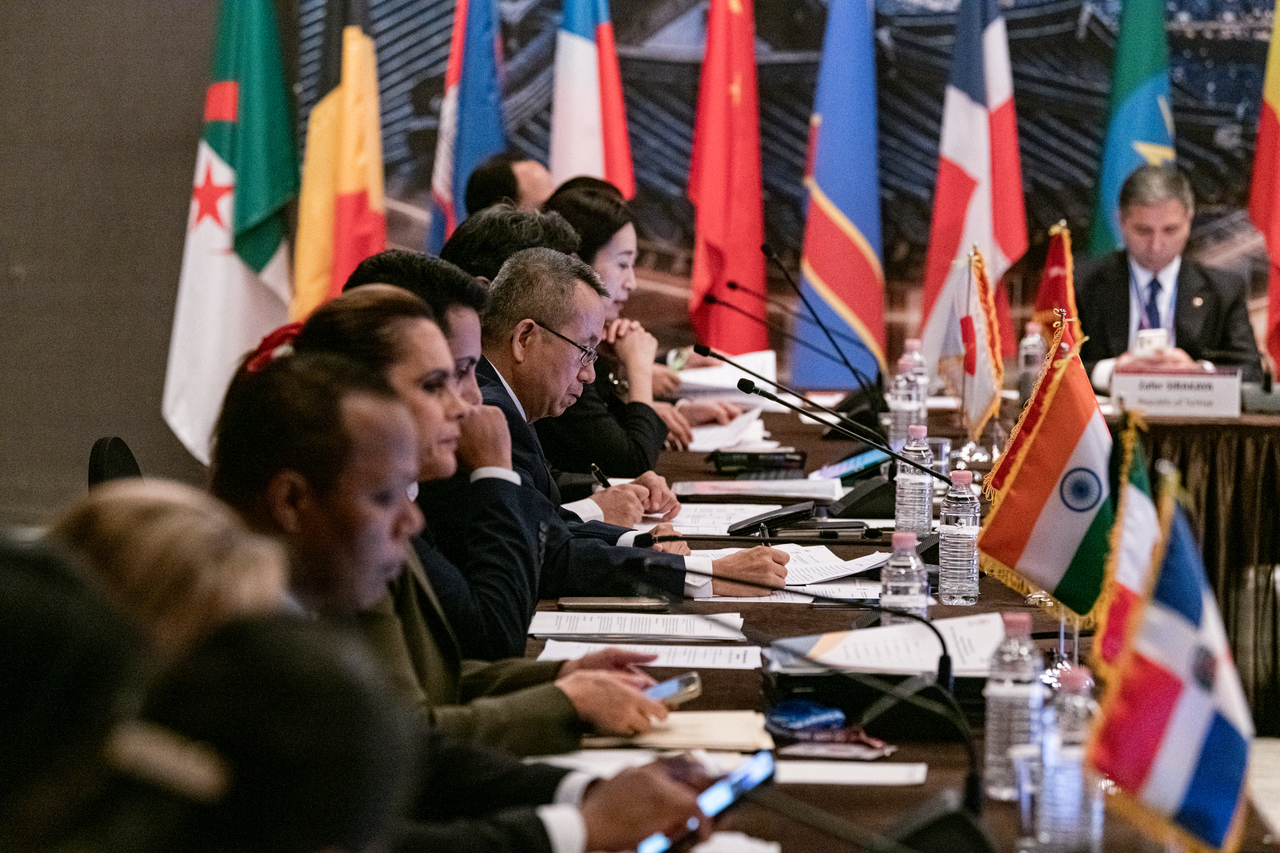
Participants unanimously adopted the Seoul Declaration as the meeting’s outcome, recognizing that “no single nation or political party can address these challenges alone, and that effective solutions demand collective action, international cooperation and shared responsibility.”
The parties expressed their “collective determination to promote dialogue over dispute, cooperation over confrontation, and partnership over polarization.”
The declaration also cast their responsibilities as extending beyond domestic electoral competition, reaffirming political parties as “indispensable institutions of representative democracy and political participation.”
It underlined that political parties “bear a unique responsibility to respond effectively to people’s aspirations in rapidly transforming and fragmenting societies, and to promote peace, mutual understanding, and international cooperation in an increasingly polarized world.”
At a time when universal values are being increasingly challenged, the parties reaffirmed their shared commitment to the purposes and principles of the Charter of the United Nations, including human dignity, sovereign equality, non-interference, territorial integrity, the peaceful settlement of disputes and respect for international law.
From launch to longevity
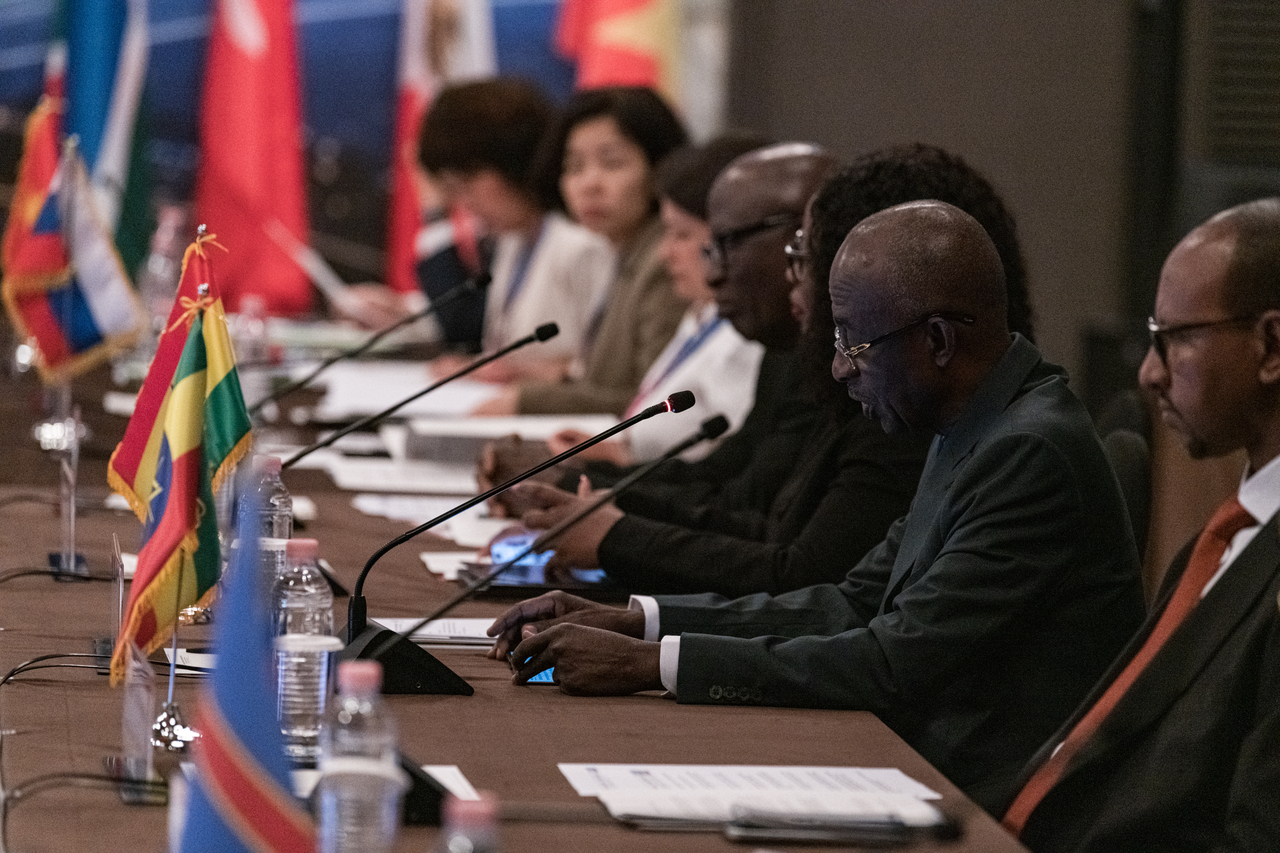
Beyond broad statements of principle, participants also took initial steps to turn the ICDPP into a continuing mechanism rather than a one-off gathering.
Turkey’s ruling Justice and Development Party, or AK Party, offered to host the second ICDPP meeting in Istanbul in March 2027, an offer formally welcomed in the Seoul Declaration.
Participants also reached consensus on “Guidelines for Terms of Reference,” laying the groundwork for periodic meetings and further consultations on rules of procedure and future work programs.
Johnson Asiedu Nketia, chairman of Ghana’s National Democratic Congress, said the challenge would be to develop the ICDPP into a lasting working relationship among political parties rather than allow it to become simply a succession of meetings.
He said the forum’s value would ultimately depend on whether parties could build closer ties, exchange experiences directly and sustain relationships as the dialogue moves from one host country to another.
“That continuity is important. Political leaders change, governments change and parties themselves evolve,” Asiedu Nketia said. “An intercontinental platform becomes significant when the relationship is strong enough to survive those changes.”
ICAPP said it plans to build on the inaugural ICDPP meeting by expanding international dialogue and exchanges among political parties and strengthening the role of party diplomacy.
ICAPP, which organized Monday’s gathering, was founded in 2000 and is headquartered in Seoul. It brings together some 360 political parties from 52 countries across Asia and Oceania.
The organization is also set to hold its 13th General Assembly in Seoul from Nov. 4 to 7, co-hosted by South Korea’s ruling Democratic Party and main opposition People Power Party. Around 100 political parties from more than 40 countries are expected to attend.
dagyumji@heraldcorp.com