Revenue share jumps to 33% as next-generation products reshape competition
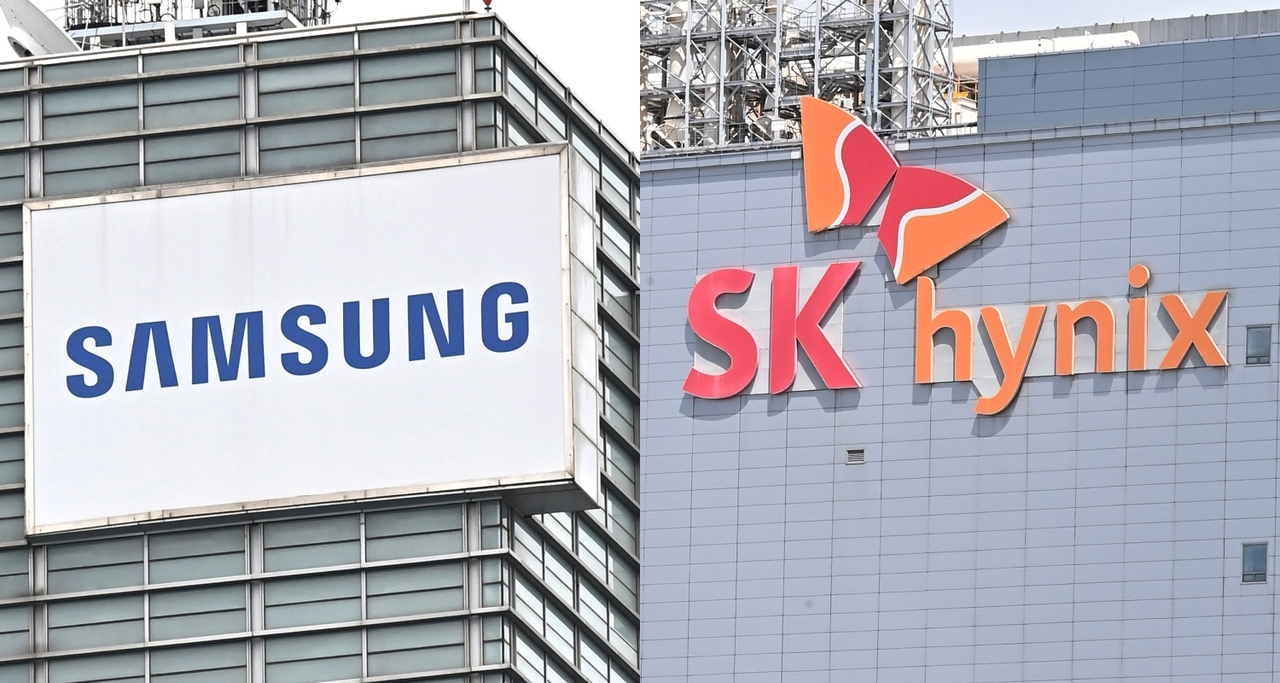
Samsung Electronics lifted its share of global high-bandwidth memory revenue to 33 percent in the second quarter, narrowing the gap with market leader SK hynix to 17 percentage points.
Samsung’s share jumped from 21 percent in the first quarter as it expanded shipments of its latest HBM products to major global technology companies, Counterpoint Research said Friday.
SK hynix retained the top spot with 50 percent of revenue in the April-June period, down from 64 percent a year earlier. Micron Technology ranked third with an 18 percent share, down from 21 percent in the previous quarter.
Counterpoint expects Samsung to gain further ground as shipments of sixth-generation HBM4 increase.
Fifth-generation HBM3E still accounts for most industry revenue, but HBM4 shipments are expected to accelerate in the second half. Competition among the three memory chipmakers is set to intensify as developers of next-generation AI processors adopt the newer products.
SK hynix has built a commanding HBM lead through its position as a key supplier of HBM3 and HBM3E to US AI chip giant Nvidia.
Samsung, however, expects HBM4 to help it close the gap. During its second-quarter earnings call in July, the company said its HBM market share could approach its overall DRAM market share in the second half.
“Demand for HBM4 is growing rapidly in line with customers’ ramp-up schedules for the second half,” said Kim Jae-june, executive vice president of Samsung Electronics’ Memory Business.
“We expect HBM4 to account for more than 60 percent of our total HBM revenue in the second half.”
Samsung increased HBM4 sales in the second quarter and supplied HBM4E samples to major customers.
SK hynix maintains that its yearslong lead has produced advantages that rivals cannot quickly reproduce.
“Our accumulated competitiveness in time to market, product performance, mass-production yield, quality and customer trust are differentiators that cannot be replicated in a short period of time,” the company said during its second-quarter earnings call.
yeeun@heraldcorp.com