Kim Jong-chul says failures cannot be blamed on individual officers alone; pledges scrutiny of command, supervisory responsibility
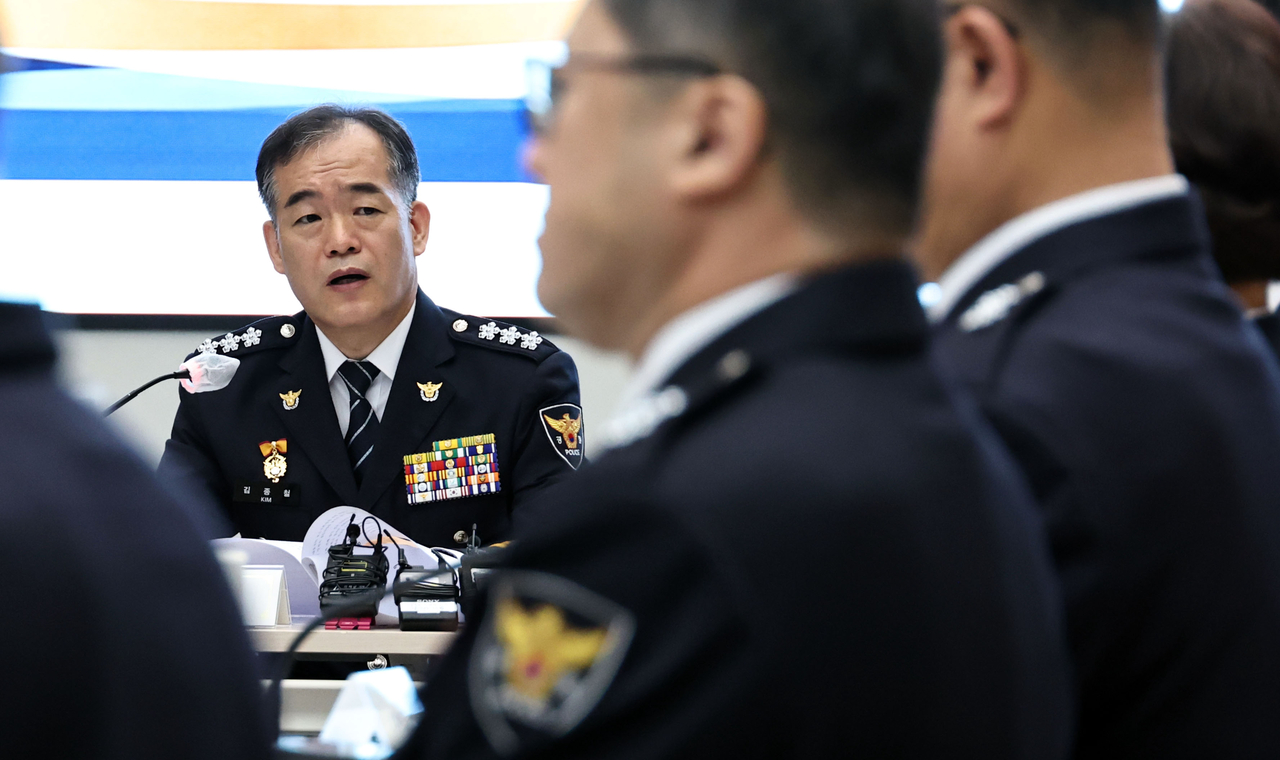
South Korea's new acting police chief on Thursday apologized for a series of botched police responses to high-profile murder and missing person cases and promised sweeping reforms to restore public trust.
“There is no reason for the police to exist if we lose the public’s trust,” said Kim Jong-chul, acting commissioner general of the Korean National Police Agency. “We will not stop at empty rhetoric. We will demonstrate our commitment through concrete change and action.”
Kim made the remarks during a meeting of 18 regional police chiefs at the KNPA headquarters in Seodaemun-gu, Seoul, held under the slogan, “The police have fallen short. Through deep self-reflection and sweeping reforms, we will rebuild the police from the ground up.”
Korea's police have recently come under intense criticism over their handling of the murder of a high school student in Gwangju.
Jang Yoon-gi was accused of killing the student in May with the motive of rape. Jang's father, a police officer, was later found to have destroyed key evidence with the help of fellow officers.
Public criticism intensified after another police officer on Jeju Island was found to have improperly closed a missing person case involving 37-year-old Jang Mi-ran, who was later found dead.
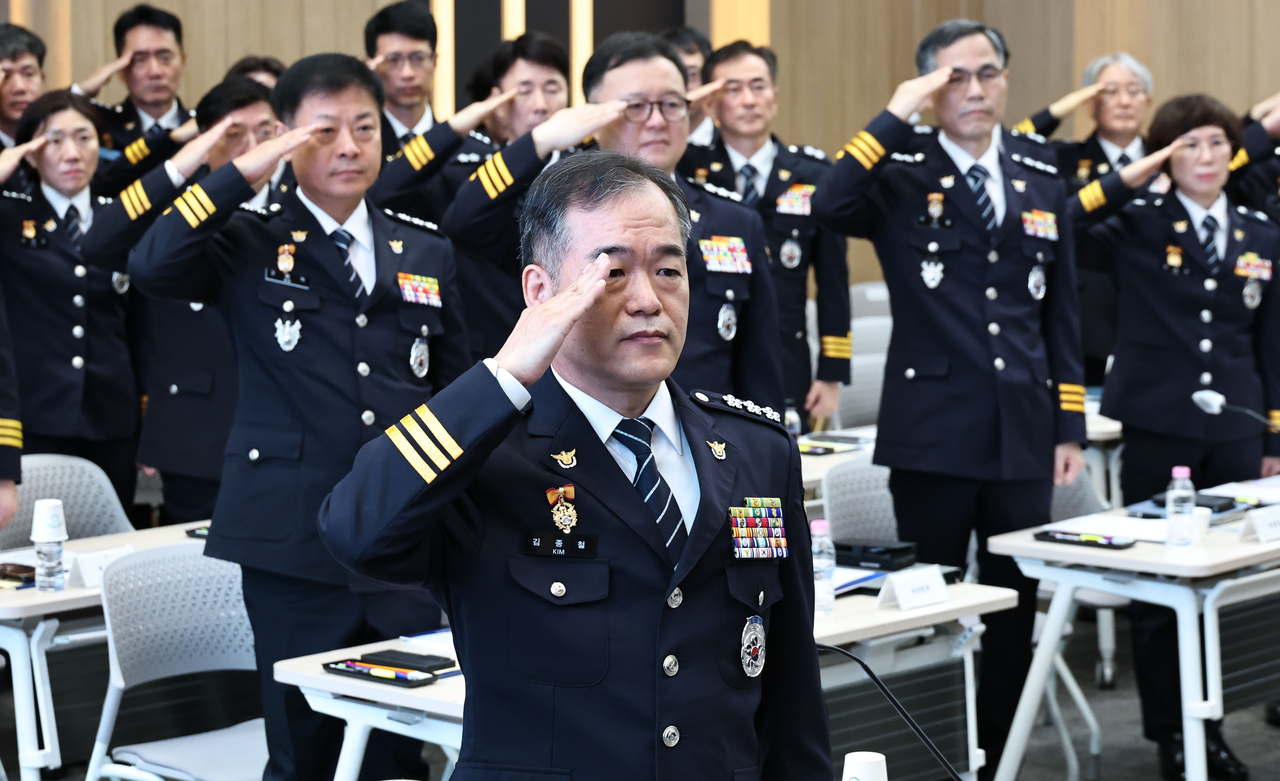
Kim said responsibility for the failures would be examined across the organization rather than attributed solely to individual officers.
“The police, whose duty is to protect the lives and safety of the public, failed to fulfill their role and properly respond to the desperate pleas of families anxiously awaiting news of their loved ones,” he said.
Kim said the incidents had left the public asking, “Can we really trust the police?”
Emphasizing that police would “neither avoid that question nor make excuses,” he pledged to examine why internal oversight, management and supervision systems had failed.
“We will not simply blame individual police officers and leave it at that,” he said. “We will thoroughly determine how such failures were possible in the field and why the management and supervision systems failed to function properly.”
He also pledged greater transparency and efforts to eliminate a culture of covering up or playing down wrongdoing to protect fellow officers.
“We will not explain only the facts favorable to the police,” Kim said. “When wrongdoing is confirmed, we will transparently disclose who was responsible and where supervisory and command responsibility lies.”
“We will put public safety before police achievements, the truth before the reputation of the organization and the rights of the public before the convenience of police officers,” he added.
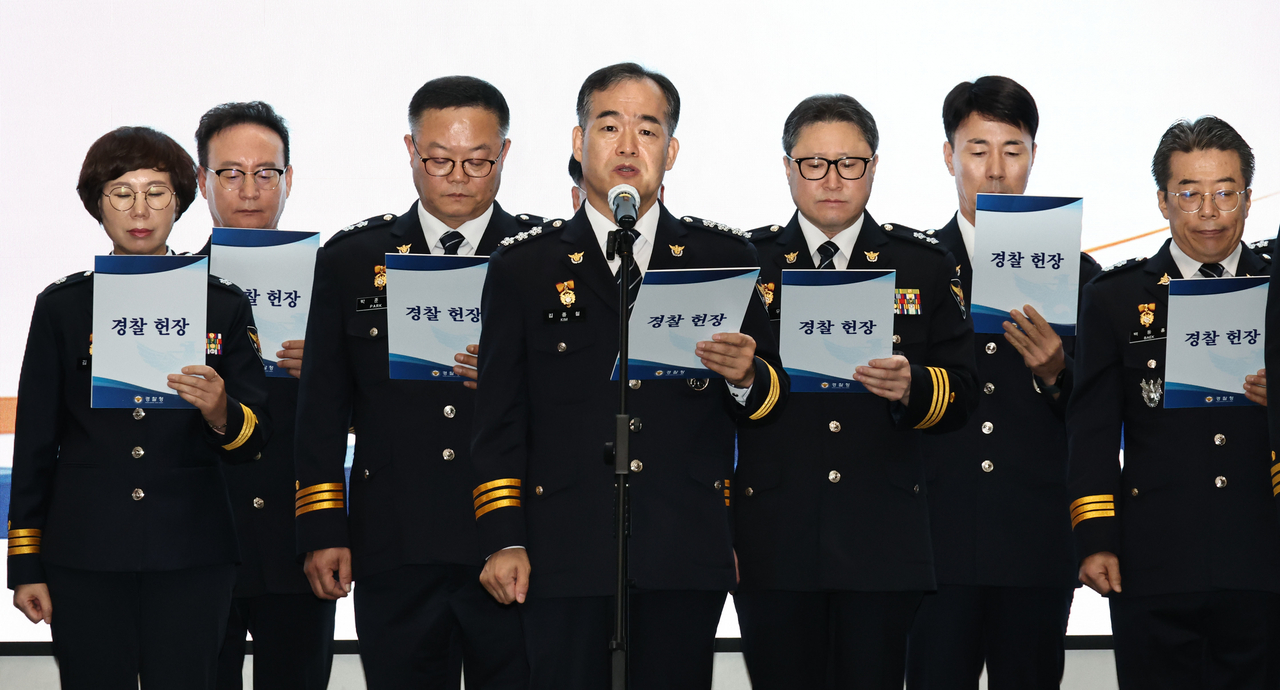
Kim also read the Police Charter aloud on behalf of the agency’s leadership, emphasizing a return to what he called the “fundamentals” of policing.
Established in 1991 when the KNPA was launched, the charter sets out core principles for officers, including protecting lives and property, enforcing the law fairly and respecting human rights.
The agency said it would comprehensively examine how missing person cases are handled, from initial reports and searches to investigations, command decisions and case closures. Officers found responsible for mishandling cases in an ongoing nationwide review will be held accountable regardless of rank or position.
The KNPA will also establish a police reform task force to review its organizational structure, front-line practices and internal culture.
Police officials also discussed expanding investigative personnel and strengthening expertise ahead of the implementation of the revised Criminal Procedure Act next month.
seungku99@heraldcorp.com