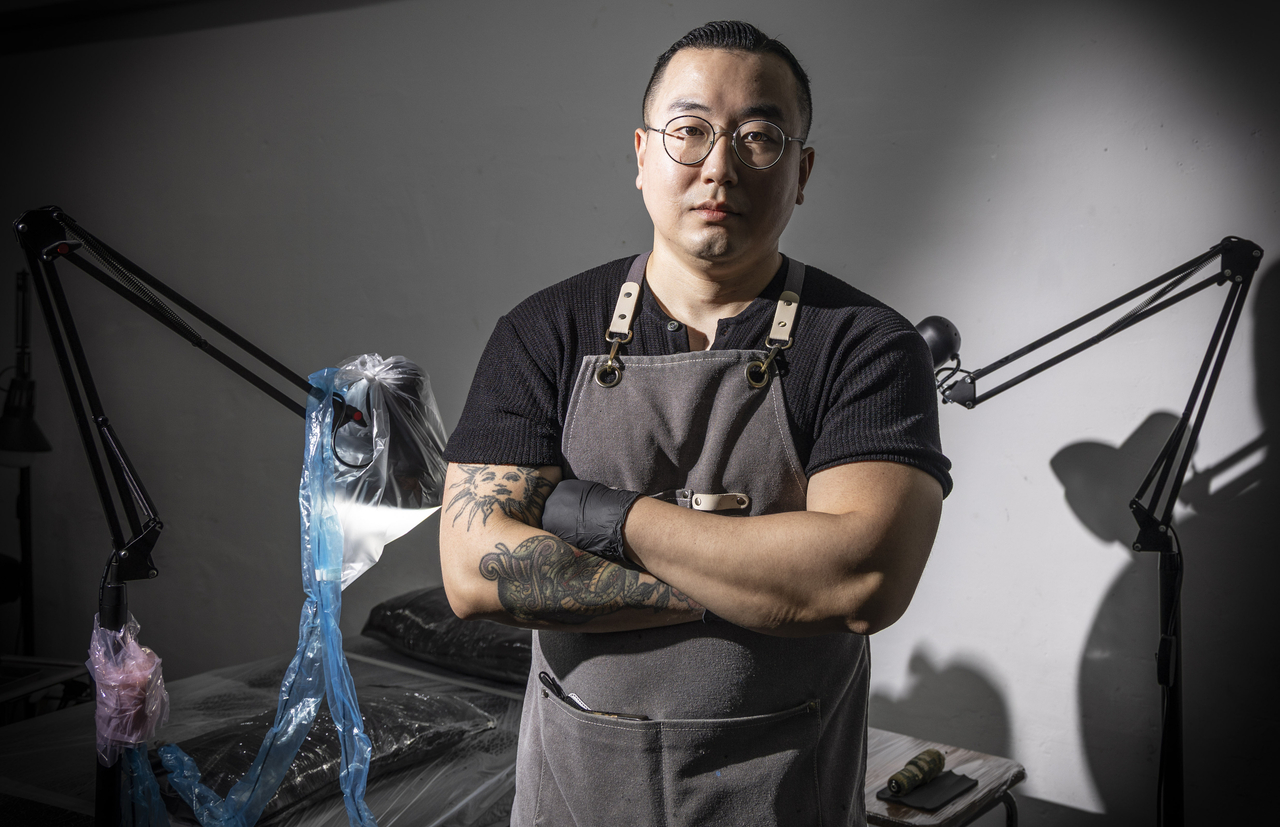
Blending Korean folk painting, its humor and tradition, Seoul tattooist Choi Hae-sol says real meaning should live in heart and mind — not on the skin
A Canadian client came to a Seoul studio this spring and asked for Ilwolobongdo, the sun, moon and five peaks that once hung behind the throne of Joseon kings. It went on his calf as a farewell to the country. He had wanted a minhwa tattoo for years, he said, and could not find anyone making them.
Tattooist Choi Hae-sol hears this often. Choi works in minhwa, the folk painting produced mostly by Joseon's commoner class rather than its scholar-gentry, and by his own count, roughly 95 percent of his clients are now foreign nationals. He works by appointment at Onsil Ink, the atelier he opened in Gwangjin-gu, Seoul, in 2021.
That clientele followed a decision he made in 2016 after years of tattooing in every style except his own. He never studied art formally and never attended university, leaving an office job for a trade he had only ever been a customer of. The shop he trained in took walk-ins of every description, so he learned every genre and settled into none.
The turn came after he watched a video of the Korean painter Kim Sun-doo and enrolled at a Korean painting studio, where he spent about two years. Korean artists already dominate Western-style tattooing abroad, he reasoned, and copying them would leave him with nothing of his own.
"When I asked myself how I could become a competitive tattooist with a unique identity, the answer was obvious: working with something Korean," Choi told The Korea Herald.
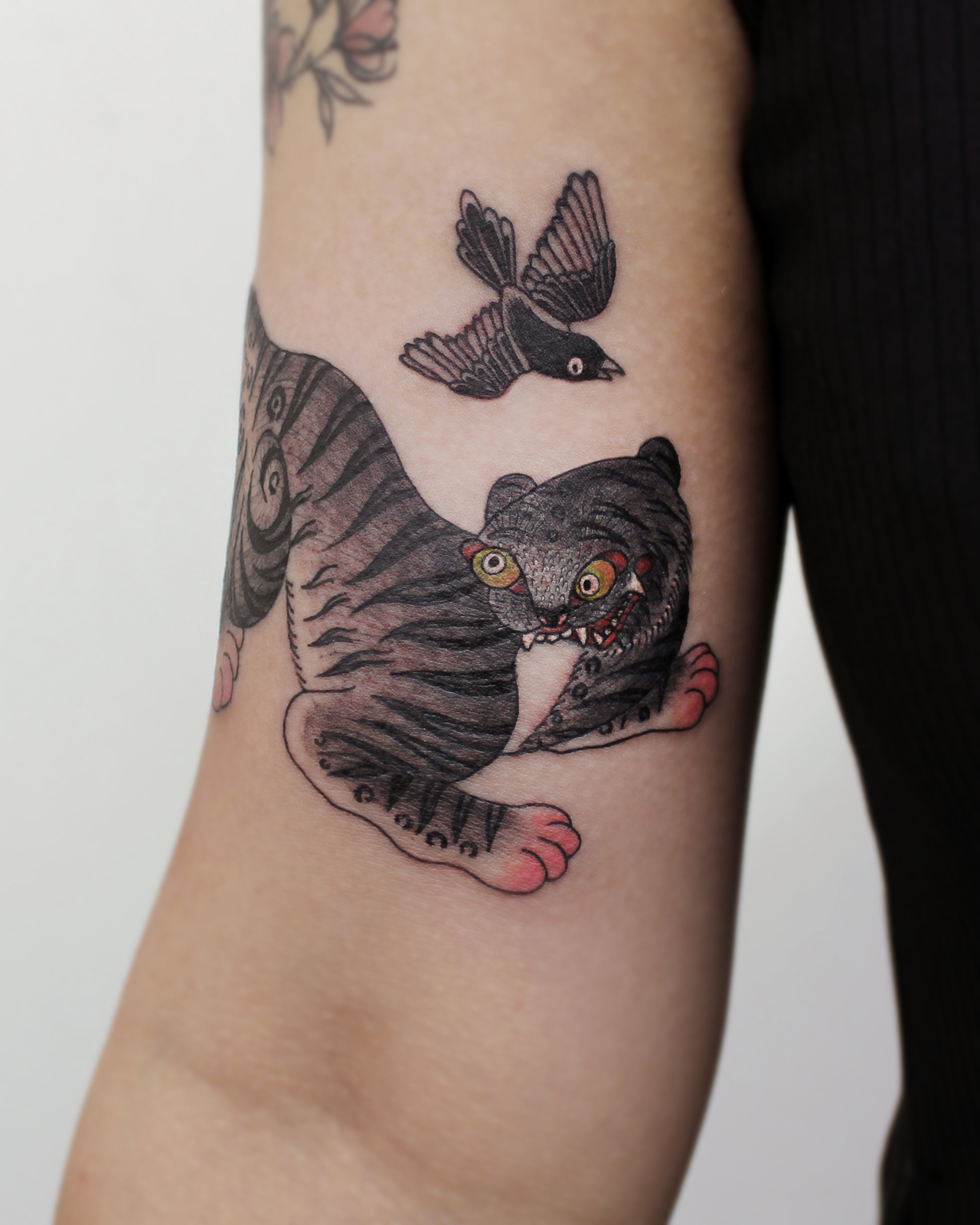
Nearly every foreign client who books him now asks for minhwa specifically rather than a general ink painting, and Choi reads the reason in that distinction.
"Ink painting exists in other countries too, but when foreigners traveling in Korea come looking for a tattoo that would remind them of Korea once they head back to their country, minhwa is the one that is actually Korean," he said.
The defining trait, he said, is humor.
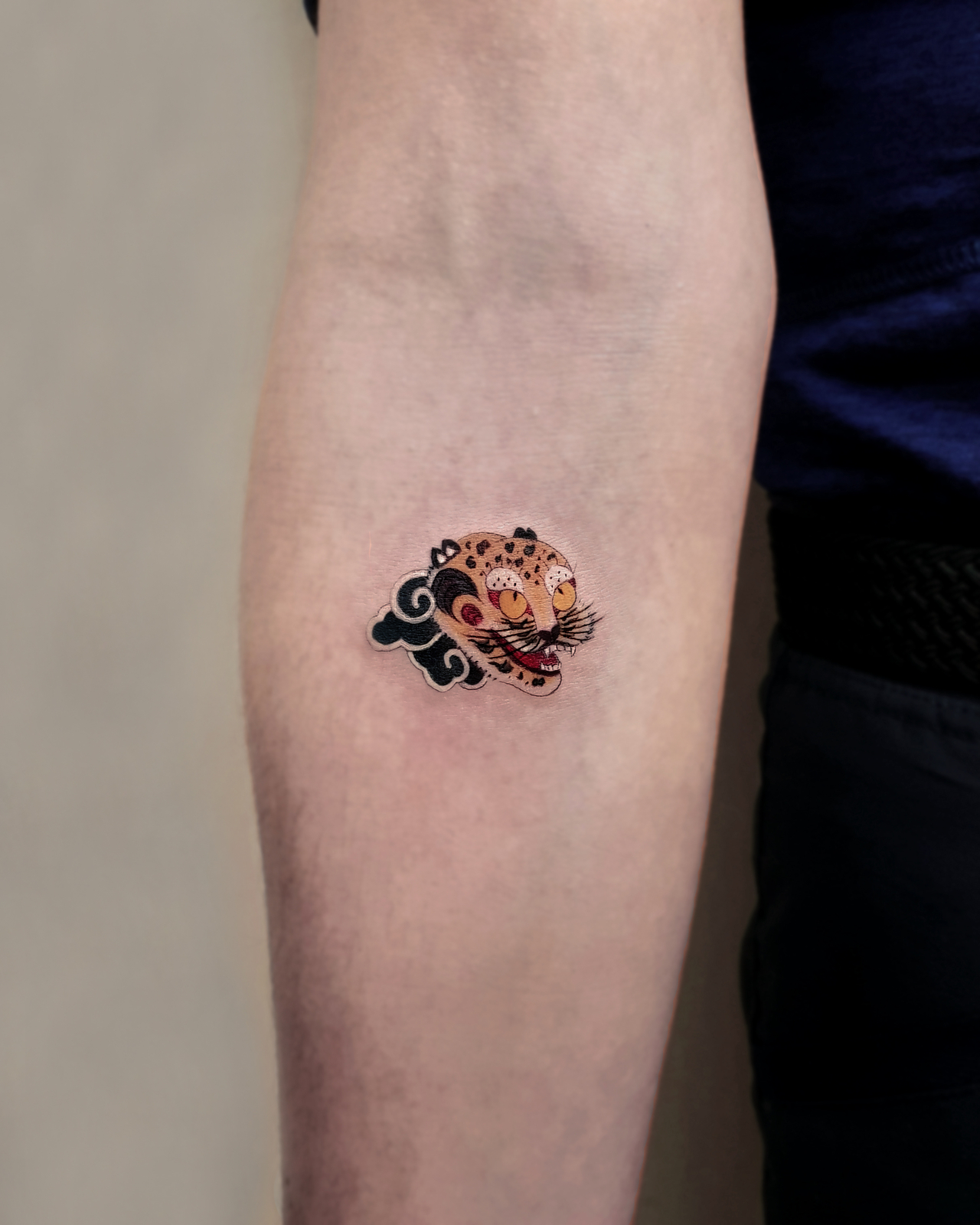
"Tigers in folk painting are not drawn to frighten anyone. Dokkaebi, the goblins of Korean folklore, come out comical rather than monstrous. To me, the biggest characteristic of minhwa is that humor," he said.
Certain figures recur. Hojakdo, the magpie and tiger pairing, comes up constantly, as do haetae, the guardian beast whose stone pair sits at Gwanghwamun, and the birds of hwajodo. Choi's most recent work reinterprets dokkaebi from gwimyeonwa, the fierce-faced tiles set at the end of a traditional Korean roof to turn misfortune away from the house.
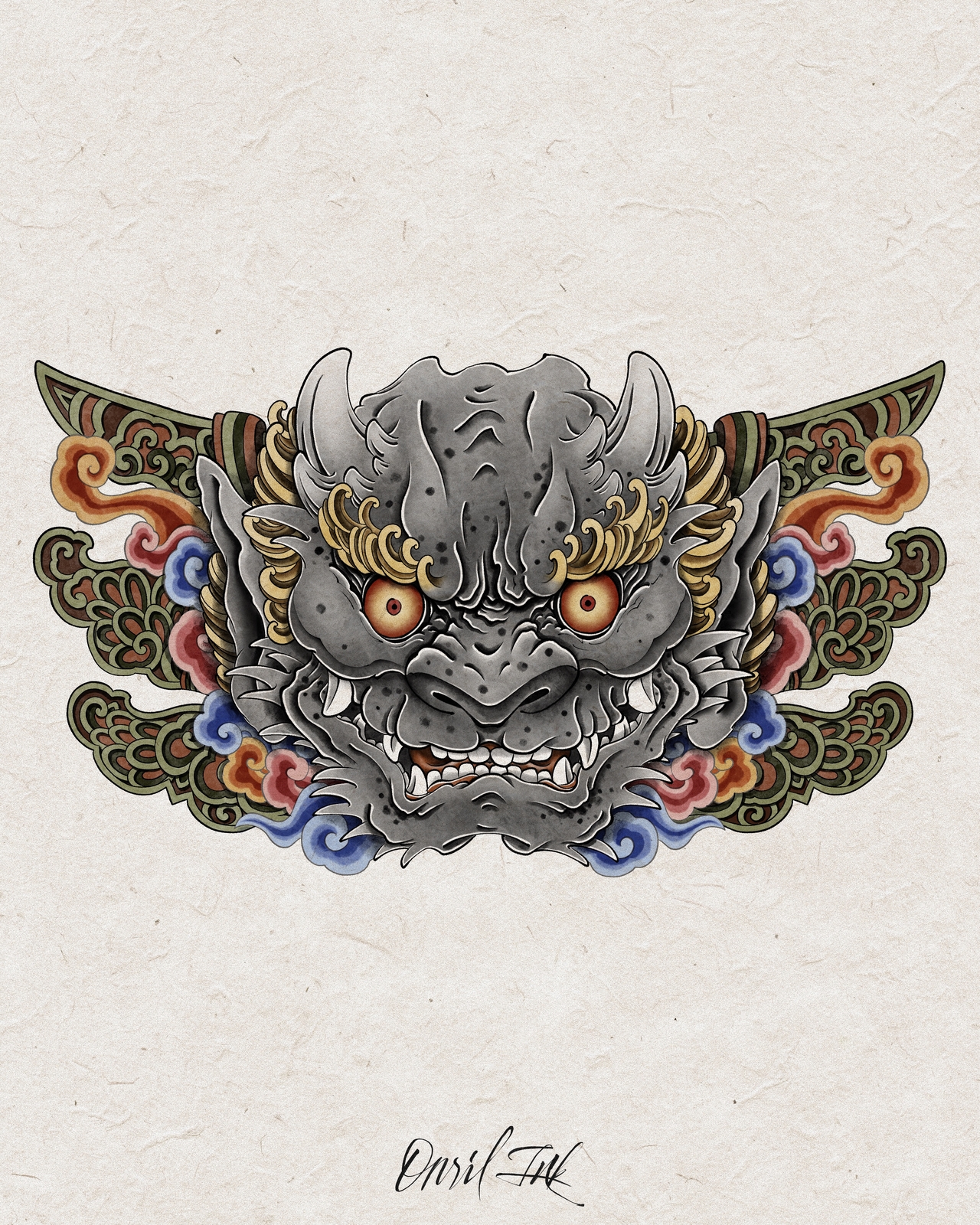
He does not copy the paintings. He studies the style and works it into designs drawn for the body part each one will occupy. He explains meanings when he knows them but does not build designs around them.
"When someone hunts too hard for a motif that carries a meaning, the design falls apart. Whatever else it is, this is a picture, and it is going on a body, so the result has to be beautiful. The real meaning should go in the heart and the head, not on the skin," Choi said.
A difficulty he faces working with minhwa is that the visual record is thin. Choi researches through Google, artificial intelligence and books, but said digging deeper rarely turns up anything new.
More than a decade in, his standard has not changed.
"Do not mess around on someone else's body. Just do it well. However many tattoos someone already has, this is still one of the events that stays for a lifetime," he said.
For decades, South Korea treated tattooing as a medical practice that could be performed only by licensed medical professionals, based on a 1992 Supreme Court precedent. In May 2026, the Supreme Court overturned that precedent, ruling that conventional tattooing by nonmedical practitioners does not constitute unlicensed medical practice.
A new Tattooist Act, enacted in October 2025, is scheduled to take effect in 2027. The law will establish a licensing system for tattooists, including a national examination and licenses issued by the Minister of Health and Welfare.
For Choi, the biggest change may be the sense of security that comes with the shifting legal landscape.
“Honestly, I do not think it changes much. It feels more like being protected from problem clients. There are people who abuse the situation, reporting you on purpose and things like that," he said. "It is more that a sense of security comes from knowing I can be protected,” Choi said.
yoohong@heraldcorp.com