From mistaken maps to garbled histories and mistranslated customs, Facts: Korea has addressed more than 20,000 cases
This week, a decade-old government hotline built to correct the world's mistakes about Korea marks a milestone: roughly 20,000 error reports logged and answered since it opened.
The service, called Facts: Korea, launched Sept. 1, 2016, under a prime ministerial directive, initially run by the ministry's now-defunct Korean Culture and Information Service before the Ministry of Culture, Sports and Tourism took it over directly in 2024. Anyone — Korean or foreign — can flag an error about the country through the website factsaboutkorea.go.kr or via the mobile app in Korean or 10 other languages: English, Mandarin Chinese, Japanese, Spanish, French, German, Russian, Vietnamese, Arabic and Indonesian.
Each report that comes in is reviewed and answered, whether or not it turns out to describe an actual error, according to an official at the ministry's overseas public relations planning division, who asked not to be named, in keeping with the office's practice of attributing comments to "an official" rather than individual staff. That is also why the ministry counts its "processed" cases as equal to its "received" ones. Where a mistake is confirmed, the office follows up with a formal, evidence-backed correction request to the outlet or institution involved, drawing on source material from relevant government agencies and, in some cases, direct contact with staff.
Korean and English speakers file the most reports, the official said. Six staffers cover the 11 supported languages.
What has shifted over the past decade, the official said, is not so much the volume of errors as their nature. Early on, foreign media and publications commonly confused South Korea with North Korea or misplaced the country on the map. Those basic mistakes have become rare as Korean pop culture's global reach has grown.
"The volume goes up and down, but the content has moved toward the margins," the official said. In their place have come subtler errors — about how Koreans actually live, eat and observe customs — that require someone who thinks they already know Korea well to be mistaken in a new way.
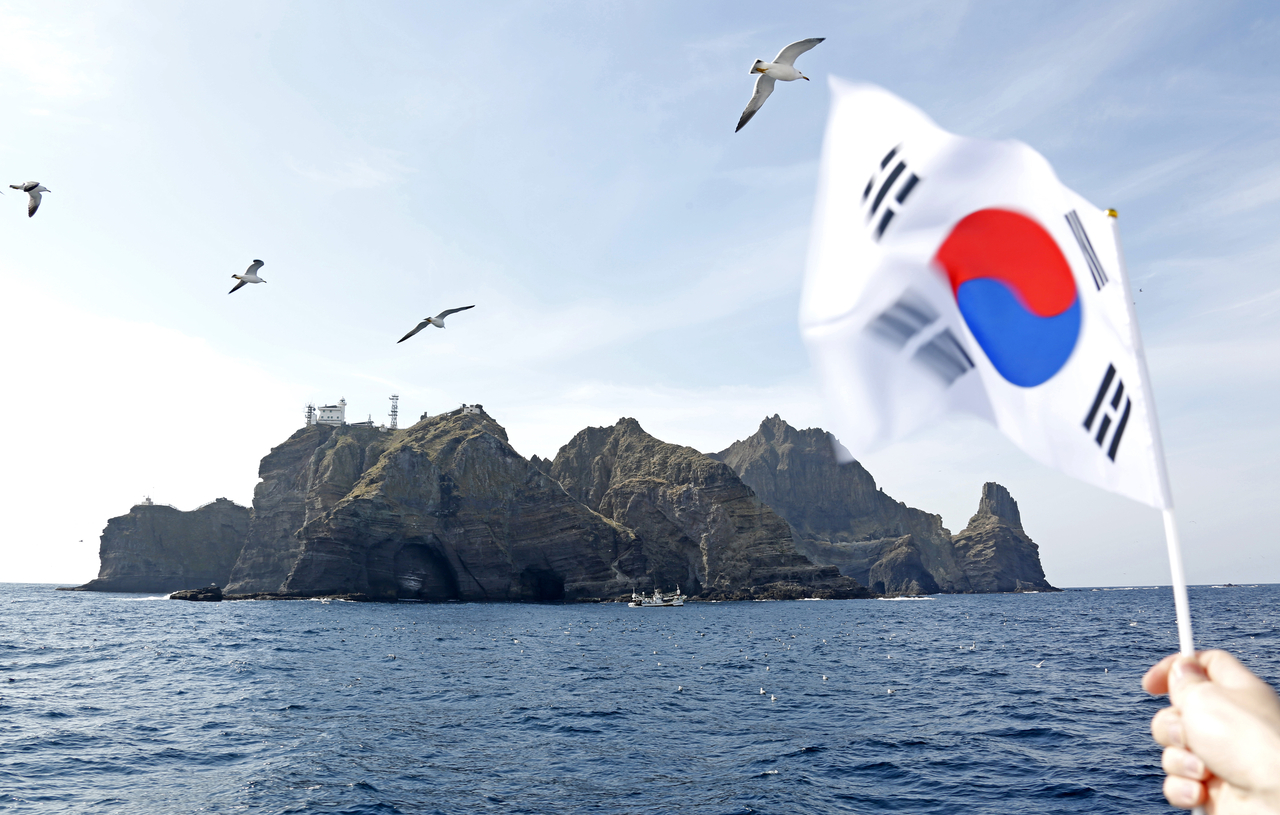
One controversial error, though, has proven stubbornly persistent across all 10 years: the labeling of the East Sea as the "Sea of Japan."
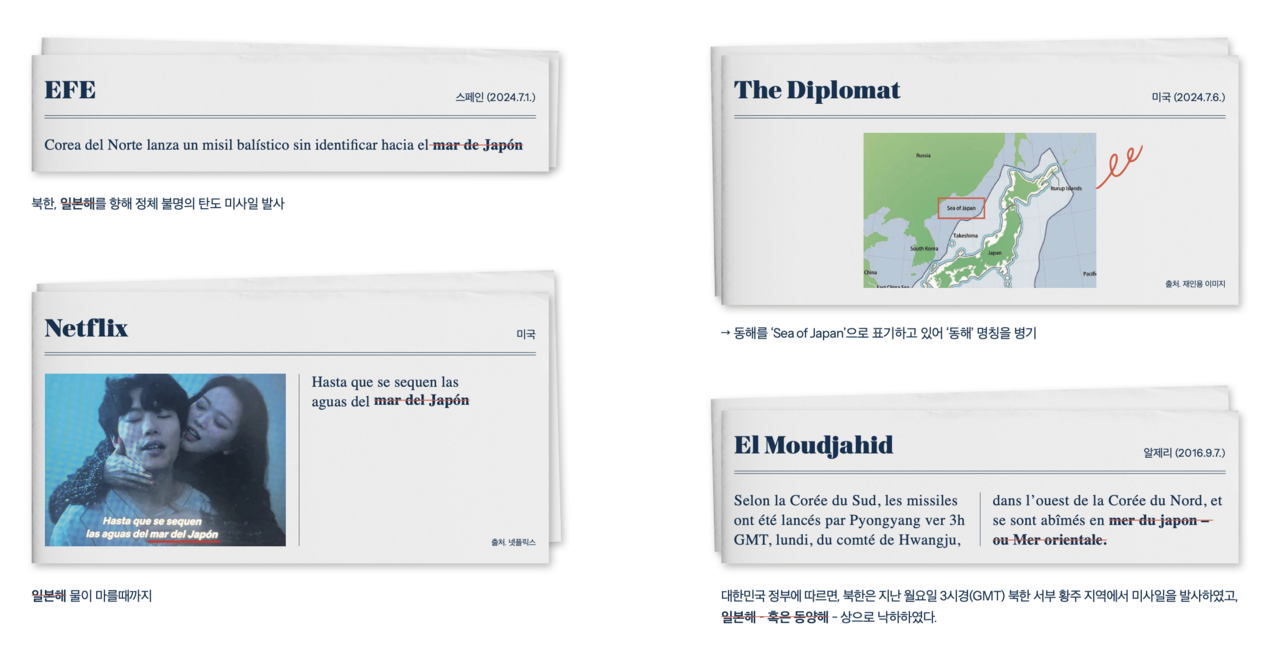
The ministry's case archive traces the mislabeling across outlets as varied as Algeria's El Moudjahid in 2016, Spain's EFE newswire in 2024 and Netflix's Spanish-language subtitles, which rendered a documentary line as "hasta que se sequen las aguas del mar del Japon," or "until the waters of the Sea of Japan dry up."
Seoul has pushed for the dual notation "East Sea/Sea of Japan," citing international resolutions from the International Hydrographic Organization and the UN Conference on the Standardization of Geographical Names that call for parallel names when countries dispute a shared body of water. Historical Japanese maps predating 1900, the ministry notes, once labeled the same waters the "Sea of Joseon."
Other cases turn less on geography than on description. The Jerusalem Post, covering an Israeli Embassy reception in 2022, described staff "dressed in the traditional Korean kimono known as hanpok" — conflating hanbok with Japan's kimono, an error the archive shows recurring in outlets from Spain to Indonesia.
Similar examples have appeared in coverage of Korean food. Hong Kong's South China Morning Post called the fermented skate dish hongeo "fish preserved in its own urine," and a Vietnamese food outlet in 2022 rendered cheonggukjang, a fermented soybean paste, as "rotten corpse soup." Both remain in the archive as reference points, alongside an explanation of what each dish actually is.
In cases like these, the office's approach stays deliberately understated, the official said. Correction requests are written to read as neutral and evidence-based rather than as a rebuke, built around vetted information rather than the office's own opinion.
The office rarely gets a defensive reaction, the official said; more often, recipients ask to learn more or say they found the outreach useful. When a request goes unanswered or is declined, it is usually because the correction conflicts with the recipient country's own official position, not because the request itself was seen as hostile.
Ten years in, the official said, the job is not nearly done — Korea's growing global profile just keeps generating new things to correct. The ministry will mark the anniversary this month with additional events and a commemorative video on Facts: Korea's website and social media channels.
gypark@heraldcorp.com