The Venice Biennale artist's largest Korean exhibition yet lets some 35 works burrow into every corner of the museum and waits for viewers to find them
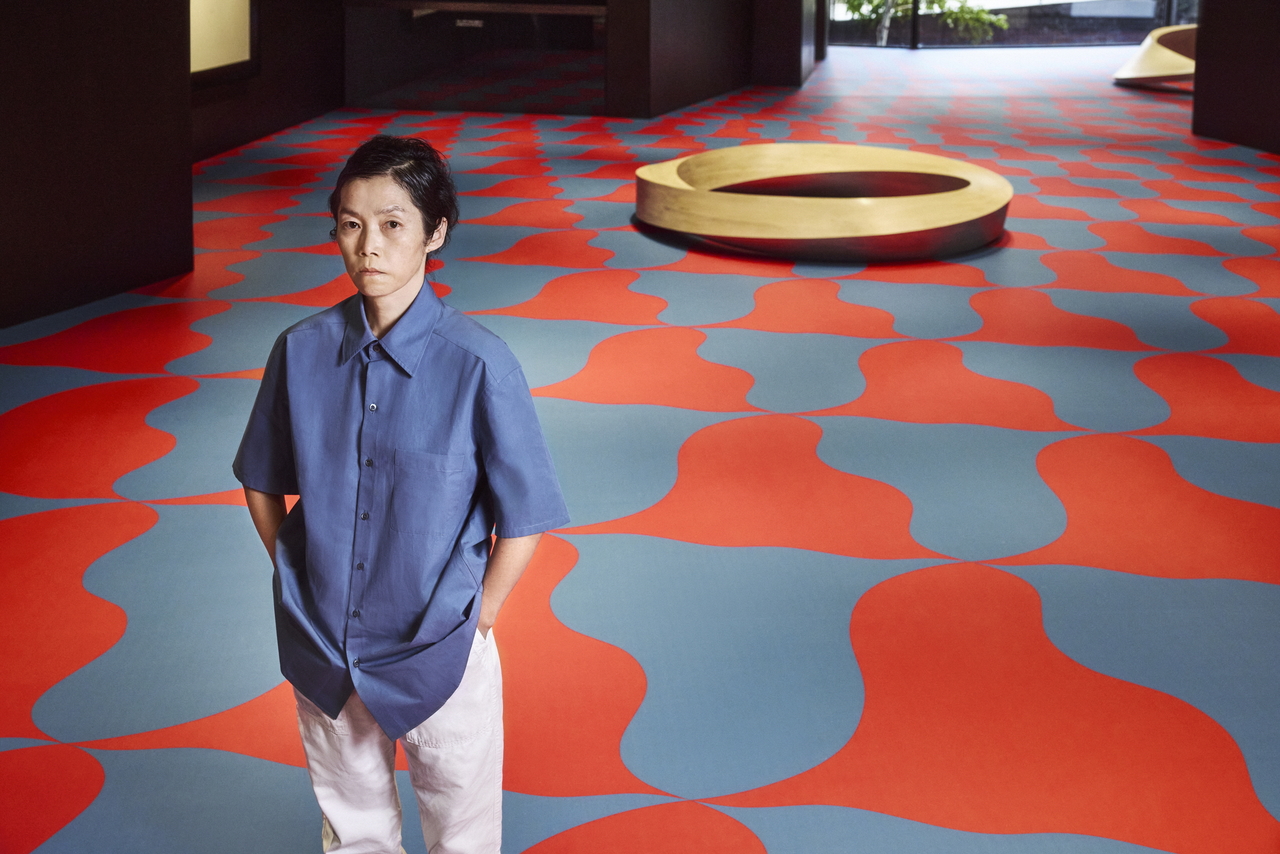
Polished steel sits near bronzes cast to look like meteorites, and a monumental metal colossus shares a gallery with a tower of pencil leads that seem as if they might scatter at a touch.
"Koo Jeong A: Ousssmos," the Paris-based artist's largest solo exhibition in Korea, revels in collisions like these — the futuristic scattered alongside the ancient, the industrial among the primitive — until a strange sense of unease takes hold, hard to pin down but all the more captivating for it.
Opening Saturday at Leeum Museum of Art in Seoul, the exhibition gathers some 35 of the artist's works, from early 1990s pieces to the brand-new commissions. The selections seep into nearly every corner of the building — the lobby, the underground galleries and even a stone wall outside all play host to her curious interventions. Curated by Deputy Director Sungwon Kim, the show surveys an illustrious career of shifting materials and scale while gesturing at what has stayed put.
"The longer we look at Koo Jeong-a's practice, the more we see continuity rather than change," Kim said. "Materials, forms and scale have shifted ceaselessly, yet for more than 30 years Koo has maintained a consistent attitude: asking us to look again at what we easily overlook and keeping open possibilities that have yet to reveal themselves."

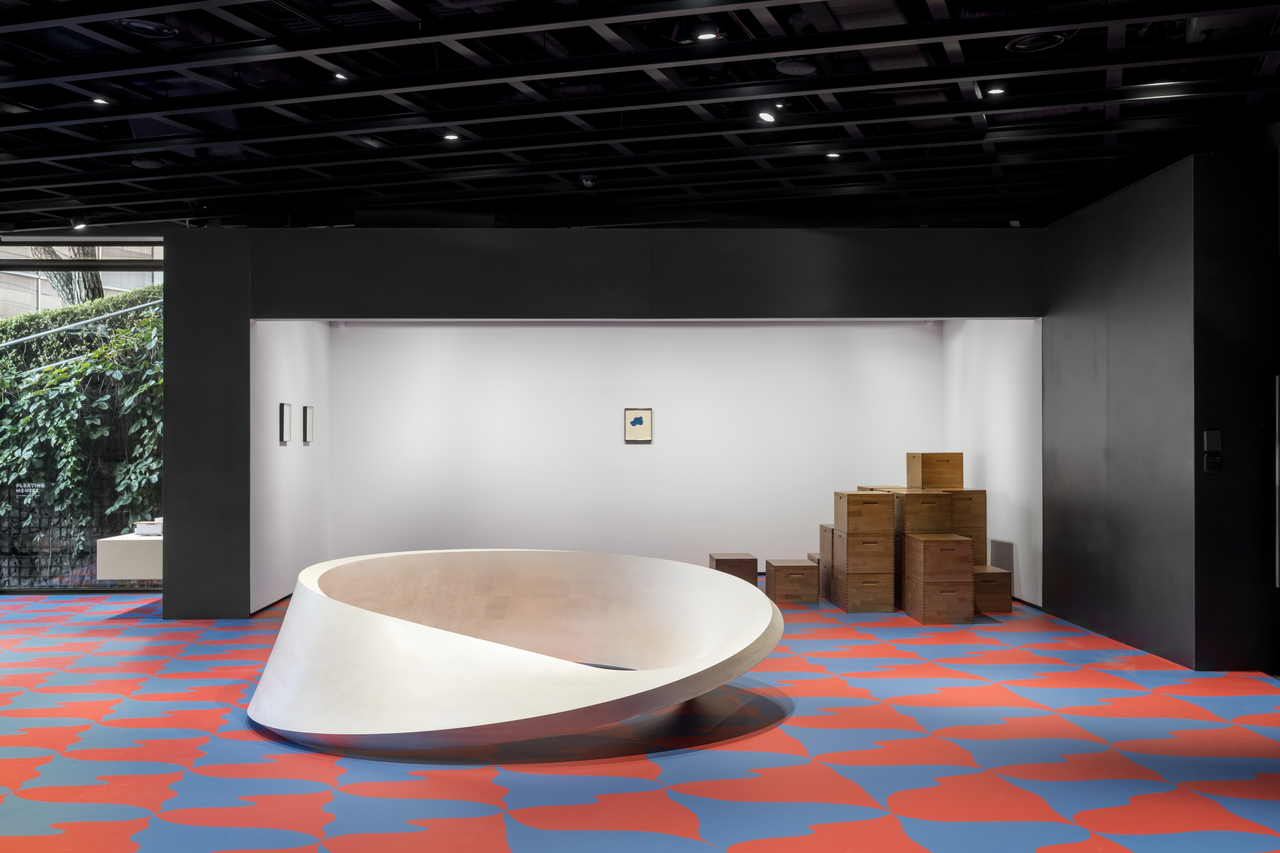
The feast of opposites is richest one floor down in the M2 galleries, the first stop after the lobby. Standing at the center is "Mobiousss" (2026), an eight-meter stainless-steel commission that appears as a tangle of tunnels up close but resolves into an infinity symbol when viewed from the floor above.
Nearby, a pair of craggy bronzes — one hugging the ground, the other hanging in the air — seem as blunt and primordial as the steel is sleek and pristine. "Untitled" (1998), meanwhile, sits so unassumingly in a wall recess that many will walk past without noticing it. Look closer and it turns out to be a cluster of 57 mechanical-pencil leads standing upright, somehow held together by balance.
The display saves its strangest surprise for the M1 galleries, where Koo's "Density, GITD" (2025), a small stone levitating within a magnetic field, is slyly slipped in alongside the Joseon-era white porcelain from the museum's permanent collection — an intrusion so casual it borders on mischief. The artist's most expansive gesture also happens to be the easiest to miss: 50 crystals hidden in the gabion wall outside, which flash only in the right weather, at the right angle, at the right moment.

If the effect here is one of estrangement and disorientation, the artist insists her intent was anything but.
"I didn't set out to create tension or shock," Koo said at a press preview Monday. "I studied how to bring back the environment I was working in at the time. If I place a work here, I thought, I can recover some of that feeling, and with it the emotion of the person who discovers it."
Born in Seoul in 1967 and based in Europe since 1991, Koo has built a career out of what most people overlook. Her materials have included sugar cubes left casually on a windowsill, aspirin hand-ground into a small white mound and mothballs recalling the smell of a grandmother's closet.
She reached her widest audience at the 2024 Venice Biennale, where "Odorama Cities" filled the Korean Pavilion with scents drawn from people's memories of the peninsula. She is otherwise best known for the glow-in-the-dark skateparks she has built in cities around the world since 2007 — the latest of which now greets visitors at Leeum. "Gravitta" (2025), a curved slab of skatepark spanning the lobby, soaks up light by day and emits a blue glow after dark.
Though often associated with fragile, ephemeral things, Koo waves off any romanticism attached to her early materials.
"Sugar cubes and pencil leads are not fragile materials," she said. "They're industrial, mass-produced. You can get them anywhere, at any time."
More precarious than any material, Koo suggested, is the work of being an artist at all — a job she described as "not welcomed." Every project begins by approaching strangers, she explained, as she recalled an installation near the Demilitarized Zone that began with persuading the locals.
"They don't understand everything I'm doing. They start out thinking, here's someone doing something useless. I'm relaxed about it, but for them I'm often a nuisance."
Elsewhere in the gallery are nine magnet sculptures, luminous paintings that reveal themselves only when the lights cut out, a scent drifting between galleries, and "R" (2005), a set of 1,001 drawings housed in 77 wooden boxes — shown as a complete work for the first time, though never all at once. Some hang on walls and rotate throughout the run; the rest stay boxed.
That reluctance to reveal everything at once is the point — or so it seems. "I can't show everything," Koo said. "The desire is certainly there. But it's impossible."
"Koo Jeong A: Ousssmos" runs through Dec. 27 at Leeum Museum of Art. Admission is 18,000 won.
moonkihoon@heraldcorp.com