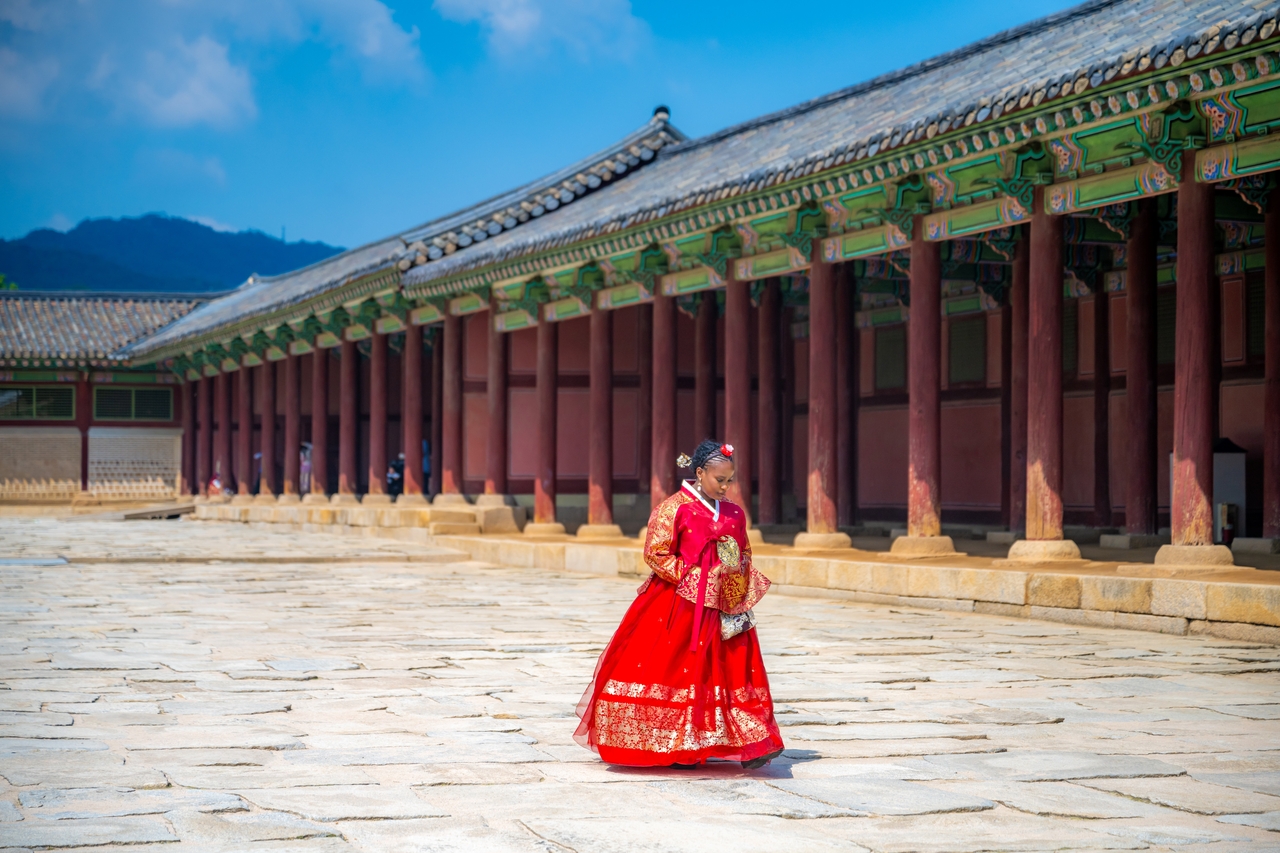
Gyeongbokgung is at its best before the tour groups arrive. Euljiro comes alive once the neon comes on.
Timing is what separates a decent Seoul photo from a good one. Here are five spots recommended by Seoul Tourism Organization, ordered by the hour.
Early morning, Gyeongbokgung
The palace is quiet right after the 9 a.m. opening, and the low sun rakes across the painted eaves without throwing hard shadows on faces. Renting a hanbok from the shops around the palace makes the result feel special with a bit of time travel thrown in.
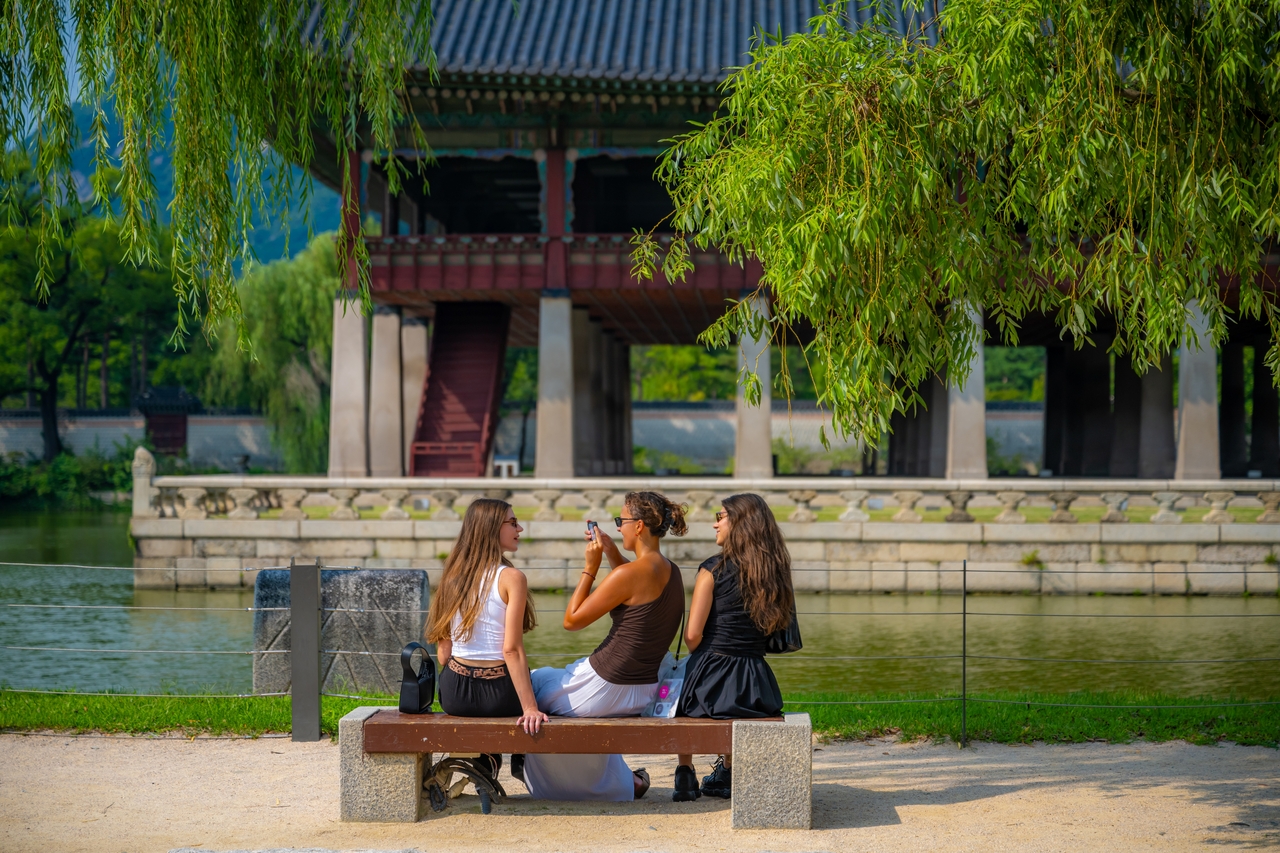
Frame a subject between the red pillars of the colonnade around Geunjeongjeon for depth. At Gyeonghoeru, shooting low from the pond's southwest corner puts sky, pavilion and reflection in a single frame.

Midday, Mullae-dong
Mullae-dong has been an ironworks district since the 1960s, and artists began moving in during the 2000s. Roughly 50 murals cover shutters and walls, alongside sculptures welded from metalworking scrap. Sunlight falls overhead through the buildings, and the contrast against the paint is the appeal here. The shops are still running, and people live in the alleys, so be respectful. Several studios offer one-day metal and ceramic classes.
Late afternoon, Cheonggyecheon
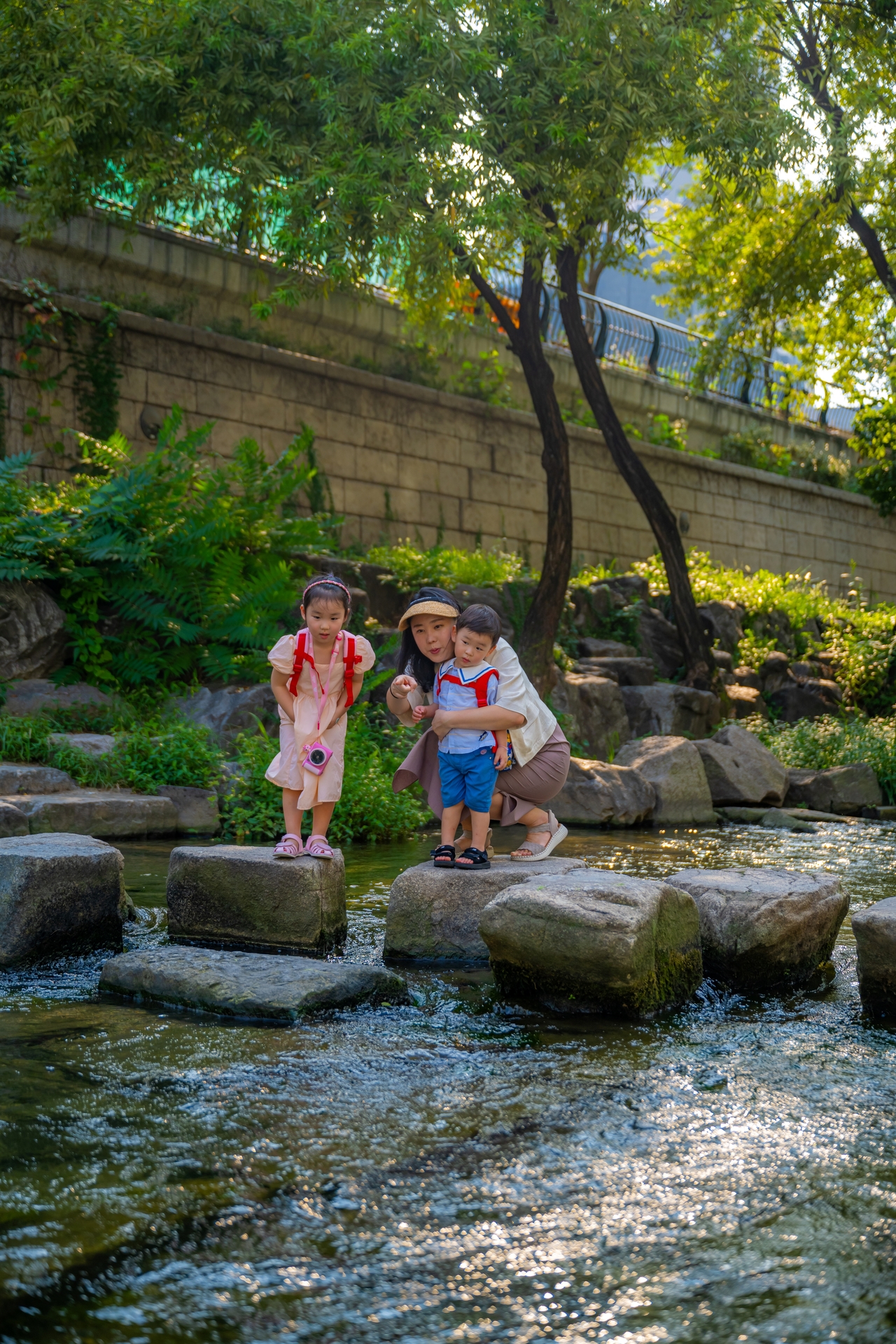
Light angles through the office towers and lands on the water. The walkway sits below street level, which keeps traffic out of the frame entirely.
Stand midway across the stepping stones with the current and the low sun behind. Gwangtonggyo holds the form of a Joseon-era stone bridge against the modern stream. The Sewoon Sangga walkway connects along the same route, past record shops and independent bookstores. At dusk, media art runs on the water under Gwanggyo.
Sundown, Naksan Park
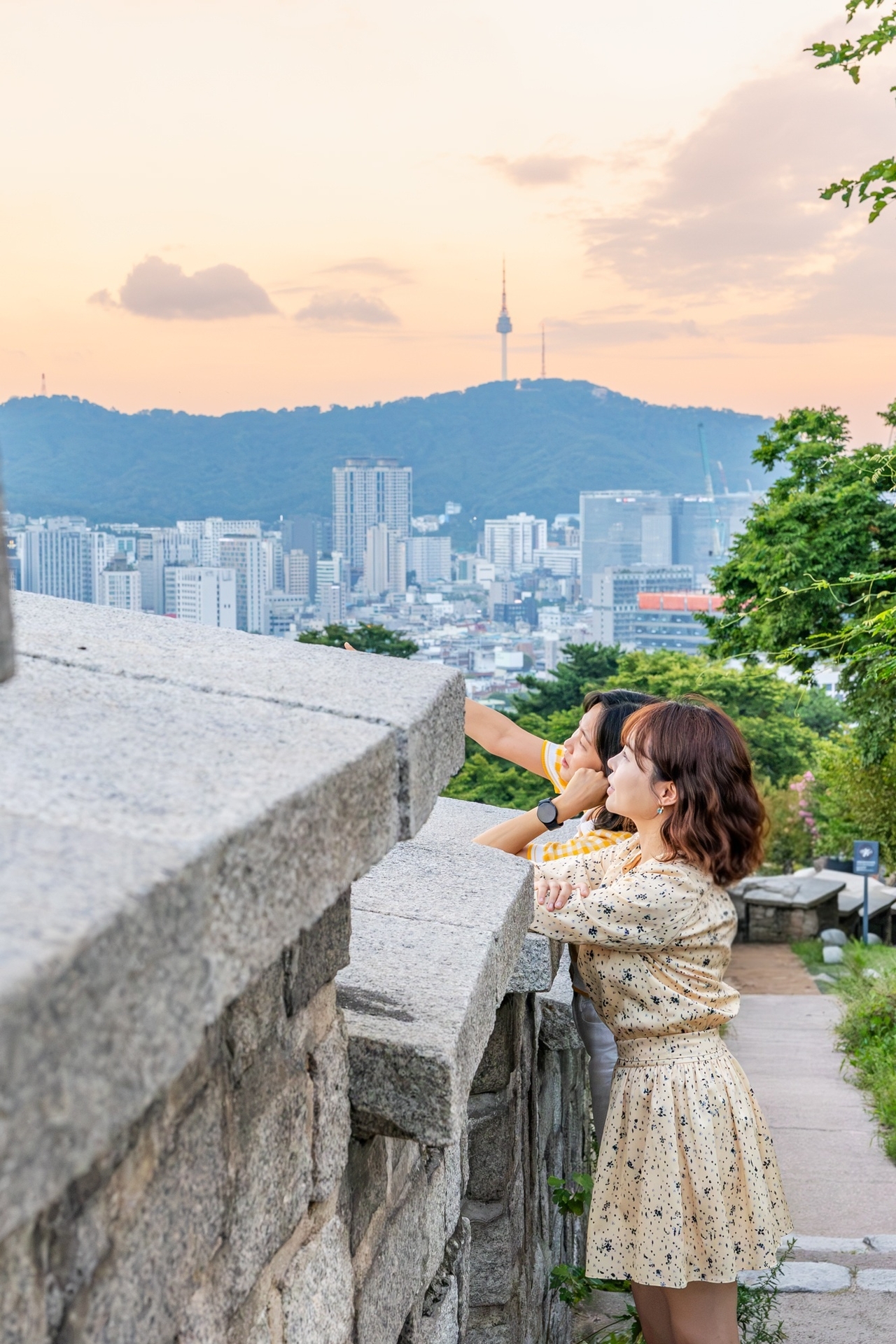
The old city wall path runs from Dongdaemun to Hyehwamun, with Namsan Seoul Tower and the Dongdaemun skyline spread out below. It appeared in "KPop Demon Hunters," and overseas fans have been visiting since.
Golden hour comes first. Then 20 to 30 minutes of blue hour, when the lighting along the wall comes on against a deepening sky. Both are short, so arrive before the sun drops and set the frame while there is still time to move.
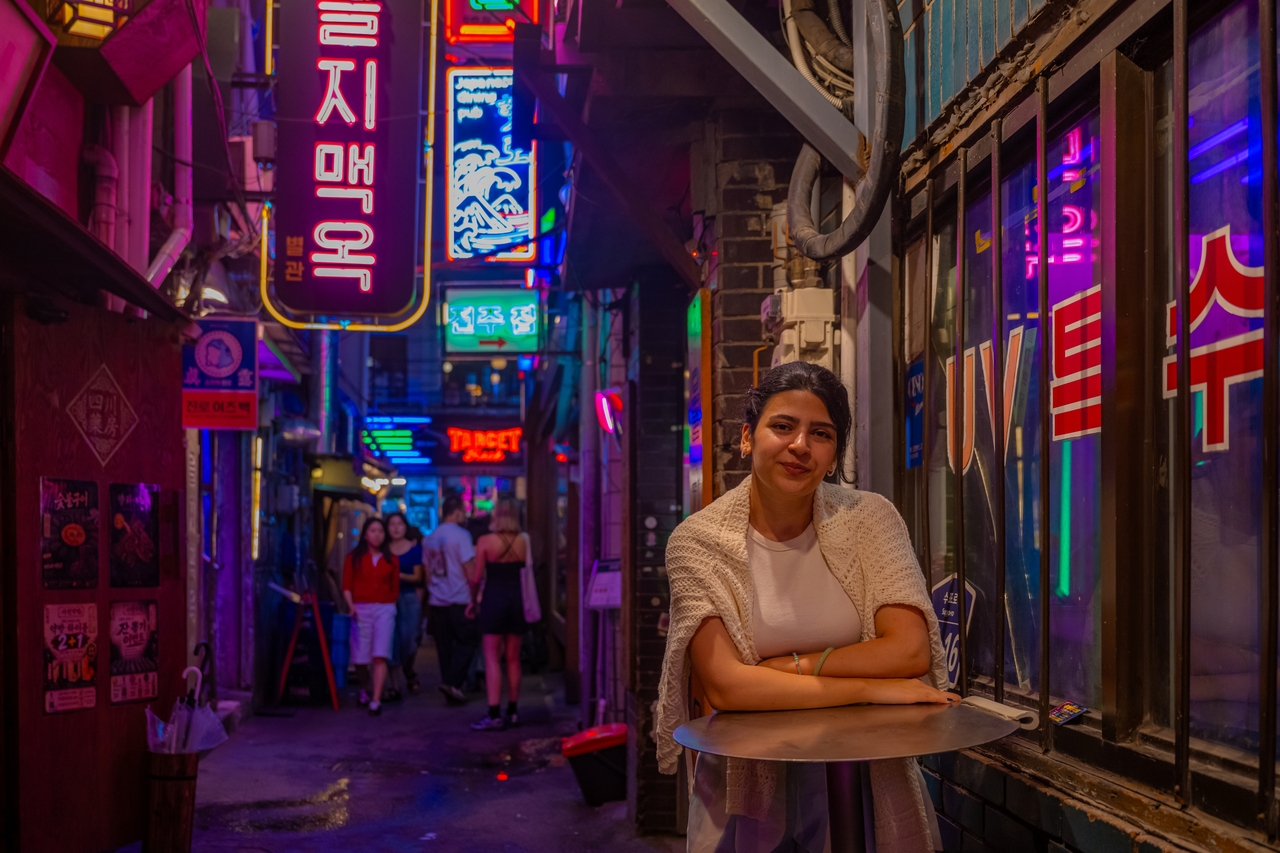
After dark, Euljiro
Euljiro runs on printing houses and tool suppliers by day, then turns to neon after dark. In Nogari Alley near Euljiro 3-ga Station, light spilling from the bars works as a reflector, and the narrow lanes bounce color back onto pedestrians.
Keep the neon as the main light source and let it blur behind the subject. The mix of aging signboards and new neon is where the "Hipjiro" nickname came from. Walk east toward Dongdaemun for DDP's curved facade.
yoohong@heraldcorp.com