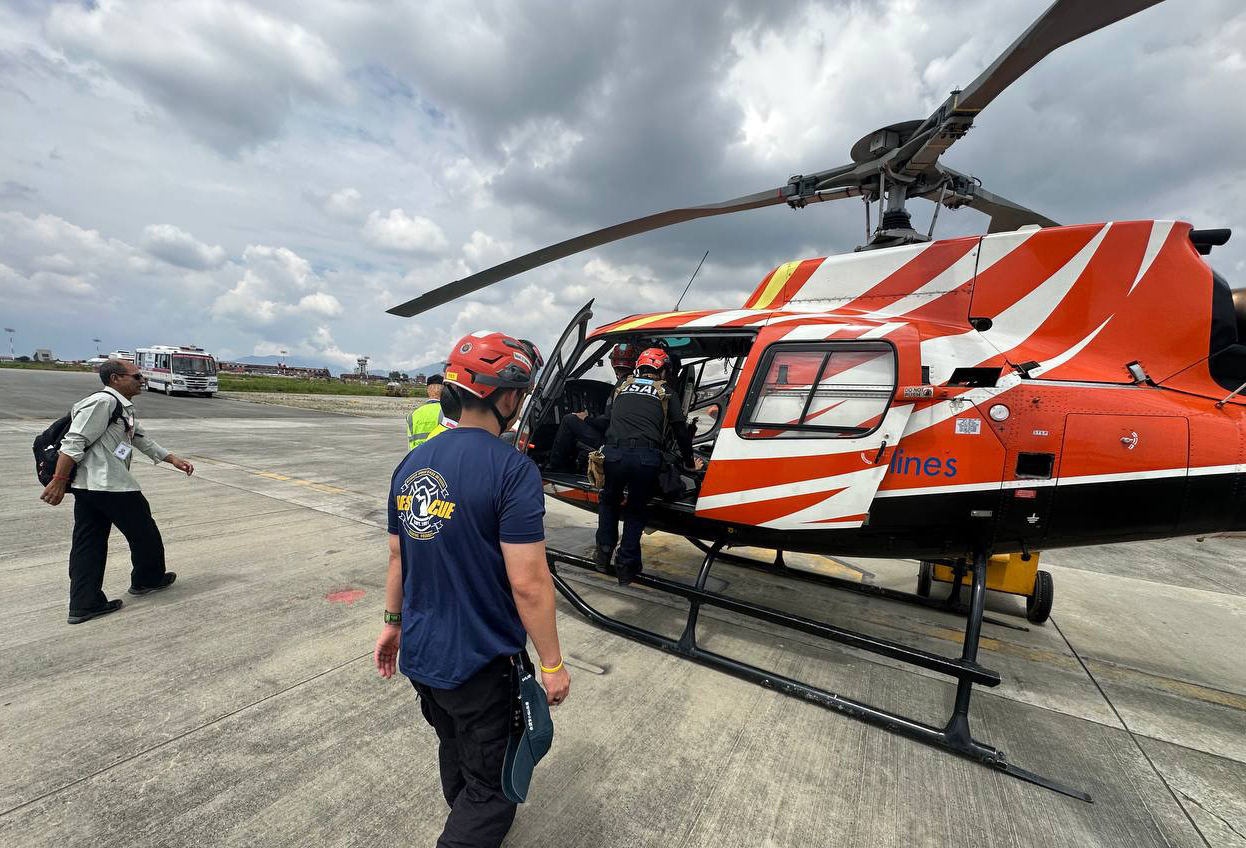
South Korea has stepped up its search for nine nationals missing in flood-hit Nepal with plans to deploy two helicopters on Sunday and review the use of drones, Seoul's Foreign Ministry said.
A separate chartered helicopter secured by the government's rapid response team for two flights over the disaster area Saturday at 11:45 a.m. and 12:38 p.m. found no survivors, a ministry official told reporters Sunday.
Each helicopter flight lasted about 40 to 50 minutes, with the response team spending roughly 20 to 30 minutes flying over the affected area and conducting visual searches from the air, according to the official. Roads and bridges leading into the Rasuwa district were washed away by the floods, meaning helicopters are currently the only means of accessing the area and carrying out search operations.
The rugged mountainous terrain and the risk of further severe flooding have also limited low-altitude flights and helicopter landings in the affected area.
The ministry clarified that contrary to earlier reports that two helicopters had been deployed, a single helicopter made two separate sorties. Response team members surveyed the affected area from the air and recorded video footage for further analysis, but found no sign of the missing South Koreans.
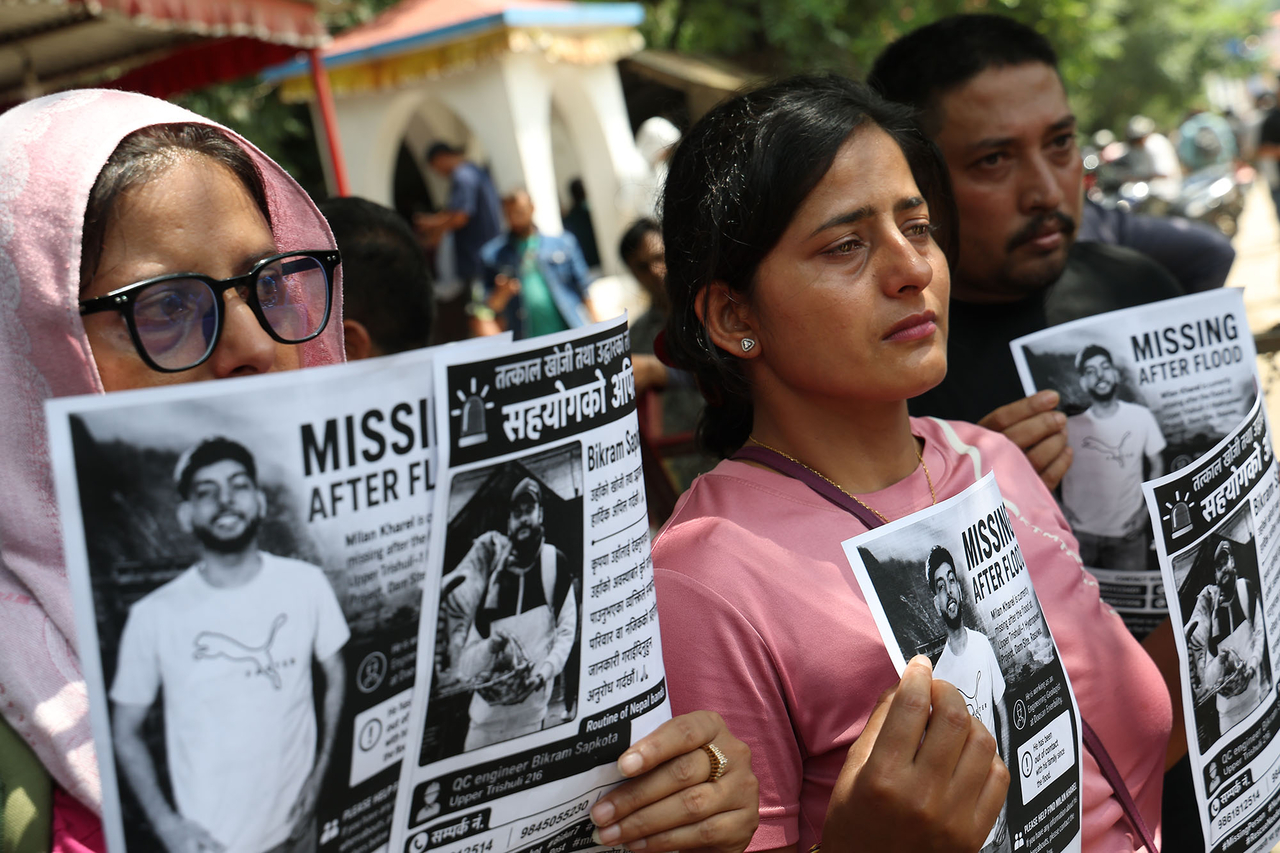
The government plans to conduct additional searches Sunday using two helicopters — one chartered by Doosan Enerbility Co. and another by the rapid response team — although the flights remain subject to clearance from Nepali authorities and weather conditions, the official explained.
Of the nine missing, six are employees of Doosan Enerbility Co., and three are from the Korea South-East Power Co. The nine had been working at a hydroelectric power plant construction site in the Himalayan region near the border with China.
"We are planning to use two helicopters today, but that will depend on approval from the Nepali authorities and weather conditions," the official said.
The search area is also expected to be widened based on information gathered during Saturday's flights.
Ten other Doosan employees who had been stranded at a separate location were previously moved to safety.
Search efforts have faced repeated difficulties due to damaged roads and bridges, unpredictable weather and restrictions imposed by Nepali authorities amid concerns over further flooding.
Nepal had largely restricted civilian helicopter operations over safety concerns but granted clearance for the helicopter chartered by the South Korean government to conduct Saturday's searches, according to the ministry official.
The Nepali military has also joined efforts to locate the missing Koreans using coordinates and maps provided by the South Korean government.
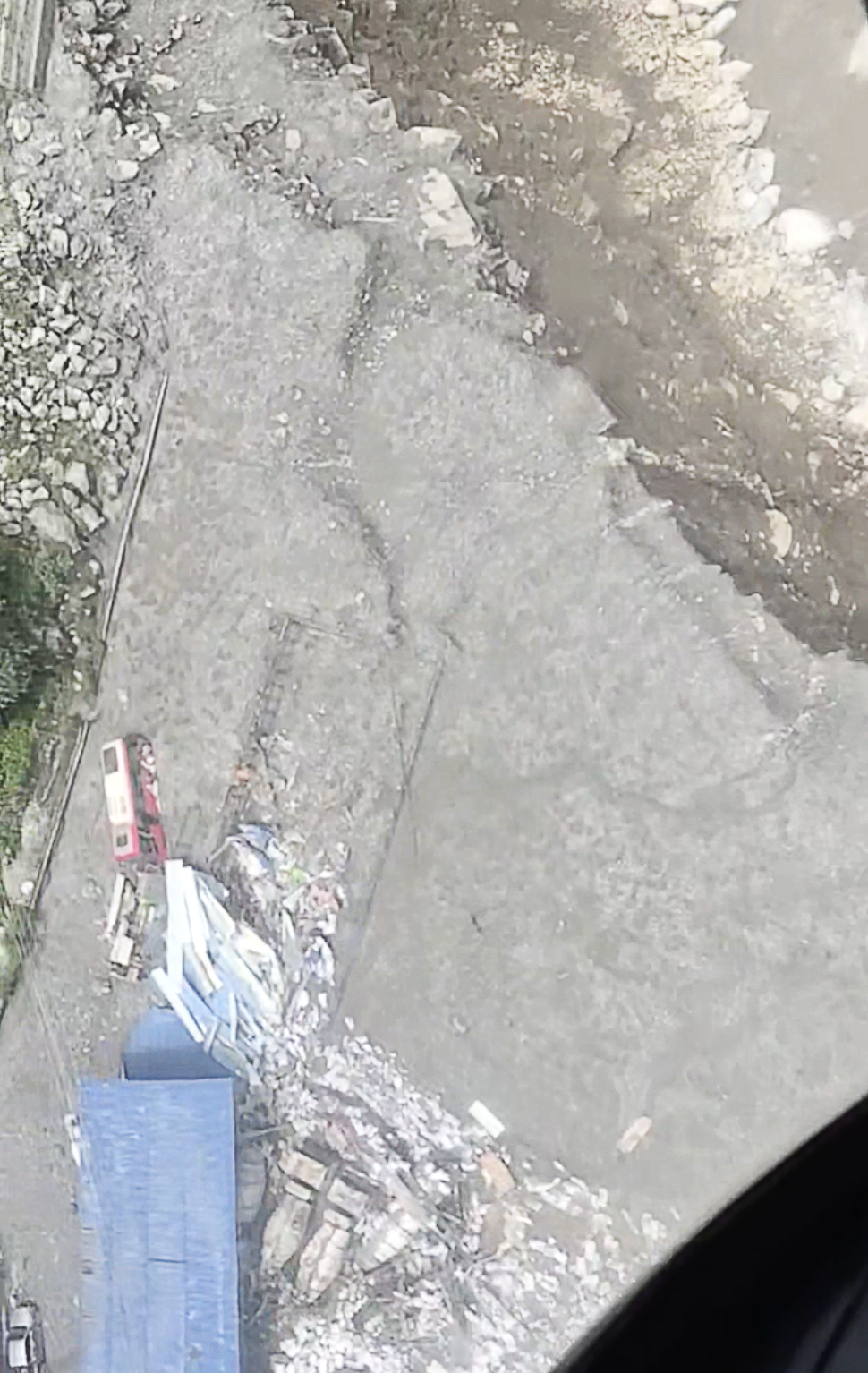
On Saturday, a Nepali military helicopter landed near the disaster area, and troops were deployed for a ground search around locations where the missing Koreans were believed to have evacuated. The operation, however, also failed to locate any of the nine missing.
Lim Sang-woo, head of the South Korean government rapid response team, has met with Nepali foreign affairs and military officials to share information on the missing Koreans' possible locations and request continued cooperation.
Meanwhile, Seoul is considering adding drones to the search effort. A second group of rapid response personnel that arrived in Nepal on Saturday brought a drone, though officials said a decision on its deployment would depend on conditions on the ground.
"If needed, we will conduct search and rescue operations using various means, including not only helicopters but also drones," the ministry official said.
On Saturday, a second nine-member reinforcement team, consisting of Foreign Ministry officials and National Fire Agency personnel, joined 11 officials dispatched earlier, bringing the government's rapid response presence in Nepal to 20.
Corporate teams have also mobilized helicopters and other equipment for the search. Korea South-East Power conducted a brief helicopter search Friday after receiving clearance shortly before sunset but could not locate the missing workers.
Separately, Seoul has offered to dispatch a Korea Disaster Relief Team, a statutory emergency response unit capable of conducting overseas search and rescue and medical relief operations. Its deployment requires a request or acceptance from the host government.

Nepali authorities have so far prioritized military- and police-led rescue operations, citing the region's difficult terrain and unstable weather conditions.
The ministry also played down reports that the missing Koreans could be among some 100 people reportedly trapped in a tunnel at a hydroelectric power plant construction site.
The tunnel was not part of the missing Koreans' workplace and was far enough away from their location that it would have required travel by vehicle, according to company information cited by the ministry.
"There is almost no possibility that our nationals evacuated toward the tunnel," the official said.
Park Jae-kyung, South Korea's newly appointed ambassador to Nepal, is scheduled to arrive in the country on Monday. Seoul appointed Park on Friday to fill the previously vacant post.
mkjung@heraldcorp.com