South Korea will intensify its crackdown on Chinese fishing boats operating illegally near the Northern Limit Line in the Yellow Sea, including by deploying more Coast Guard special forces and strengthening cooperation with Beijing, the government said Thursday.
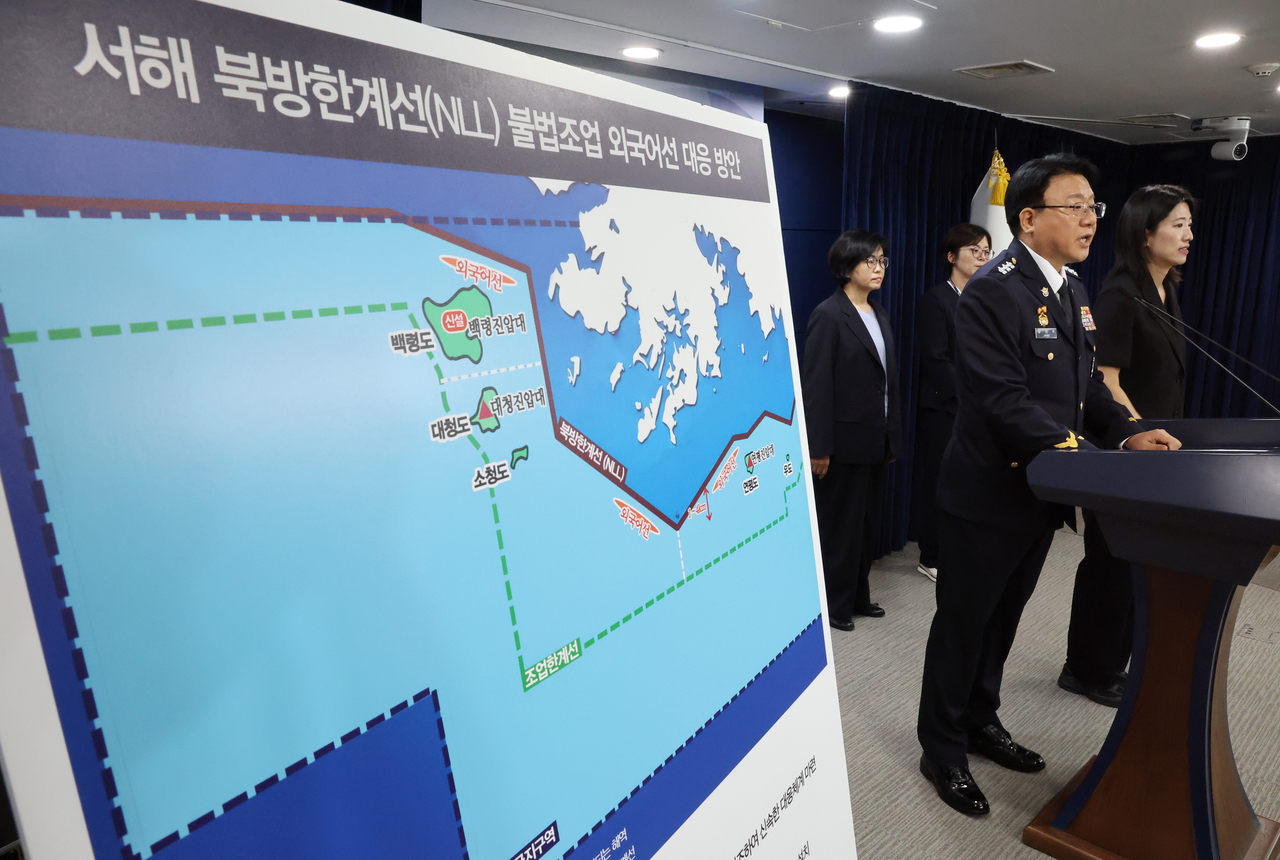
The Korea Coast Guard announced the measures at a joint briefing in Seoul with the Ministries of Foreign Affairs, Unification, National Defense and Oceans and Fisheries.
The package focuses on tougher enforcement near the NLL, the removal of illegal fishing gear and installation of underwater deterrents, stronger on-site enforcement capabilities, and closer coordination with China.
The government plans to streamline information sharing between the military and Coast Guard and revise regulations so authorities can take action not only against illegal fishing but also against unauthorized anchoring, drifting and supply activities.
Currently, authorities can punish only confirmed illegal fishing in waters near the NLL. A planned revision to the Enforcement Decree of the Territorial Sea and Contiguous Zone Act would allow enforcement against vessels that stop or remain in the area for purposes unrelated to passage.
Officials said the change would make it possible to block fishing-related activity and supply operations even without direct evidence of fishing.
The Oceans Ministry will also begin operating a vessel for removing illegal gear, including traps laid by Chinese boats near the NLL.
Additional artificial structures fitted with sharp hooks will be placed on the seabed in areas closed to South Korean fishing vessels. Authorities expect the structures to damage the nets of Chinese pair trawlers that drag fishing gear along the seafloor.
The Coast Guard will also establish a new special response unit on the island of Baengnyeongdo under the West Sea Special Security Unit. Special teams are currently stationed on islands of Yeonpyeongdo and Daecheongdo, with 30 commandos and two high-speed craft at each location. The new Baengnyeongdo unit will add 50 personnel and two boats.
The government also plans to expand cooperation with China. The Oceans Ministry will urge Beijing to fully implement agreements reached through the Korea-China Joint Fisheries Committee, under which Seoul shares information on suspected illegal fishing and China is expected to punish violators and report the results.
The Foreign Ministry will press Chinese authorities to step up education and enforcement involving their fishermen. South Korean diplomatic missions in China will also publicize tougher penalties introduced in May, when the maximum fine for illegal fishing under South Korean law was raised from 300 million won ($217,000) to 1.5 billion won.
The tougher measures will take effect from next month, when the autumn blue crab fishing season begins.
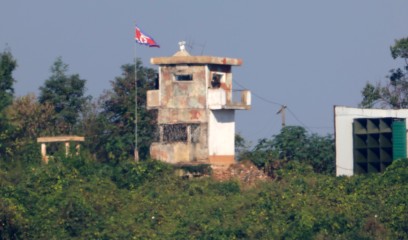
Waters south of the NLL are designated as a restricted zone where foreign fishing vessels are banned. Chinese boats, however, have repeatedly crossed the maritime boundary, taking advantage of the security constraints near North Korean waters.
The number of Chinese vessels operating illegally near the NLL has fallen from an average of about 200 per day in 2016 to fewer than 100 in recent years. The daily average was 94 in 2023, 90 in 2024 and 97 in 2025. This month, an average of 77 vessels have been operating 2 to 4 kilometers south of the NLL near Baengnyeongdo, Socheongdo and Yeonpyeongdo.
Enforcement remains difficult as Chinese boats often flee into North Korean waters when South Korean authorities launch seizure operations. Coast Guard officers generally have only 10 to 15 minutes to complete an operation before risking crossing the NLL.
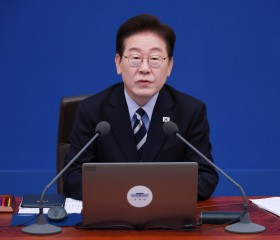
President Lee Jae Myung called for stronger measures after visiting the Yeonpyeongdo Peace Observatory on June 24.
"They have crossed the NLL that we officially recognize. I don't think we can simply leave this unattended," Lee said at the time. "Isn't this too much in broad daylight?"
Acting Coast Guard Commissioner General Jang In-sik said the government would respond firmly to repeated illegal fishing and unauthorized incursions.
"We will take firm action against any illegal activity to protect the lives and safety of our people and the livelihoods of our fishermen," he said.
cheesuk@heraldcorp.com