Crab 52 asks $200 per person for unlimited crustaceans. The raw bar and the gejang justify it. The lobster does not
Dinner at Crab 52 starts with clam chowder and a plate of steamed snow crab, but for the next half-hour it's all about the raw bar.
That 30-minute window matters. The main dishes begin circulating roughly 30 to 40 minutes after service begins, and once the butter and chili sauces arrive, the appetite for raw fish tends not to return.
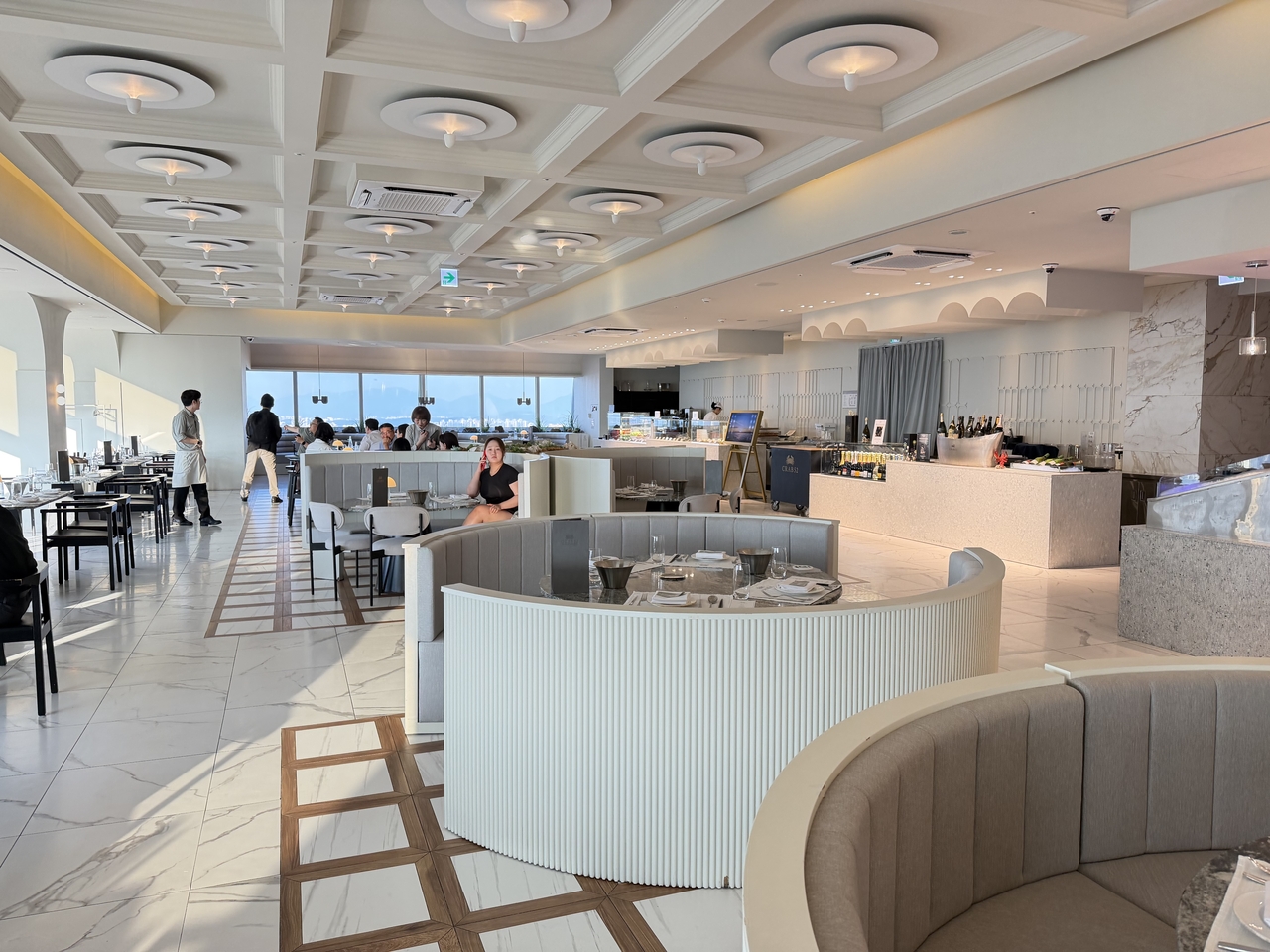
The restaurant, billed as the most expensive buffet in the country, occupies the 52nd floor of Trade Tower in Gangnam, Seoul, with sightlines running to the Han River. Window tables are assigned by booking order rather than on arrival, so the view rewards early reservations.
Adults pay $200 and children $100. The bill is settled in won at a rate reset daily according to the previous day's exchange rate. Lunch runs from noon to 3 p.m. and dinner from 6-9 p.m., with a three-hour seating. A revamped menu took effect this month.
Crab 52 is operated by Viking Group, which opened the seafood restaurant Vikings in 2003 and later launched Viking's Wharf, an all-you-can-eat lobster restaurant. The company holds an intermediary wholesaler license at Noryangjin Fisheries Wholesale Market and buys directly at the dawn auctions.
It runs a bonded seawater tank facility inside the free trade zone at the Incheon Airport logistics complex. Crab, including snow crab, lobster and Dungeness crab, is brought in from 10 countries.
The kitchen is led by executive chef Choe Byung-youl, a Le Cordon Bleu Paris graduate who spent five years at Sheraton Grand Walkerhill Hotel before joining Viking Group as executive chef in 2016.
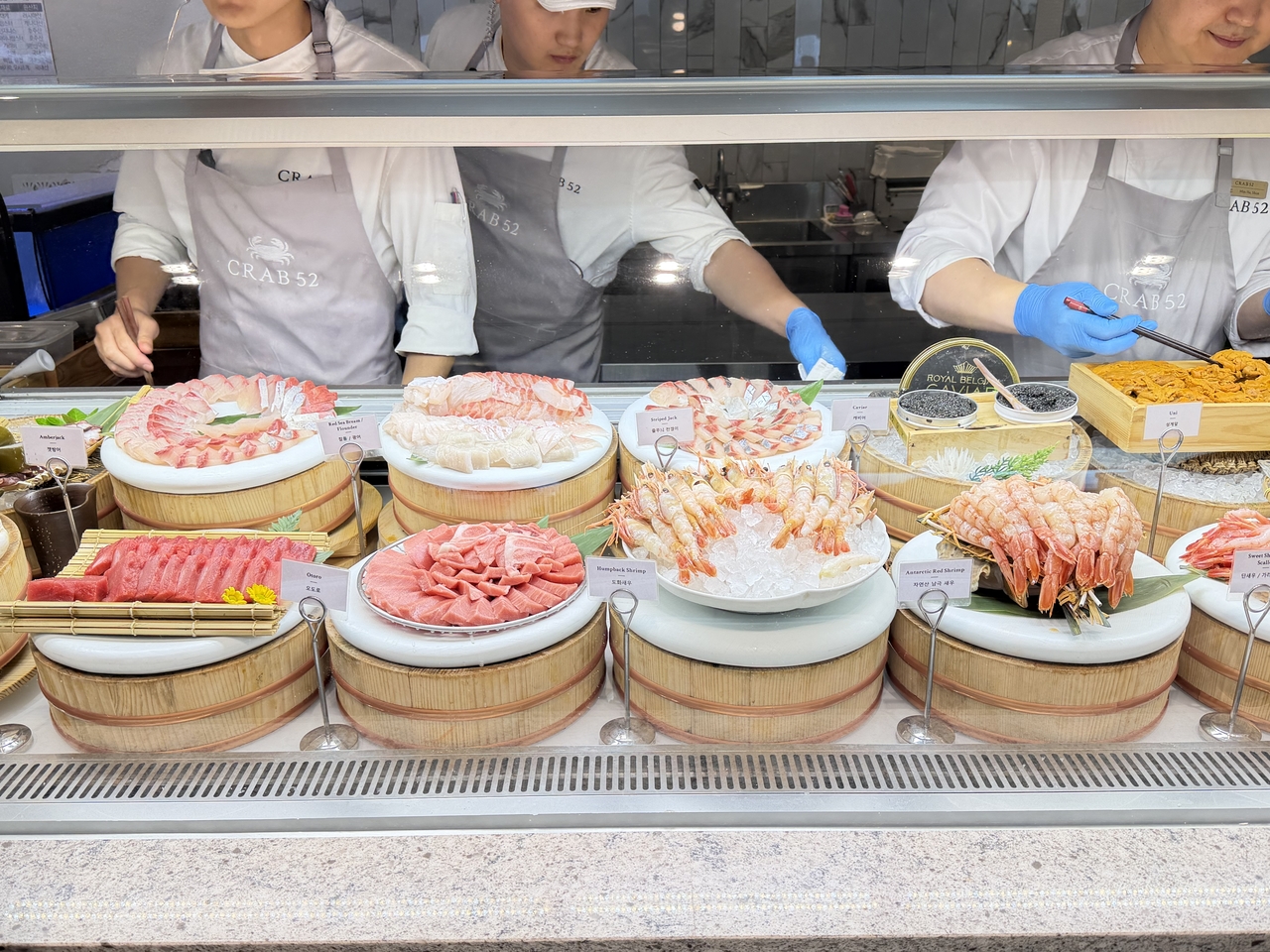
The raw bar
The sashimi counter is assembled to order from amberjack, blanched octopus, abalone, otoro, red sea bream, humpback shrimp, striped jack, Antarctic red shrimp, uni, salmon roe, royal Belgian caviar and sheets of gamtae seaweed. Plates come on dark, rough-edged stoneware.

Built as a wrap, a sheet of gamtae loaded with Antarctic red shrimp, uni, salmon roe and caviar is the most persuasive thing on the floor. Priced individually, those four ingredients would account for a meaningful share of the cover charge on their own. Here they refill without limit, and when The Korea Herald ate here the fish was uniformly fresh.
A hanwoo grill station sits beside it, opening an hour into service and offering striploin, sirloin and short rib. Diners give their table number, and the beef is grilled to headcount and delivered with scallion salad. Being a crustacean specialist, beef is definitely not their forte.
Soft drinks are unlimited and include three San Pellegrino sparkling varieties, zero-sugar cola and sparkling water. Alcohol is charged separately, and the list runs as far as Piper-Heidsieck Rare Champagne Queen Edition.
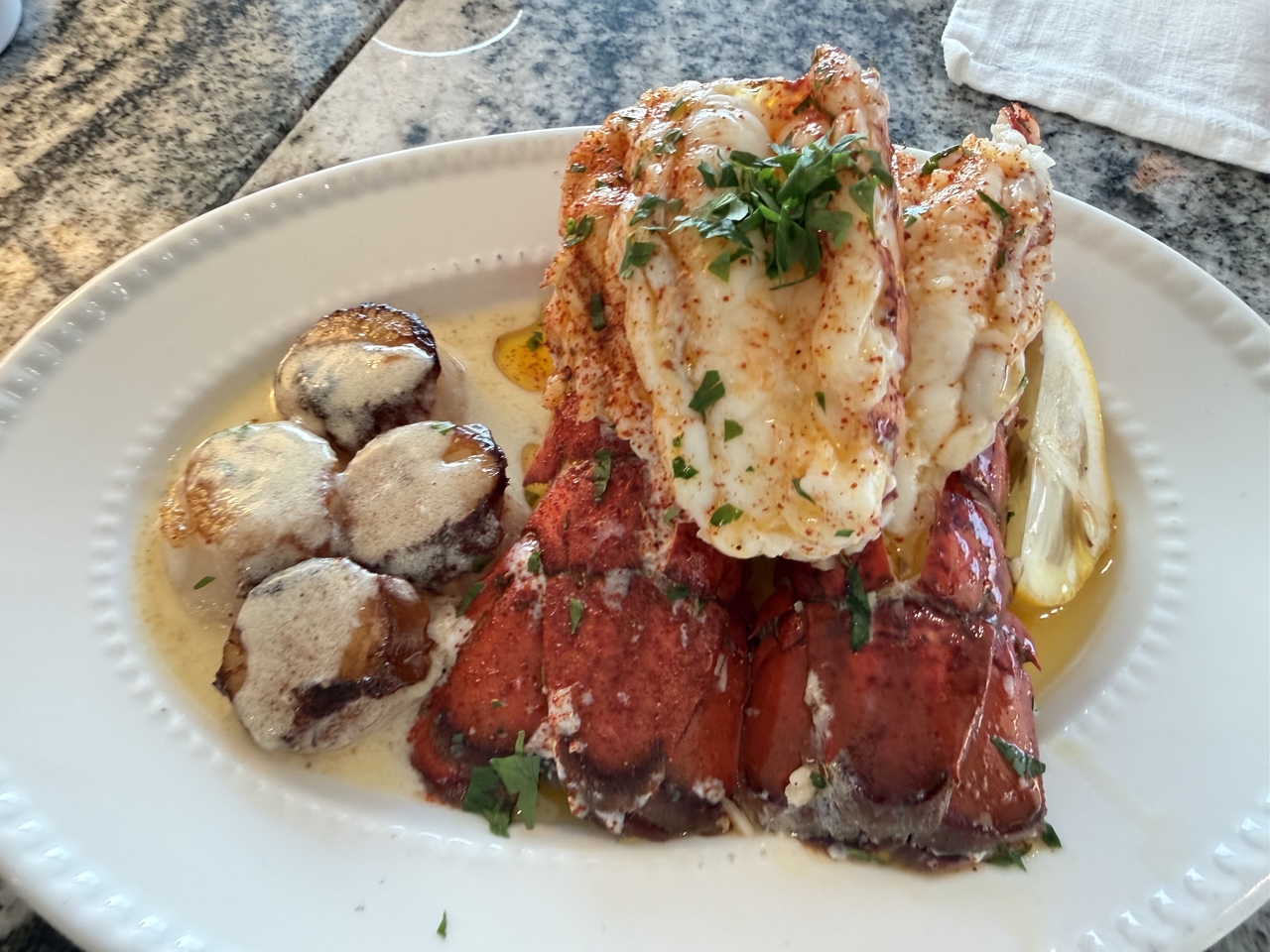
Trolley service
The first course out is butter lobster with garlic cream scallop. Only the tail is served, and it stays moist, but the flavor was thin enough to raise questions about whether the shellfish reaches the table as fresh as billed. The garlic cream sauce was good. The scallop under it was bland.
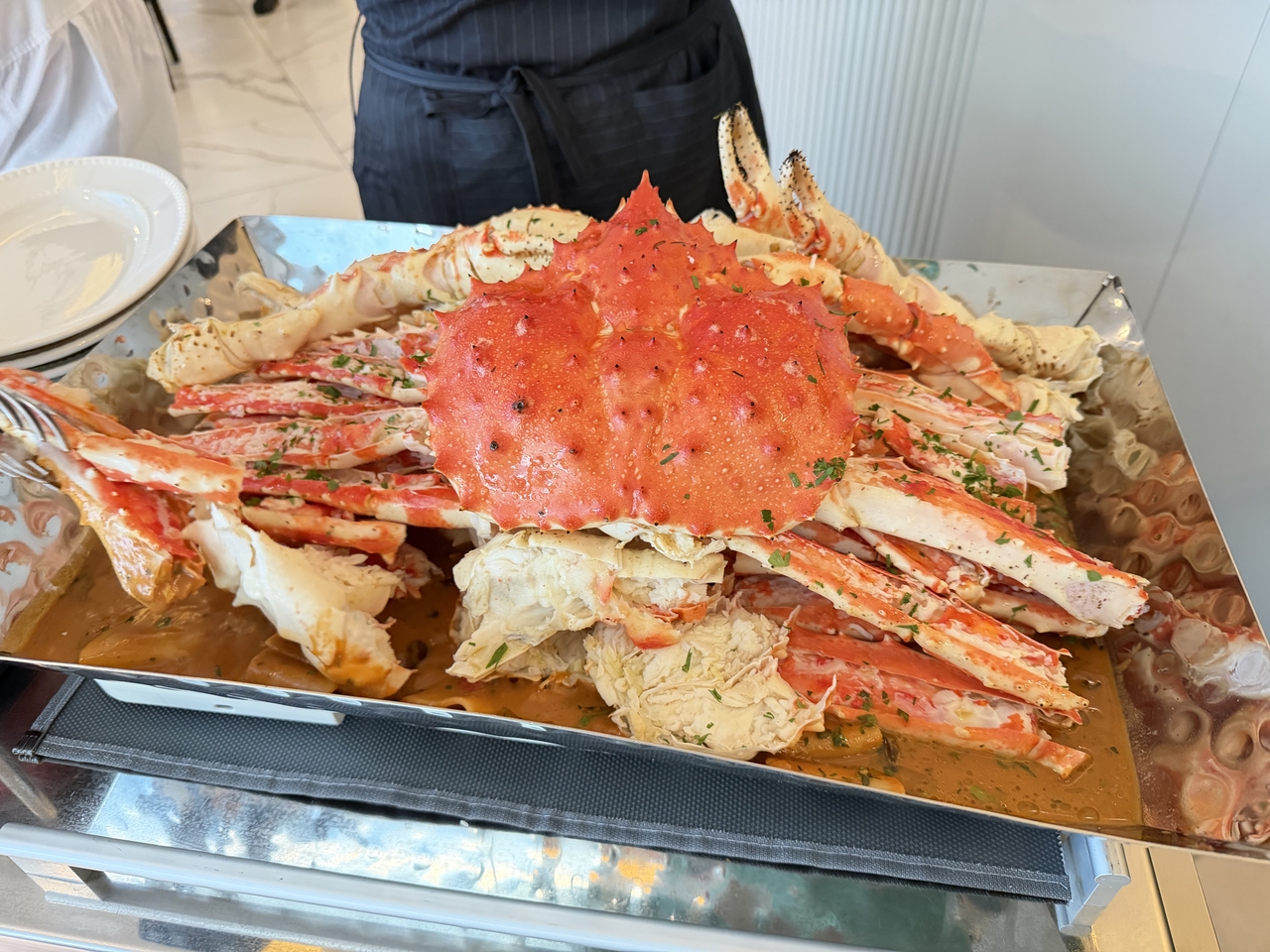
King crab bisque pasta follows. It is made with paccheri cooked al dente and finished tableside with grated Reggiano, but the bisque lacked the concentration the name promises.
Garlic lobster, chili crab and fried mantou land next, and the mild heat arrives at the right moment, roughly when the butter starts to accumulate. The chili crab was the highlight of the cooked menu and closely tracks the Singaporean version. Staff on the floor volunteered that the crab reserved for this dish is the best on the menu. The mantou is drizzled with condensed milk and turns the sauce into a sweet-salty course of its own. The dish is served with cilantro, so anyone wanting to avoid it should say so at the table.

Shabu-shabu also comes portioned individually with vegetables, snow crab, scallop and hard clam in a broth that runs clean and spicy. The scallops here were plump in a way the garlic cream version was not.
The final savory course is ganjang gejang, described by the restaurant as Yeonpyeong Island crab, served whole with a scoop of white rice and sesame oil spooned into the shell.
Soy-marinated raw crab turns unpleasant easily, going either fishy or oversalted. This one did neither, and the sweetness of the roe carries through. A single gejang runs about 50,000 won at a specialist restaurant in Seoul, so this is the best value on the table.
Every crustacean arrives pre-shelled, and every trolley dish can be reordered.

Secret event
Fruit is offered as an assortment or by request, from Shine Muscat, apple mango, melon and cherry. The melon was properly ripened and sweet. The apple mango was flat and missing its acidity.
A gelato counter carries about 10 flavors from Gelati Gelati, alongside vanilla mille-feuille, matcha mille-feuille and chocolate fudge supplied by Lyon Bakery. The mille-feuille lived up to the bakery's reputation.
At 8:20 p.m., part of the dining room lighting is switched off so the night view takes over, which is the moment the address does the work.
Whether the price is worth it depends on what a diner comes for. The cooked crustacean courses are competent, but they do not match the $200 price tag. The uni, caviar, salmon roe and Antarctic red shrimp do. So does the gejang and the window seat.
Based on the Herald's experience, guests who work the raw bar hard before the trolleys start will eat well past the cover charge. Guests who hold out for the lobster will not.
yoohong@heraldcorp.com