Lee calls emergency meeting over safety of Koreans in Nepal, response team sent to South Asian country
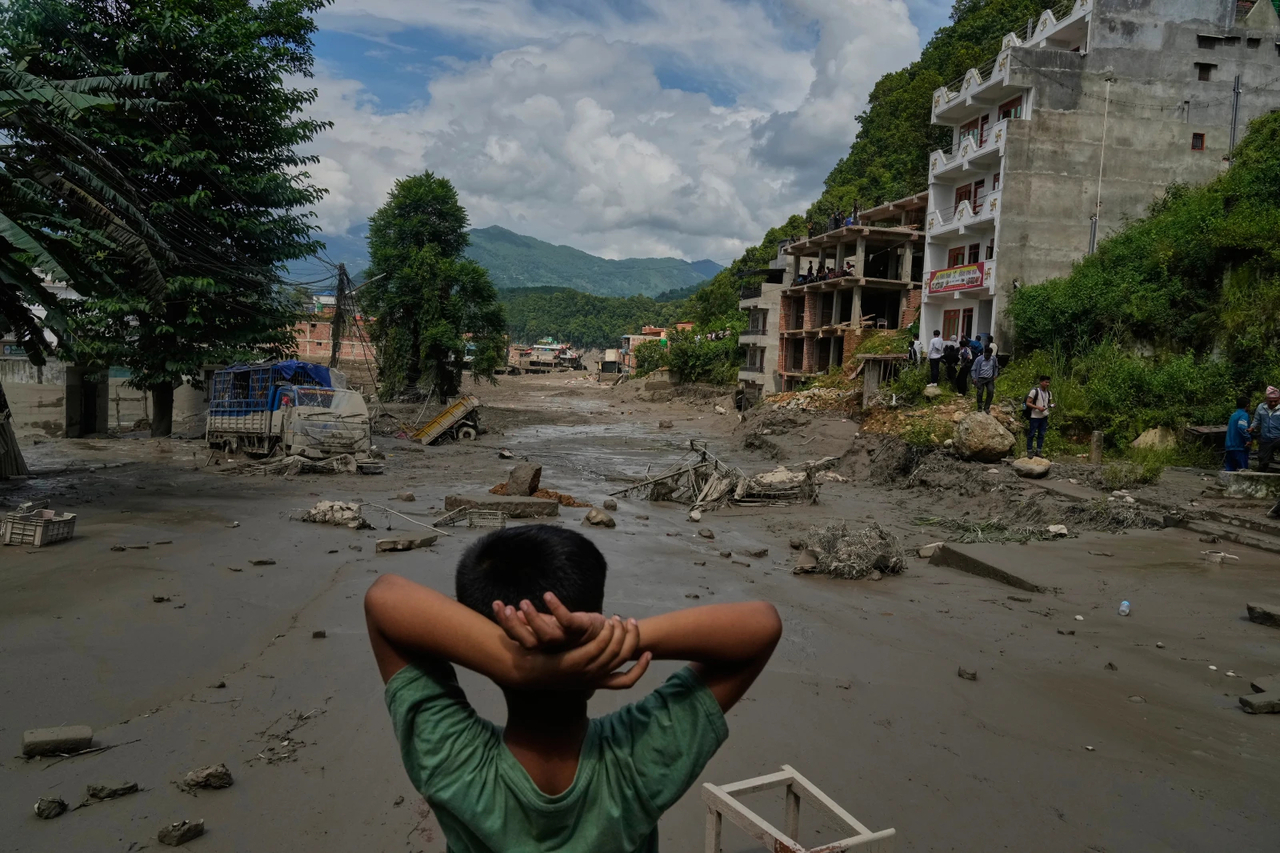
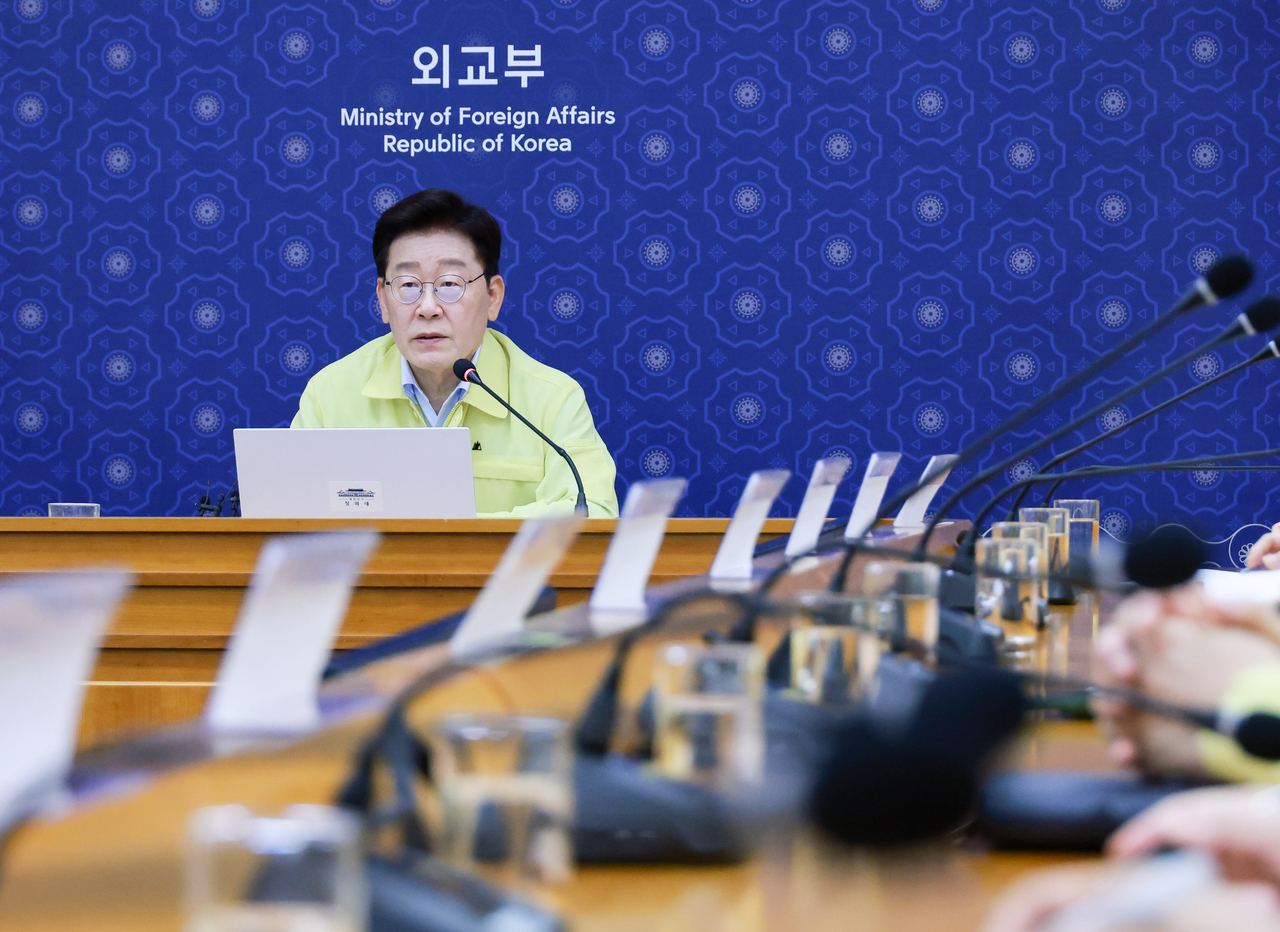
President Lee Jae Myung on Thursday ordered the mobilization of all available resources to search for and rescue South Koreans who remain out of contact or stranded after Wednesday's flash floods in northern Nepal.
“We have had to convene an unscheduled emergency meeting. The safety and lives of our citizens are in a very serious situation,” Lee said in his opening remarks at an emergency meeting at the Foreign Ministry’s situation room in Seoul.
“Nine of our citizens who were working at a hydropower plant construction site in Nepal remain unaccounted for and appear to be in a very dangerous situation,” Lee said.
The meeting brought together the heads of the Foreign Ministry, the Ministry of Land, Infrastructure and Transport, the National Fire Agency, the National Police Agency, and the acting head of the South Korean Embassy in Nepal.
Lee asked the Foreign Ministry to take the lead in mobilizing personnel and resources from government agencies, the Embassy in Nepal, the rapid response team dispatched to Nepal, and the Korean companies concerned.
“I ask everyone to do their utmost by mobilizing all available resources, with the resolve that no response is excessive when it comes to protecting the lives and safety of our citizens,” Lee said.
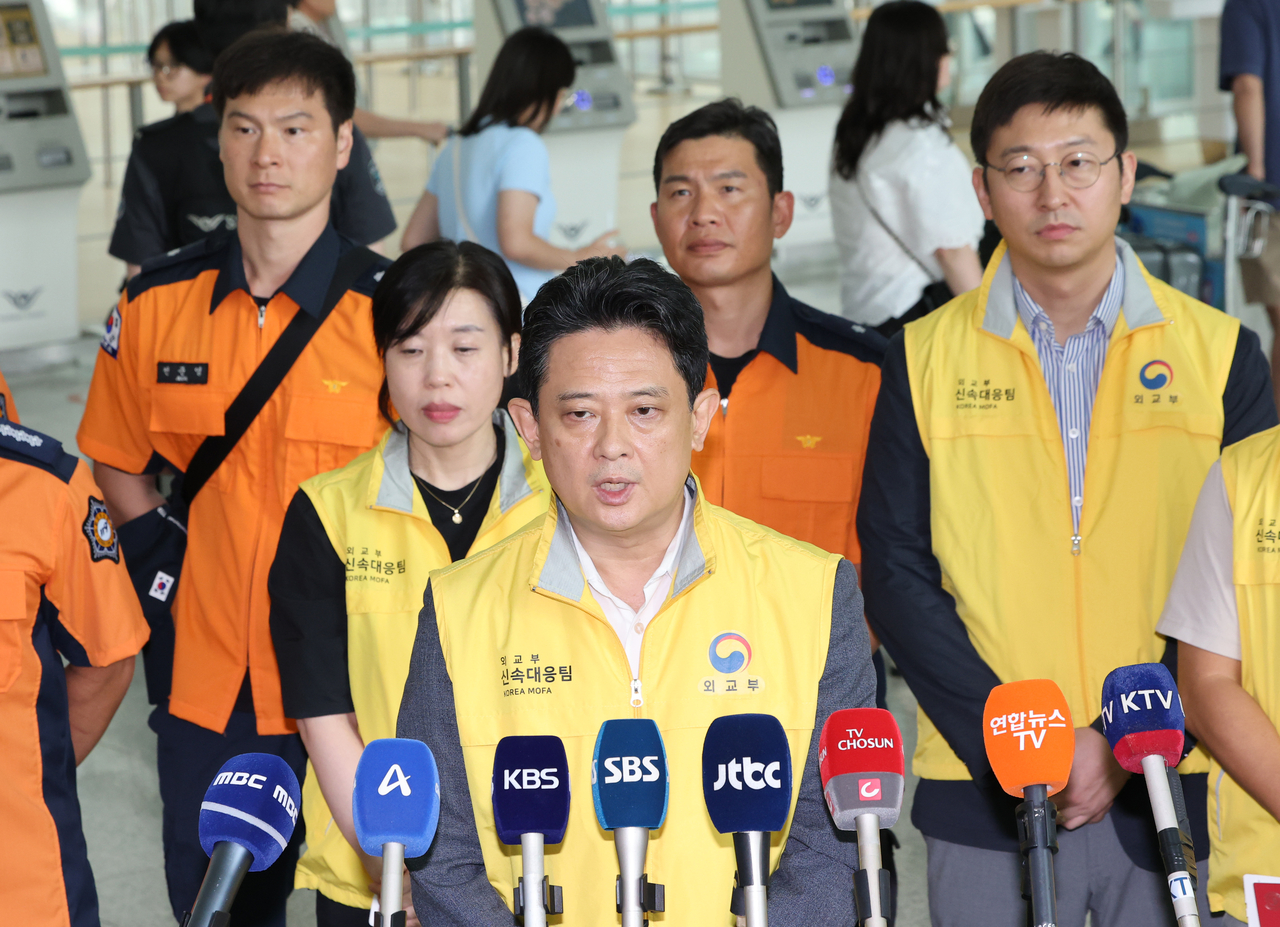
South Korea dispatched an 11-member government rapid response team to Nepal on Thursday afternoon to support search-and-rescue operations for the missing Koreans, according to the Foreign Ministry.
Led by Lim Sang-woo, the government representative for overseas Korean protection and consular affairs, the team consists of four Foreign Ministry officials, five firefighters and two police officers.
During the emergency meeting, Lee also called for measures to prevent further harm to Korean nationals.
Lee stressed the importance of cooperation with the Nepalese government, instructing the Foreign Ministry to use all diplomatic channels to ensure that resources needed for search-and-rescue operations could be deployed.
Lee also extended his “deepest sympathies to the people and government of Nepal.”
“I ask the government to carefully review what assistance we can provide for a swift response to the loss of life and property and for an early recovery,” Lee said. “Please make sure that there are no shortcomings in our humanitarian assistance.”
Following the emergency meeting, Foreign Minister Cho Hyun told reporters that Seoul could send additional rescue personnel, describing the 11-member team as an advance unit.
“We need to speak with Nepal’s foreign minister” before deciding whether to dispatch a rescue team, Cho said. “If we send additional personnel, it would have to be dozens of people.”
Cho later spoke by phone with his Nepalese counterpart, Shisir Khanal, to request the Nepalese government’s cooperation in the search-and-rescue effort.
Cho also said South Korea would provide $1 million in humanitarian assistance through international organizations operating in Nepal to support the government's emergency response and recovery efforts.
Nine South Koreans — employees of Doosan Enerbility and Korea South-East Power — lost contact after the flooding Wednesday morning and remained out of touch as of 11 a.m. Thursday, according to the Foreign Ministry in Seoul.
Separately, as of Thursday afternoon, nine of the 10 South Korean workers who had been stranded in the area awaiting rescue had been evacuated to a safe location by a Nepalese military helicopter, according to the ministry.
The 10 workers had earlier been confirmed safe while awaiting evacuation alongside some 200 foreign workers, with a South Korean consular official dispatched to the site.
The workers were stationed at the Upper Trishuli-1 hydropower plant construction site in Rasuwa district, a mountainous region near Nepal’s border with Tibet, about 70 kilometers from Kathmandu.
Doosan Enerbility dispatched an on-site response team led by Vice Chairman Jung Yeon-in to Nepal on Thursday afternoon, while Korea South-East Power sent employees from its headquarters to set up a local rescue coordination camp.
The Foreign Ministry said it would continue to check whether any other South Koreans had been affected, noting that an average of around 20,000 South Koreans visit Nepal each year for tourism.
Against that backdrop, the Lee administration stepped up efforts Thursday to ensure the safety of South Korean nationals in Nepal, adjusting the president’s schedule.
Lee postponed his regular weekly meeting with senior presidential aides to convene an emergency session at the Foreign Ministry headquarters in Seoul, according to Cheong Wa Dae.
The presidential office also postponed a lunch meeting Friday between Lee and lawmakers from the ruling Democratic Party of Korea, citing the “government’s all-out efforts to ensure the safety of South Korean nationals,” senior presidential spokesperson Kang Yu-jung said in a statement Thursday.
Cho chaired an emergency meeting at 10:30 p.m. Wednesday with officials from the South Korean Embassy in Nepal, the National Police Agency, the Land Ministry and other agencies.
The flooding was part of a wider disaster that swept through mountainous areas along the Nepal-China border Wednesday. Nepal’s National Disaster Risk Reduction and Management Authority said the death toll from the flash floods had risen to 165 as of Thursday and was expected to climb further, with 826 people still missing.
dagyumji@heraldcorp.com