Five years in, Frieze Seoul has raised the city’s global profile, but its impact on the art market remains an open question
Four years ago, Korea’s art market was riding a pandemic-era boom and the inaugural edition of Frieze Seoul fueled expectations that Seoul was poised to emerge as another art capital in Asia.
It was also around the time that Korea's art market reached a record 806.6 billion won ($572 million) in sales. International galleries opened new outposts, expanded their existing spaces or staged pop-up exhibitions in Seoul.
Korea’s relatively favorable tax regime was another factor that attracted international galleries and market players.
Although it offers fewer advantages than Hong Kong, eligible original artworks can generally be imported free of customs duties and value-added tax. Private sales below 60 million won ($43,000) per work and sales of works by living Korean artists are also generally exempt from income tax.
Now, as Frieze Seoul approaches its fifth edition, has the city lived up to its promise?
The fair has undoubtedly raised Seoul's international profile and transformed September into the busiest month on the city’s art calendar. But some still question whether it has strengthened Seoul as an art market overall.
“Many people from the international art world tell me they visited Korea during Frieze Seoul and saw a lot of great exhibitions here. Participating in the fair has also given me opportunities to meet a wide range of people in the art world,” said Kang So-jung, executive director of Arario Gallery in Seoul. The gallery has participated in Frieze Seoul since its inaugural edition.
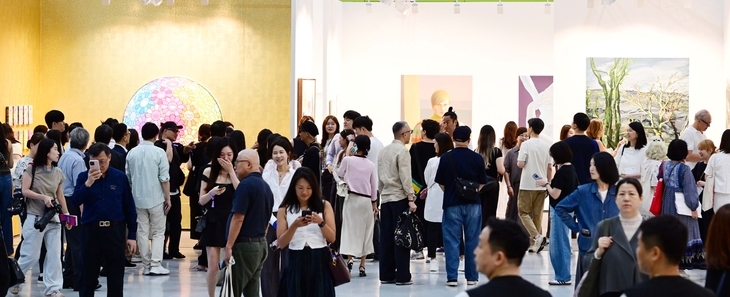
One significant change, industry insiders say, is that Frieze Seoul has brought together different players in the art world: Commercial galleries, public museums and government bodies now coordinate exhibitions and programs around Frieze Week.
Art professionals here also widely agree that Frieze Seoul has expanded public engagement with art. Audiences are exposed to major works and exhibitions scheduled to coincide with the fair, while galleries and museums stay open late to offer exhibitions, performances, food and drinks.
“It has fostered a culture of appreciating art and created an environment that encourages it,” said Park Kyung-mi, founder of PKM Gallery in Seoul.
“Art, in particular, needs to be experienced firsthand, and seeing outstanding works and exhibitions in Korea has undoubtedly broadened people’s perspectives on contemporary art.”
Questions over sustainability
Four editions later, however, it remains uncertain whether the international attention brought by Frieze Seoul has made the city's art market richer and more sustainable.
After peaking in 2022, the resilience of Korea's art market was put to the test as it entered a correction after the pandemic-era boom.
Although the downturn reflected broader global economic uncertainty, Korea's relatively small market leaves it particularly vulnerable to shifts in economic conditions and collector sentiment, multiple industry sources said.
According to the Korea Arts Management Service, art transactions in Korea totaled 615.1 billion won in 2024, equivalent to roughly 0.8 percent of the global market’s estimated $57.5 billion in sales, according to Art Basel and UBS.
“Korea tends to see money concentrate heavily in certain assets, whether in real estate, stocks or art. Especially now, much of the available investment capital seems to be flowing into stocks rather than art,” said a Seoul-based gallerist who requested anonymity.
Buoyed by an AI-driven semiconductor rally, the Kospi more than doubled from the start of the year to reach an all-time closing high of 9,114.55 on June 22, drawing strong investor interest and capital into the stock market.
“A mature market continues to build trust and lasting relationships around artists and their work even as market conditions change. Korea needs to establish that long-term foundation,” said Kim Kyung-mi, director of Pace Gallery Seoul.
Many gallerists also note that the past four editions of Frieze Seoul have confirmed a long-standing concern about Korea’s art market: Collectors tend to gravitate toward a narrow group of blue-chip or fashionable artists, often with resale value in mind.
For Jason Haam, founder of Seoul-based gallery Jason Haam, the market will not truly grow until demand broadens to a new generation of Korean artists.
“Qualitative growth will come when emerging artists gain international recognition and develop markets comparable to Lee Ufan’s,” Haam said.
“In the US, people get excited when a new market forms around an artist. In Korea, people are more likely to ask, ‘Is this a genuine market, or is it just hype?’ There is strong resistance to the emergence of new artist markets here.”
Although Frieze Seoul’s initial momentum has yet to translate into tangible market growth, Haam still views the fair as an essential “art Silk Road” connecting Korean artists and galleries with the international art world.
“This is not a short game,” he said. “It takes time for a generation shaped by Frieze Seoul to enter the art market. Sustaining this platform for 20 years would itself be a significant achievement.”
Amid the market downturn and unmet expectations of building a broader collector base in Korea, some international galleries have scaled back or stopped participating, including Perrotin. Korean galleries have increasingly filled the gap, and Frieze Seoul has claimed that the shift reflects its growing regional strength.
More than 70 percent of the over 125 galleries participating this year are based in the Asia-Pacific region.
Gajah Gallery, which has championed Southeast Asian contemporary art for three decades, is one of the newcomers this year, making its Frieze Seoul debut with artists from Indonesia, Malaysia and the Philippines.
The gallery said it sees growing opportunities in Korea and believes this is the right time to engage more deeply with the country’s art scene.
"While Korean collectors have typically been strong supporters of blue-chip and established international artists, we are seeing growing curiosity in contemporary practices from Southeast Asia," the gallery said via email in response to a question about joining Frieze Seoul.
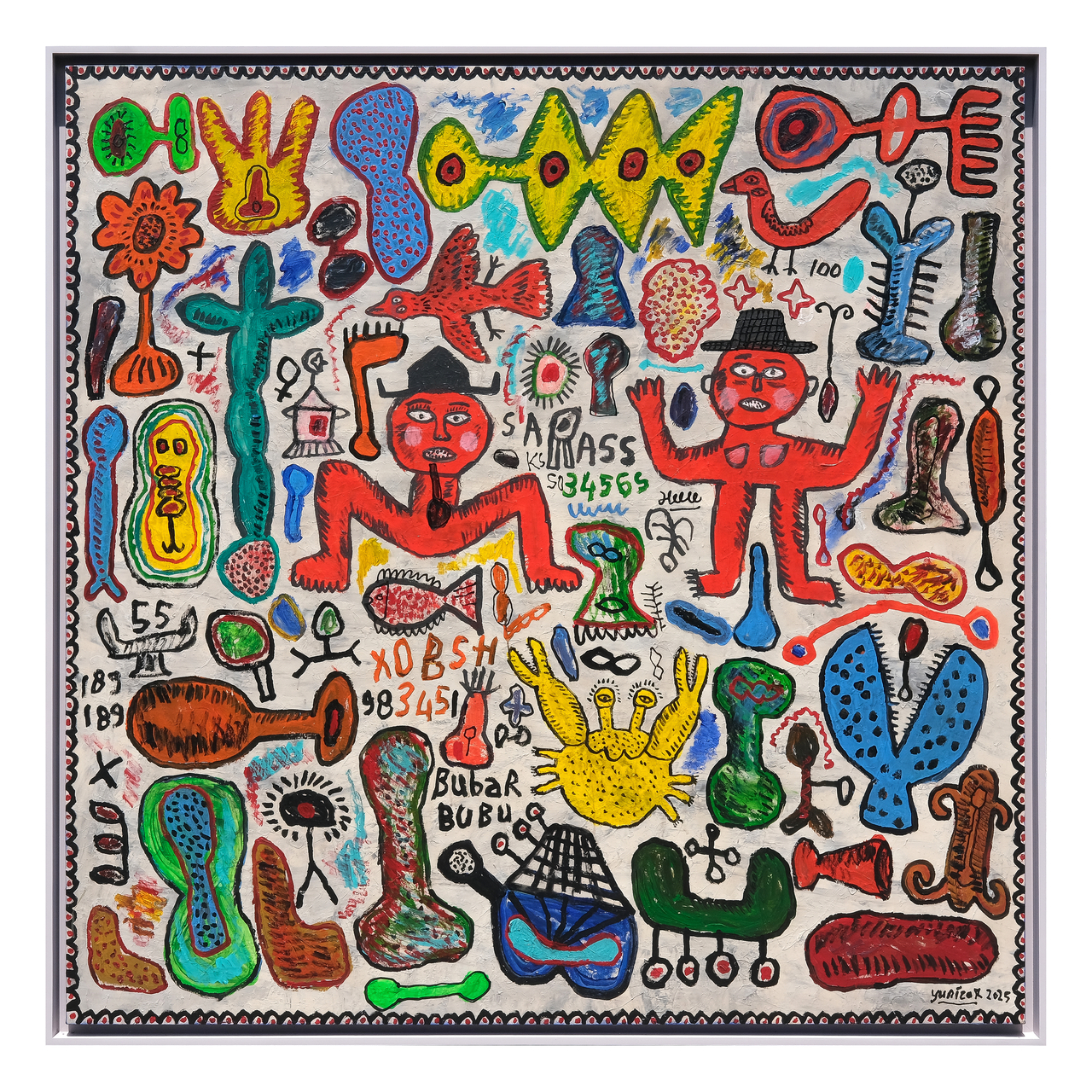
Its presentation will include Indonesian artists I Gusti Ayu Kadek Murniasih and Yunizar, as well as Filipino artist Benedicto “BenCab” Cabrera. Murniasih was featured in the National Museum of Modern and Contemporary Art, Korea's exhibition, "Connecting Bodies: Asian Women Artists," in Seoul last year.
“The commitment to bringing diverse Southeast Asian artists to Seoul is part of a broader movement towards greater cultural exchange across Asia. As collectors and institutions look beyond their own borders, Southeast Asian contemporary art is gaining well-deserved visibility, not as a niche category but as an integral part of the global contemporary art conversation,” the gallery said.
The fifth edition of Frieze Seoul will run Sept. 2-5 in collaboration with Kiaf Seoul, a homegrown art fair, at Coex in southern Seoul.
The two fairs will be held at separate venues for the first time in 2027 due to renovations at Coex. Frieze Seoul will relocate to Dongdaemun Design Plaza, while Kiaf Seoul will remain at Coex.
The split is expected to present another test for Frieze Seoul and the broader Korean art market, industry insiders say.
“Frieze Seoul will enter a new phase next year. Once it is held separately from Kiaf Seoul, we will see how strong its drawing power really is,” said a Seoul-based gallerist who has participated in the fair since 2023.
yunapark@heraldcorp.com