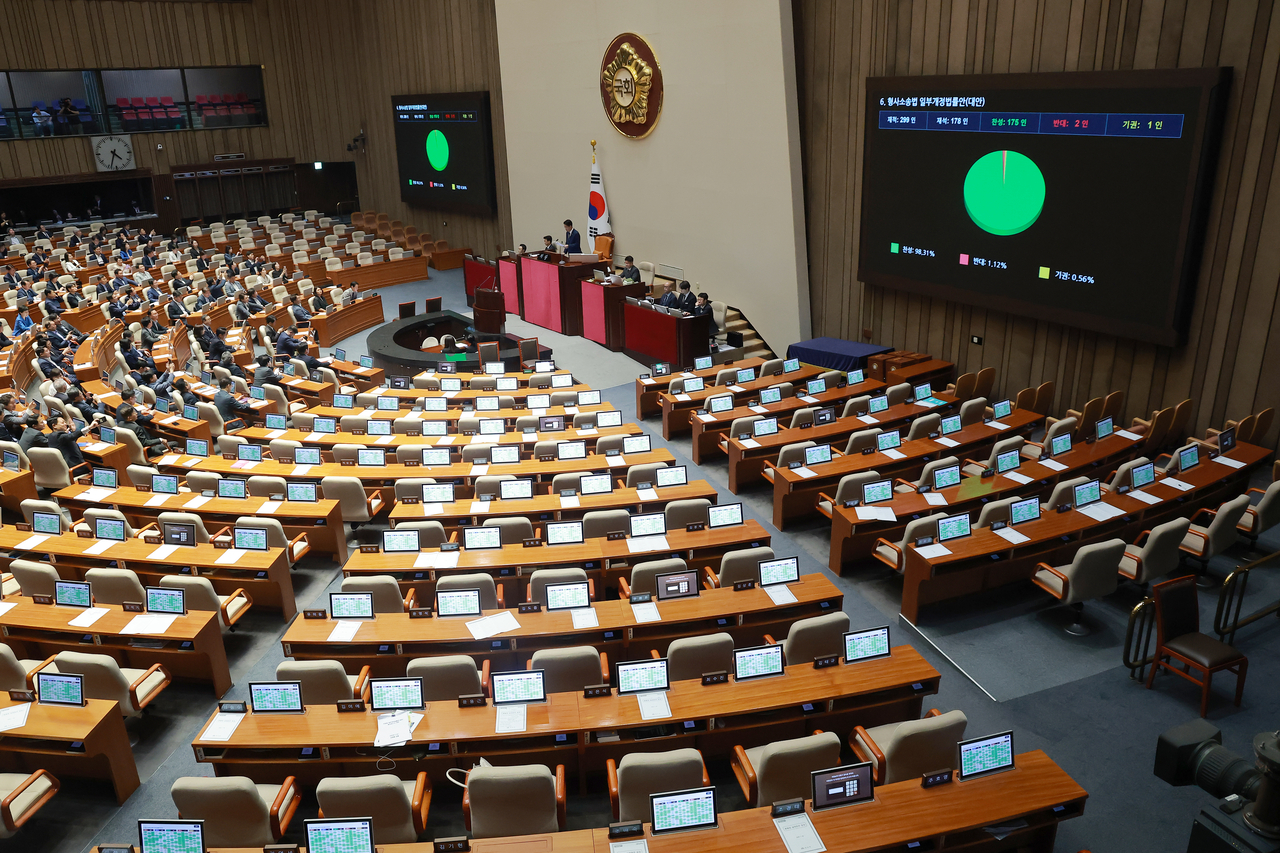
The National Assembly on Friday voted in favor of a revision to the Criminal Procedure Act to strip the prosecution of its authority to investigate crimes under any circumstances.
The bill passed the plenary session in a 175-2 vote with one abstention Friday. This followed the liberal parties' vote to lift the filibuster launched Thursday by the main opposition People Power Party.
Cheong Wa Dae said it "respected the National Assembly’s legislative process and final decision," pledging to ensure that the revised law would be implemented smoothly.
"The revision to the Criminal Procedure Act will prevent the concentration and abuse of power by separating investigative and prosecutorial functions," Seong Ghi-hong, senior presidential secretary for public relations and communications, said in a statement following the bill’s passage.
"It will also bring the criminal justice system one step closer to the people by strengthening protections for victims and the public’s human rights."
Seong's statement followed the request of People Power Party Floor Leader Rep. Jeong Jeom-sig on Friday that the president veto the bill, on the basis that the revision would otherwise help Lee Jae Myung evade responsibility in the criminal cases brought against him before he became president. Jeong added that the main opposition party was considering all available options, such as constitutional appeals, to stop the bill from becoming law.
The Democratic Party of Korea expects that the bill will put the final touches on its reform efforts to curb prosecutors' power abuses for the first time in nearly eight decades of the prosecution's history.
The reform push has centered on ways to separate prosecutors' powers to investigate crimes and issue indictments. Friday's bill will be aligned with the Democratic Party's earlier legislative push to carve the investigative function out of the prosecution, effective Oct. 2.
The ruling party has claimed such a structure of power concentration in the country's criminal justice system has allowed the prosecution to attack politicians and exert influence on national politics.
The Democratic Party has also claimed that liberal politicians including President Lee and Roh Moo-hyun, the former president who died of suicide in 2009 amid a prosecution probe into his alleged corruption, have been among the victims of politically motivated prosecutors.
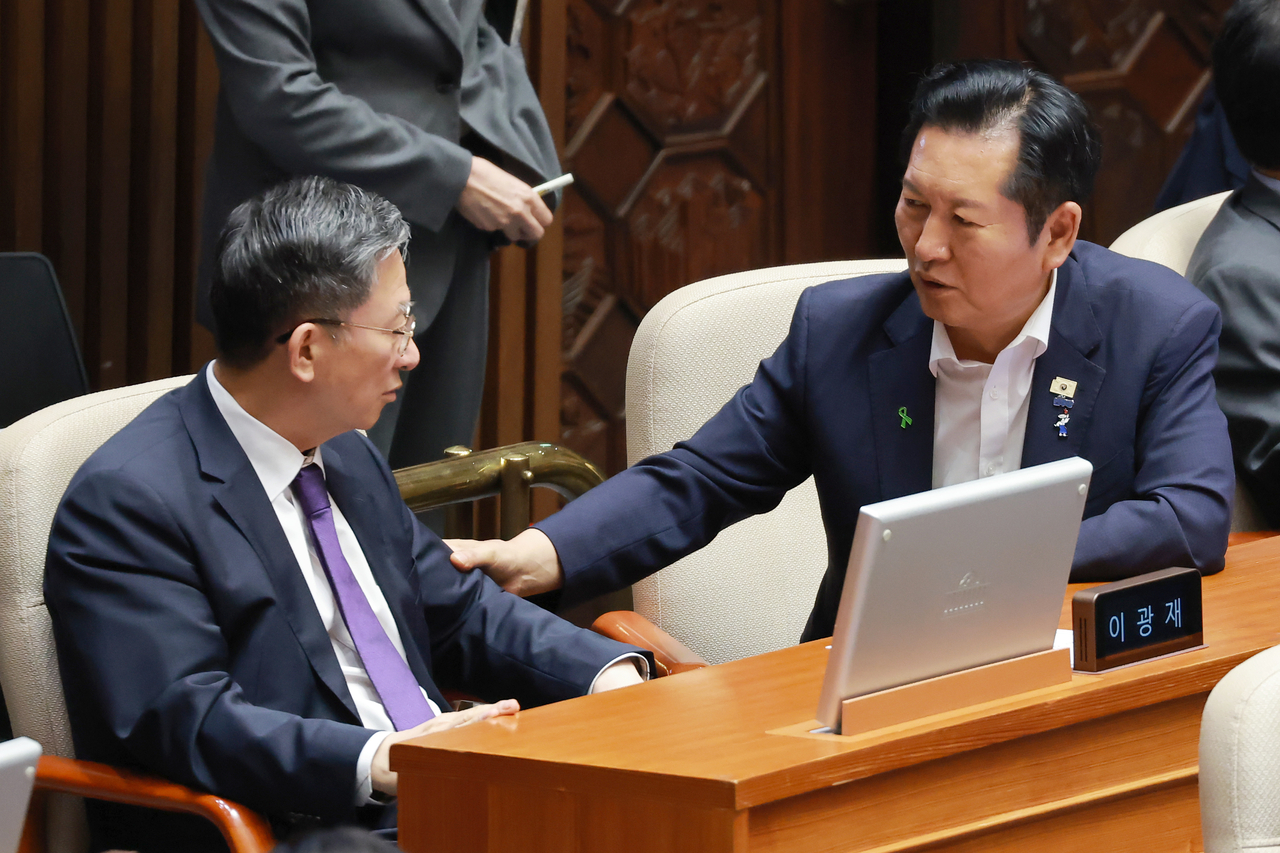
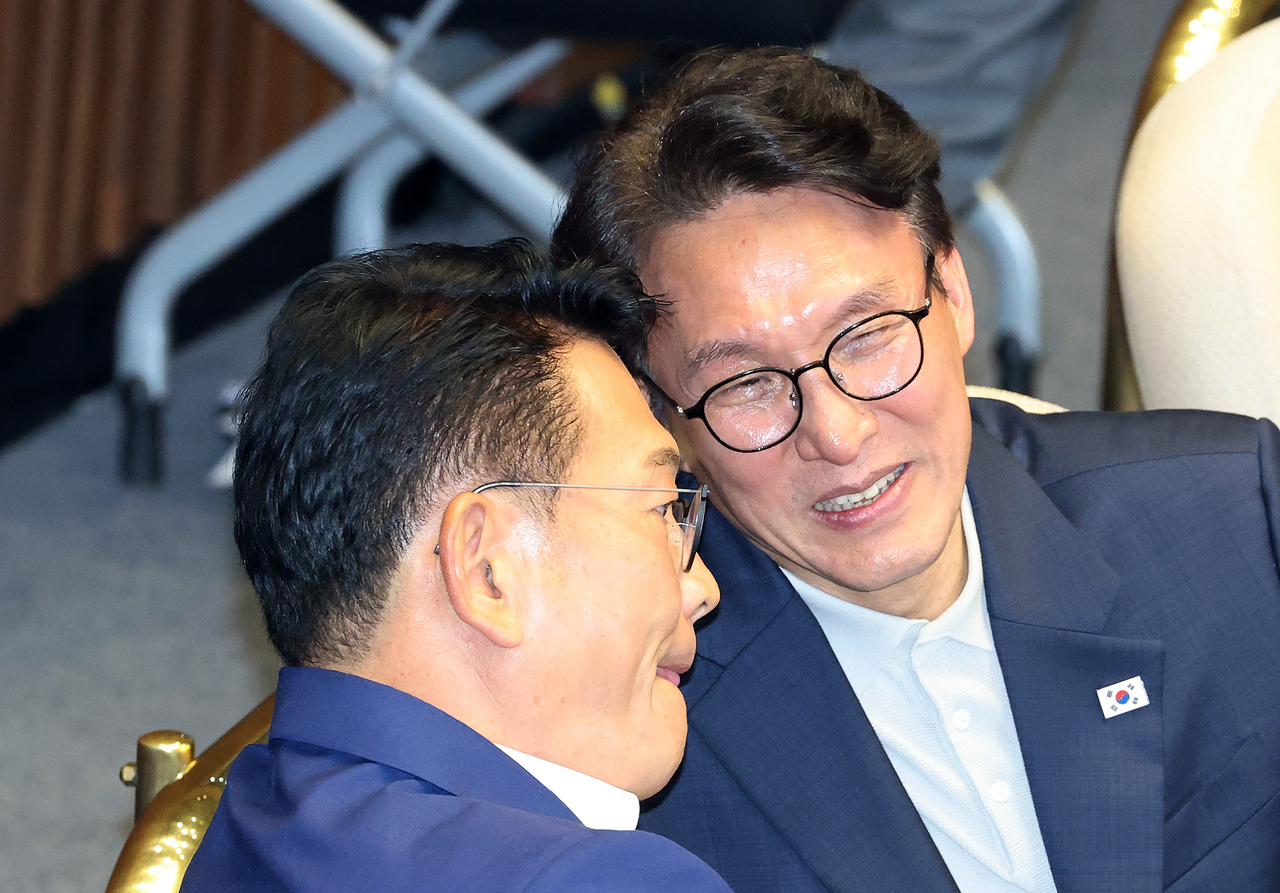
As to concerns that the bill would undermine people's right to justice because it bans prosecutors from intervening in criminal investigations when they find a police investigation insufficient, Democratic Party lawmakers who led the proposal, including Rep. Kim Seung-won, have contended that the bill guarantees the prosecution's right to ask police to investigate a crime further.
Also, victims of select crimes such as sexual assault and domestic violence will be granted rights to ascertain how far the investigation has proceeded or to file an appeal, in case criminal procedures are delayed.
Regarding the People Power Party's claims that the revision aims to clear President Lee of all criminal charges, Kim labeled that a "malicious framing" of the bill. The claims concern the bill providing grounds for a court to reject public prosecution in such cases that a party has been indicted based on a prosecutorial power abuse.
On Friday morning, Democratic Party interim Chair Rep. Han Byung-do blasted the People Power Party for "delaying the task of completing prosecution reform until the end."
But Democratic Party Rep. Jung Chung-rae, one of the advocates of prosecutorial reform who announced a bid to rerun for the party chair post, told reporters Friday that the party should be wary of "resistance to reform" and said more actions should be taken to complete the reforms.
Jung raised the possibility that some investigators within the prosecution might not comply with the law after it becomes effective in October, splitting the prosecution into two.
"Reform always comes with resistance, and when strong reform is in place, a strong backlash is inevitable. So we must be wary of this," Jung said after a forum held at the National Assembly to debate victim protection measures after the revision passes.
During the forum, Jung was met with a complaint from a participant that the revision bill fails to protect victims' right to justice. The participant was forcibly exited from the venue.
consnow@heraldcorp.com