Double-digit losses in Samsung, SK hynix revive peak-cycle fears despite robust AI demand, record earnings
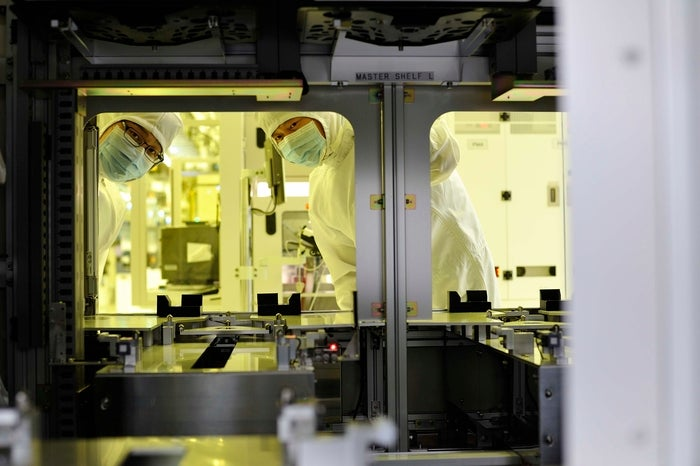
A record-breaking memory rally collided with peak-cycle fears Monday as Samsung Electronics and SK hynix suffered double-digit losses, reviving concerns that the boom is nearing its peak even as bullish investors argue that AI demand will extend the cycle.
By Monday’s close, Samsung had fallen 10.7 percent to 254,500 won ($169), while SK hynix had plunged 15.4 percent to 1.84 million won. The rout in the two market heavyweights helped drag the Kospi down nearly 9 percent as investors locked in profits and reassessed the outlook for chip earnings.
The plunge came despite Samsung’s record preliminary second-quarter operating profit of 89.4 trillion won announced last week, including about 84 trillion won from its memory business. The quarterly figure exceeded the company’s combined operating profit over the previous three years, but failed to halt the selloff or settle the debate over how much longer the memory upturn can run.
With near-term volatility hard to predict, investors are looking to upcoming earnings for direction. Results from ASML and TSMC this week, followed by big tech firm earnings and capital spending plans later this month, will help determine whether the chip cycle has further to run.
The Bank of Korea on Monday backed the more bullish view, saying semiconductor demand was rising faster than supply as global technology companies expanded AI infrastructure.
“Semiconductor demand has increased significantly due to AI infrastructure investment, while the pace of supply expansion has remained slow,” the central bank said in a written response to Rep. Park Sung-hoon of the ruling Democratic Party of Korea.
It said the current upturn differed from previous cycles because competitive AI investment was driving structural demand, while advanced chips such as high-bandwidth memory required longer development and production periods.
The BOK expects the global chip industry to remain in expansion “for a considerable period.” The current upturn has lasted 40 months since March 2023, exceeding the 29-month average of five expansion cycles between 2000 and 2020.
SK hynix’s strong Nasdaq debut offered some support. Its US depositary shares closed 12.8 percent above the offer price, at a premium to the Seoul-listed stock, though analysts said the listing provided limited evidence on whether the memory cycle had further to run.
“The ADR listing does not necessarily signal a change in the memory cycle, but it could help revive the sentiment toward semiconductors and the broader Kospi,” said Han Ji-young, an analyst at Kiwoom Securities.
Yang Ji-hwan, head of research at Daishin Securities, said the chip industry is in the early to middle stage of an upcycle.
"AI is changing the nature of memory supply and demand, and an extreme imbalance will drive further price gains and earnings growth," Yang said.
Analysts say the next several weeks are likely to determine whether investors return to the AI supercycle thesis or continue to price in a peak in memory earnings.
ASML and TSMC will provide the first major signals this week through their orders, capital spending plans and demand outlook. Their guidance will offer an early indication of whether leading chipmakers and foundries still expect AI-related investment to remain strong.
The more decisive test will come later this month from Microsoft, Alphabet, Amazon and Meta. Their earnings and capital expenditure plans will show whether spending on AI servers, data centers, HBM and advanced processors remains intact.
“Chip stocks are likely to trade in a broad range for some time before attempting another advance,” said Na Jeong-hwan, an analyst at NH Investment & Securities. “A sustained rebound will require further earnings upgrades and evidence that AI demand remains strong and Big Tech continues to expand capital spending."
The two Korean chipmakers may respond differently to those signals. Samsung has greater exposure to conventional DRAM and NAND, while SK hynix remains the purer bet on HBM and AI accelerators.
herim@heraldcorp.com