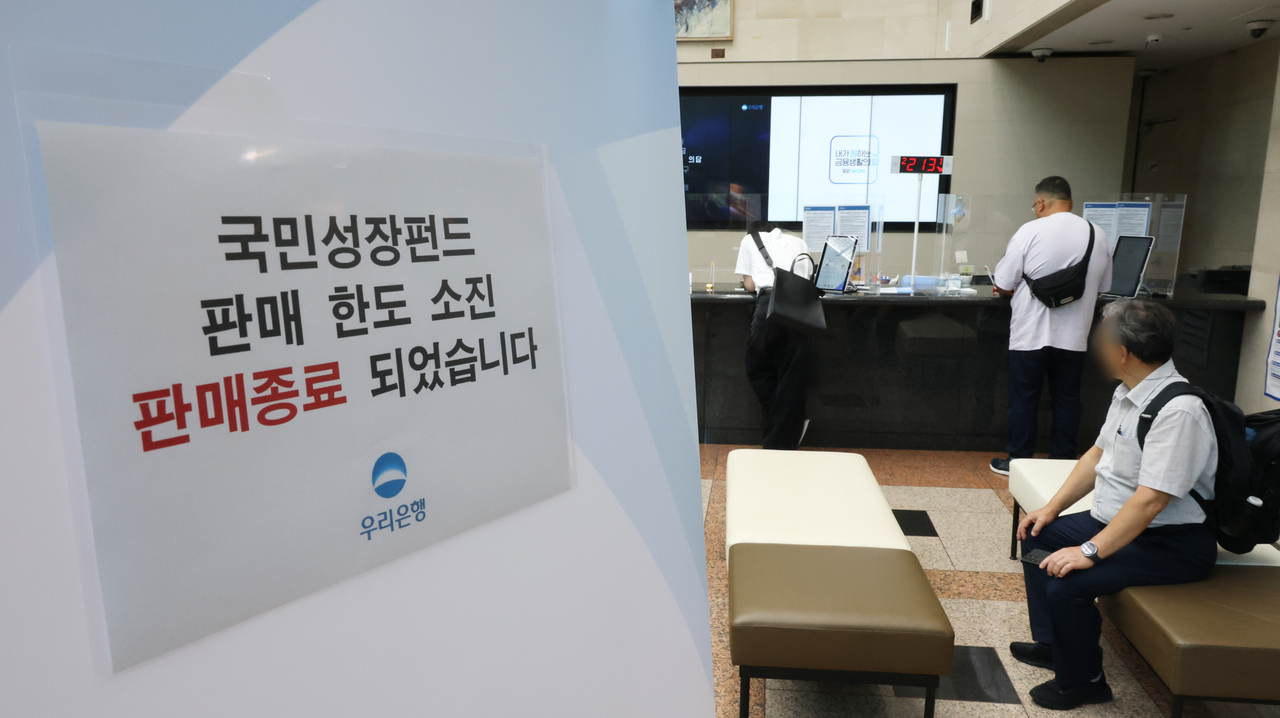
The line formed before the doors opened. By the end of Friday, most of the National Growth Fund’s retail tranche had already been taken up. Nearly 87 percent of the 600 billion won ($398.9 million) quota was gone in a day, and the tech-heavy Kosdaq market shot up 4.99 percent in response.
문이 열리기도 전에 줄이 생겨났다. 금요일 밤까지 국민참여성장펀드의 개인 투자자 배정분은 거의 완판되었다. 6천억원에 상당하는 배정분의 87퍼센트에 가까운 물량이 하루만에 팔렸고 이에 따라 테크 기업 위주의 코스닥 시장은 4.99퍼센트 급등했다.
The spectacle was striking. But its implications are less obvious, at least for now.
인상깊은 장면이었다. 그러나 그 함의는 최소한 지금으로서는 눈에 보이는 것보다 덜 명확하다.
The fund arrives at a moment when the Lee Jae Myung administration’s policy ambition and strong market momentum overlap. Competition in semiconductors and artificial intelligence is intensifying, while domestic equities hover near their highs.
이재명 정부의 정책적 포부와 시장이 강력한 동력을 얻게 된 것과 맞물리는 시기에 펀드가 출시되었다. 반도체와 인공지능에 있어 경쟁은 심화되고 있고 국내 증시는 고점 근처에서 움직이는 중이다.
Against this backdrop, policymakers are attempting to redirect private savings into strategic industries, hoping to narrow asset gaps while financing long-horizon technologies.
이러한 배경을 두고 정책당국은 민간 저축을 전략적인 산업으로 다시 끌어들이고자 한다. 장기 과업인 기술 분야에 자금을 대면서 자산의 격차를 줄이려는 시도다.
In scale, the effort is formidable. The plan is to mobilize up to 150 trillion won over five years, combining public and private capital across sectors from AI to biotech. The logic is that, left alone, private finance is unlikely to supply sufficient patient capital to industries with long payback periods and uncertain returns.
규모면에서 엄청난 시도다. 향후 5년간 150조 동원을 목표로 공적, 사적 자본을 합해 AI에서 바이오테크까지 분야를 아우르는 계획이다. 민간자본은 정부의 개입없이는 투자금을 돌려받는데 시간이 오래 걸리거나 회수가 불확실한 산업에 인내심을 가지고 충분한 투자를 하지 않을 것이라는 논리에 기반해서다.
The appeal to investors is equally clear. The government said it will absorb up to 20 percent of losses, reshaping downside risk. Tax incentives reinforce the attraction, including income deductions of up to 40 percent and reduced taxation on dividends.
투자자들에게도 마찬가지로 분명한 유인 요인이 있다. 정부는 20퍼센트까지 손실을 보전해주겠다고 밝혀 하방 리스크를 완화시켰다. 최대 40퍼센트의 소득공제에 배당금에 부과되는 세금감면 등 세금 혜택은 그 매력을 더한다.
For households shut out of large-cap rallies, the fund offers access to earlier-stage growth. Demand from lower- and middle-income investors has been particularly strong, reaching roughly 40 percent of bank subscriptions, well above the initial allocation.
대형주 상승장에 참여하지 못한 가계들은 이 펀드로 초기 성장 단계에서 접근이 가능해진다. 중저소득 투자자들로부터의 수요가 특히 강세를 보여 은행가입에서 초기 할당량을 크게 상회하는 약 40퍼센트에 달했다.
Yet popularity is not proof of durability.
그러나 당장의 인기가 지속성을 보장하는 것은 아니다.
Even the launch revealed strain. Subscription channels opened at different times, and technical bottlenecks limited access. These are operational flaws, but they hint at a deeper issue: A policy instrument encountering demand at a scale it is not yet equipped to manage.
펀드 발매에서도 문제가 드러났다. 가입 채널마다 판매 시작 시간이 엇갈렸고 기술적인 병목현상으로 접근에 어려움이 있었다. 운영상의 결점이라고는 하나 더 근본적인 문제를 암시했다. 이 정책 수단은 아직 이정도 대규모 수요에 대처할 능력을 갖추지 못했다는 것이다.
The more consequential response has been official enthusiasm. Authorities are already considering additional issuance, potentially advancing future quotas into the current year. The temptation is understandable. It is also risky.
더욱 중대한 반응은 당국의 적극적인 호응이었다. 당국은 이미 추가 발행을 고려중으로 향후 예정되어 있던 분량을 올해로 앞당겨 판매할 가능성이 있다. 그러고자 하는 것은 이해할 수 있다. 그러나 위험하기도 하다.
Accelerating supply would complicate fiscal planning, given the public funds needed to support loss coverage and tax benefits. More importantly, it would push capital into a market already flush with liquidity.
공급을 앞당김으로써 재정 계획은 더욱 까다로워질 것이다. 공적펀드가 손실을 일부 보전하고 세금혜택을 제공해야하기 때문이다. 더욱 중요한 것은 이미 유동성이 넘치는 시장에 자본을 불러들일 것이다.
Korea’s constraint is not funding but investable assets.
한국의 제약 요인은 자금이 아니라 투자할만한 대상이 부족하다는 것이다.
As multiple policy-driven funds converge on a narrow pool of unlisted technology firms and specialized Kosdaq companies, competition has intensified. Valuations have risen sharply, in some cases doubling or tripling within a year. In extreme cases, firms now dictate terms to investors.
다수의 정책주도 펀드가 소수의 비상장 테크 기업과 특화된 코스닥 기업들에 몰려 경쟁은 심화되었다. 기업가치는 급등해 한해동안 두배에서 세배까지 오른 경우도 있다. 극단적인 경우 이제는 기업이 투자자들을 좌지우지한다.
That inversion can carry dire consequences. Reports have emerged of weaker firms seeking short-term financing on the assumption that future policy allocations will provide repayment. When capital begins to anticipate policy rather than performance, discipline weakens.
그러한 주객전도는 매우 심각한 결과를 가져올 수 있다. 좀더 취약한 회사들이 앞으로의 정책적인 배분을 통해 상환가능할 것이라는 가정하에 단기 자금조달을 모색중이라는 보도가 나왔다. 자본이 성과보다 정책에 기대기 시작하면 기강은 해이해진다.
This pattern is not new. Earlier state-backed funds struggled to generate returns once fiscal support was stripped away or political priorities shifted. Their weakness lay less in intent than in execution. Capital was raised first, while investment discipline followed, if at all.
새로운 패턴은 아니다. 기존의 정부 지원 펀드는 재정 지원이 끊기거나 정치적 우선순위에 변화가 생기면 수익창출에 어려움을 겪었다. 의도보다는 그 실행에 약점이 있다. 투자 원칙이 있다고 해도 이는 자금을 마련한 후에 세워졌다.
Avoiding a sorry repeat of those failures will require restraint and balance. The test of success is not how quickly money is raised, but how well it is deployed. Fund managers must be allowed to invest at their own pace, guided by opportunity rather than administrative targets. Lower utilization, when quality assets are scarce, should be accepted rather than penalized.
유감스러운 이러한 실패를 반복하지 않으려면 자제와 균형이 필요하다. 성공의 척도는 자본이 얼마나 신속히 조달되었느냐가 아니라 그것이 얼마나 제대로 배분되었는지에 달려있다. 펀드 매니저들은 행정적인 목표가 아니라 기회를 따라 그들이 원하는 대로 투자할 수 있어야 한다. 우량 자산이 부족할 경우 자본 가동률이 낮다고 해도 그에 불이익을 주는 것이 아니라 받아들여야 한다.
Flexibility will also matter. Annual funding should adjust to market conditions, and the investment limit should broaden where appropriate. Expanding into adjacent sectors could ease pressure on a narrow set of assets without diluting strategic focus.
유연성 또한 중요하다. 연간 예산은 시장의 상황에 맞춰져야 하고 투자 한도 또한 적절하다면 확대되어야 한다. 연관 분야로의 확대를 통해 전략적 초점을 흐리지 않는 선에서 소수의 자산에 몰리는 압박을 완화시킬 수 있을 것이다.
The state-led fund has tapped into a real demand: broader access to growth and a shift toward capital-led wealth formation. But the opening-day rush should not become the benchmark.
정부 주도 펀드는 새로운 수요를 창출해냈다. 성장에의 좀더 폭넓은 접근 그리고 자본 주도의 부의 형성으로의 전환이다. 그러나 펀드 개시일의 쏠림현상을 기준으로 삼아서는 안될 것이다.
If anything, a warning endures: In state finance, speed is easy to manufacture, discipline is not.
외려 경고가 지속된다. 국가 재정에서 속도는 쉽게 만들어질 수 있으나 규율은 그렇지 않다.
tranche 분할 발행
long-horizon 장기 과업
mobilize 동원하다
deduction 공제
allocation 할당(량)
inversion 도치
penalize 처벌하다
khnews@heraldcorp.com