When BTS chose "Arirang" as an album title and wove the familiar refrain — "Arirang, Arirang, Arariyo" — into its music, the move sparked widespread discussion about meaning, identity and cultural heritage.
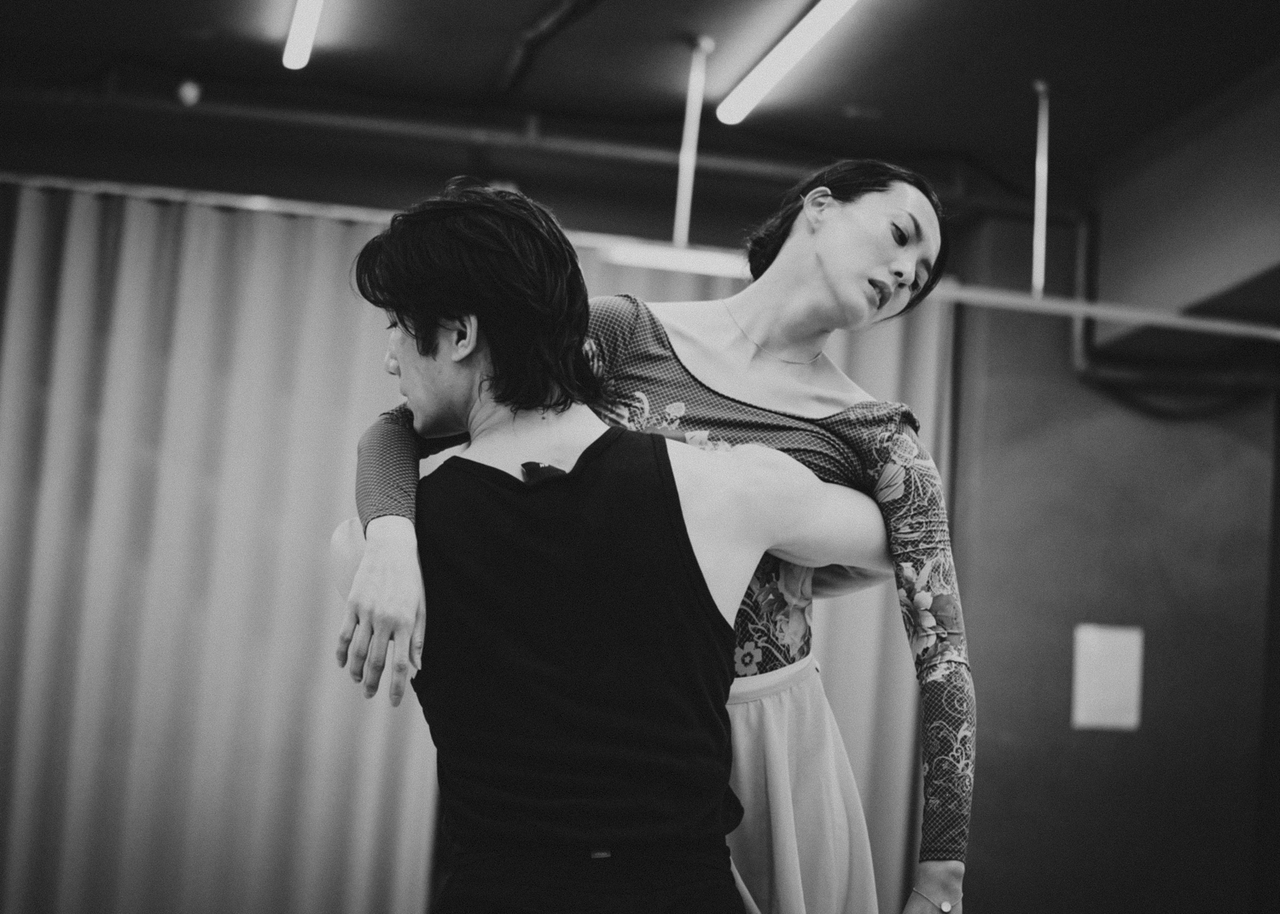
"Ballet Arirang," presented at the Seoul Arts Center's CJ Towol Theater over the weekend, approached the iconic folk song from a different angle. Although the title invoked Korea's most familiar melody, not a single note of "Arirang" was heard during the performance. Instead, the production sought to translate the song's emotional and symbolic resonance into movement, music and imagery.
"There is no 'Arirang' melody in the performance, and no one sings 'Arirang,'” said Park Hoon-kyu, director of the multimedia arts collective MUTO and the production's creator ahead of the performance.
The production was commissioned as a special project of the Ballet Festival Korea at the suggestion of its artistic director, Kim Joo-won. The project had already been in development before BTS unveiled its "Arirang" project.
For Park, the production's definition of "Arirang" is clear: "It is a scream rebounding from a wall of despair, which ultimately becomes a song of salvation connecting people to one another."
The absence of the melody prompted debate over the title itself. Park said he repeatedly argued against using the word "Arirang." In the end, the creative team chose "Ballet Arirang" because they viewed "Arirang" not as a specific tune but as a symbol.
"The 'Arirang' I think about begins with a great wall we encounter in moments of hardship and despair," Park said. "I wanted to show the solidarity required to break through that wall."
That wall served as the production's central image. The towering structure featured on the poster was inspired by imagery from "2001: A Space Odyssey."
"When you step outside before dawn, everything around you can feel like a wall. But if you lift your head in that darkness, there comes a moment when a single star shines on you. I think we have lived by looking toward that kind of hope."
Over the past six months, Park said, the team created 12 original tracks, blending electronic music with the sounds of traditional Korean instruments, the geomungo and the taepyeongso, as well as orchestral arrangements. The result aimed to create a sonic texture distinct from conventional ballet scores.
The choreography brought together two prominent Korean dance-makers, Choi Soo-jin and Lee Luda, who divided the work into separate acts. The creative process also departed from ballet convention. Rather than beginning with music or movement, the project started with a written narrative.
Park wrote the script and discussed with choreographers what kind of dance would emerge from it.
The work unfolded around the metaphor of a wall. The first act depicted an individual being consumed by it, while the second followed a collective effort to break through it.
Choi, who choreographed the first act, approached despair as something more complex than sorrow.
"I felt the weight of the word 'despair,' but I didn't want to leave it as sadness alone," said Choi. "Despair comes because there were once dreams and hopes before it. I wanted to show the strength to move forward again rather than remain trapped in despair."
Lee's second act focused on emergence and renewal, drawing heavily on Korean movement traditions.
"I referenced Korean dance techniques, taekwondo forms and shamanistic gestures," she said. While the lead character dances on pointe, the rest of the cast incorporates Korean movement vocabulary throughout the performance.
"The rhythms of the janggu and other percussion instruments kept pushing the body to move. That sensation reminded me of a shamanistic ritual, and I wanted the ending to build toward an explosive surge of energy, as if everyone were leaping upward together."
hwangdh@heraldcorp.com








