People Power Party lawmakers launch an all-out offensive against Kim’s proposal ahead of June 3 local elections

South Korea should consider institutional ways to redistribute potential excess tax revenue generated by the AI infrastructure boom to help ease inequalities that could deepen in an AI-driven era, a top presidential policy aide said.
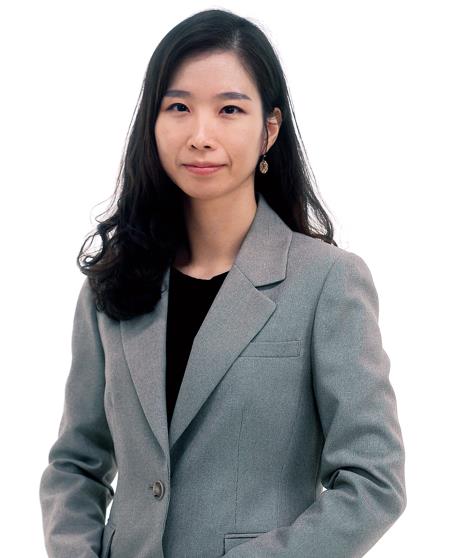
Presidential chief of staff for policy Kim Yong-beom underscored the need for such a framework as South Korea could be entering a structurally different economic era driven by AI infrastructure supply chains, including memory chips and high-bandwidth memory.
Kim proposed the principle, tentatively named a “national dividend,” underlining that gains from AI infrastructure should be understood as the product of South Korea’s collectively built industrial foundation.
Kim went on to stress that South Korea should address the risk that excess profits in the AI era could structurally widen social inequalities, adding that “excess profits in the AI era are concentrated by nature.”
Kim’s suggestion drew backlash from lawmakers in the main opposition People Power Party, emerging as a political flash point ahead of the June 3 local elections.
In his Facebook post on Monday, Kim explained that "the central question of the AI era is not simply about growth rates, but about how to socially stabilize excess profits."
Kim explained that groups with direct access to productive assets, such as shareholders of memory chipmakers, core engineers and owners of capital assets in the Seoul metropolitan area, would likely reap disproportionately large gains from the AI industry boom.
By contrast, much of the middle class may experience only indirect gains, such as stronger purchasing power from a firmer won, limited fiscal transfers and moderate asset appreciation, according to Kim.
Kim stressed that “using a portion of the excess profits to bolster social stability and ease the costs of transition for the current generation is not merely redistribution, but carries the character of a cost for maintaining the system.”
“I would like to give that principle the tentative name of a ‘national dividend.’ The core is not a specific program, but the principle,” Kim said.
Kim underlined that “the fruits of the AI infrastructure era are not the result of any single company alone.”
“They are built on an industrial foundation accumulated collectively by the Korean people over the past half-century. If so, part of those gains should be structurally returned to the entire public. That is the legitimacy and principle behind the design,” Kim said.
“If Korea’s strategic position in the AI infrastructure supply chain creates a structural boom and that leads to record excess tax revenues, how to use that money is not a matter of choice but a matter of design that must be properly considered,” Kim added.
Kim said the specific form of such a program — whether support for young entrepreneurs, basic income for rural and fishing communities, assistance for artists, stronger pensions or education that accounts for the AI transition — should be debated under that principle and refined through broad social consensus.
“If excess tax revenues do not materialize, the national dividend would be an unrealistic idea," Kim said. "But if the argument is correct, letting the fruits of those excess profits pass by without any guiding principle may be the more irresponsible choice."
Kim explained that the proposed national dividend mechanism was based on the assumption that South Korea could be entering a new economic structure shaped by AI infrastructure.
Kim forecast that the country could be moving toward “a structure closer to a technology-monopoly economy based on structural scarcity and persistent excess profits.” Such a transformation, he added, “could alter not only growth rates or stock prices, but the very character of the country itself.”
The People Power Party launched an all-out offensive against the proposed “national dividend.”
Party chair Rep. Jang Dong-hyeok said, “If the government takes the money I earned through my own efforts and redistributes it, that is essentially a communist rationing economy.”
Rep. Song Eon-seog, floor leader of the main opposition People Power Party, called on President Lee Jae Myung to “immediately dismiss” Kim.
“Corporate profits are the result of massive investment, technological innovation and the willingness to take the risk of failure,” Song said in a Facebook post on Tuesday.
Song claimed that raising the idea of a “national dividend” based on assumed future earnings is “extremely dangerous and irresponsible,” noting that the semiconductor and AI industries are highly cyclical sectors in which sharp downturns often follow periods of boom.
Amid the growing controversy, a Cheong Wa Dae official, speaking on condition of anonymity, said, “The post uploaded by the presidential chief of staff for policy on social media represents his personal view and is unrelated to any internal discussion or review at Cheong Wa Dae.”
dagyumji@heraldcorp.com
![[Graphic News] Korea’s marine waste up 20% in 4 years](https://wimg.heraldcorp.com/news/cms/2026/10/27/news-p.v1.20261027.091c35e4ae1a4bb2a598a9138e673a7b_T1.gif?type=h&h=800)