Teachers say mock documentary reflects workplace culture shaped by malicious complaints, emotional exhaustion, weak protections
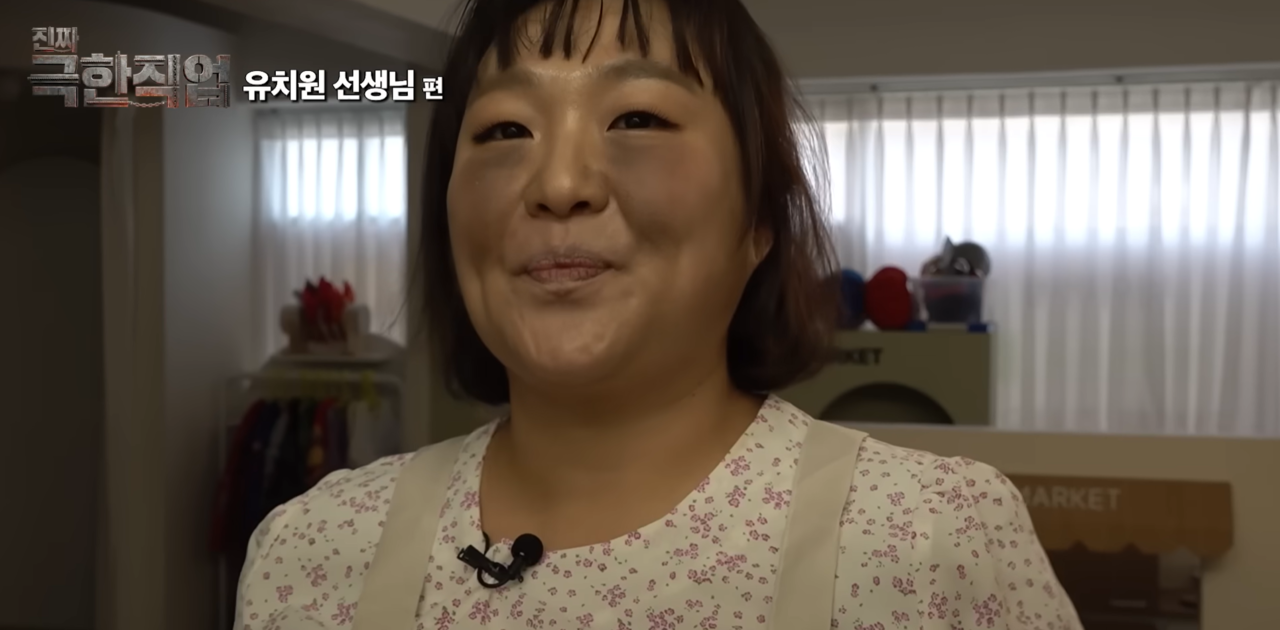
Comedian Lee Soo-ji is known for her versatility in portraying a wide range of satirical characters. But to many kindergarten teachers in South Korea, her latest role depicting their own occupation feels less like comedy than documentary.
“It’s worse in real life,” one comment on the video, claiming to be written by a kindergarten teacher, reads. “It was supposed to be funny, but I almost cried.”
On April 7, Lee began posting regular episodes of a mock documentary series on her YouTube channel centered on Lee Min-ji, a fictional kindergarten teacher, as she navigates excessive parental complaints and an overwhelming workload.
The first two episodes had garnered nearly 10 million views combined as of Sunday.
The episodes feature absurd scenes in which parents complain about the brand of wet wipes the teacher uses to help children clean up after using the bathroom, or take issue with seeing the teacher in a nightlife district over the weekend.
In one scene, a parent complains that Lee beat a student in a game of rock-paper-scissors.
“I couldn’t sleep after hearing that from my child because my hands were shaking and my heart was beating fast,” the parent tells Lee in the video.
But the satire was seen by several kindergarten teachers as a depiction not so far from reality.
‘Not an exaggeration’
“I thought it mirrored reality pretty well,” said a kindergarten teacher with 14 years of experience. “The situations portrayed in the videos are things you can easily come across in the field. Sometimes, real-life cases are far more devastating and cruel.”
The teacher, who spoke on condition of anonymity, said he had seen parents request wet wipes made with specific ingredients, and blame teachers when a child got a mosquito bite — both situations depicted in Lee’s video.
Another teacher, Lee Eun-ju, who has taught for eight years, said she had experienced similar situations.
“There are a lot of complaints in the summer about mosquito bites, especially when I worked in the countryside,” Lee said. “Parents would complain that their child could not sleep because they were bitten at kindergarten and their skin was swollen.”
Lee recalled parents demanding the kindergarten use electric mosquito repellent diffusers. When she explained that extended use of repellent devices, which heat up blocks containing repellent, could be harmful to the children's respiratory systems, the parents said it was the teacher’s responsibility to ventilate the classroom constantly.
Lee also said parents sometimes discussed, and even tried to interfere with, teachers’ private lives. The problem eventually led her to use KakaoTalk’s multiple-profile feature to separate her personal life from work.
She said she would receive calls from parents late into the evening.
“Teachers immediately get worried when parents call after hours, because we think something may have happened to the child,” Lee said. But most of the calls, she said, were not urgent. Some parents simply asked what had happened at kindergarten that day because their child seemed “tired.”
The anonymous teacher said he had seen cases in which teachers received complaints after posting photos of themselves drinking beer after work.
Both teachers said parents often use the phrase, “My husband is very angry,” when filing complaints — another detail echoed by parent characters in the satirical video.
Why teachers do not fight back
“We try to accept at least 90 percent of complaints,” Lee said. “Principals are often very afraid of parent complaints.”
She said rejecting complaints can ultimately lead to a drop in enrollment, which in turn can reduce government funding, which is provided on a per-student basis.
But Lee said the main reason administrators and teachers accommodate complaints is that resisting them is emotionally exhausting. Parents whose complaints are not accepted often leave angry reviews on online parent communities, damaging the reputation of both the teacher and the kindergarten, she said.
“Parents often single out one teacher on online mom cafes,” Lee said, referring to Korean online communities where parents share neighborhood and school information. “We just accommodate them because we don’t want that to happen.”
Lee said her institution has since decided not to disclose teachers’ personal phone numbers in an effort to protect them. It has also adopted a separate messaging platform for parents who need to contact teachers.
Worse in private institutions
Lee said she was fortunate to work at a public kindergarten, noting that teachers at private institutions often face harsher conditions.
“Teachers at public kindergartens are considered public officials, so we do not have the same fear of being fired,” she said. “But teachers at private kindergartens renew their contracts every year, making them more vulnerable to pressure from principals.”
Lee also said the scenes in the satirical video depicting overtime work applied more directly to teachers at private institutions.
What needs to change?
The anonymous teacher said a culture that expects kindergarten teachers to sacrifice themselves has become deeply entrenched.
“There is a deeply rooted misconception that kindergarten teachers should naturally sacrifice themselves,” the teacher said. “As a result, the essence of education is gradually being eroded.”
He said education authorities need to reduce the number of children per class and provide more staff to support administrative work at kindergartens.
“There also needs to be a substitute teacher system run at the education office level, especially for replacement teaching,” she said.
“Kindergartens are not simply child care facilities. They are educational institutions,” the teacher added. “If teachers are forced to accommodate every demand and complaint, education for children is pushed aside.”
Lee also called for legal and structural changes.
“There are so many cases where parents threaten teachers with groundless child abuse accusations,” Lee said. “There need to be legal structures that protect teachers from such malicious complaints.”
seungku99@heraldcorp.com