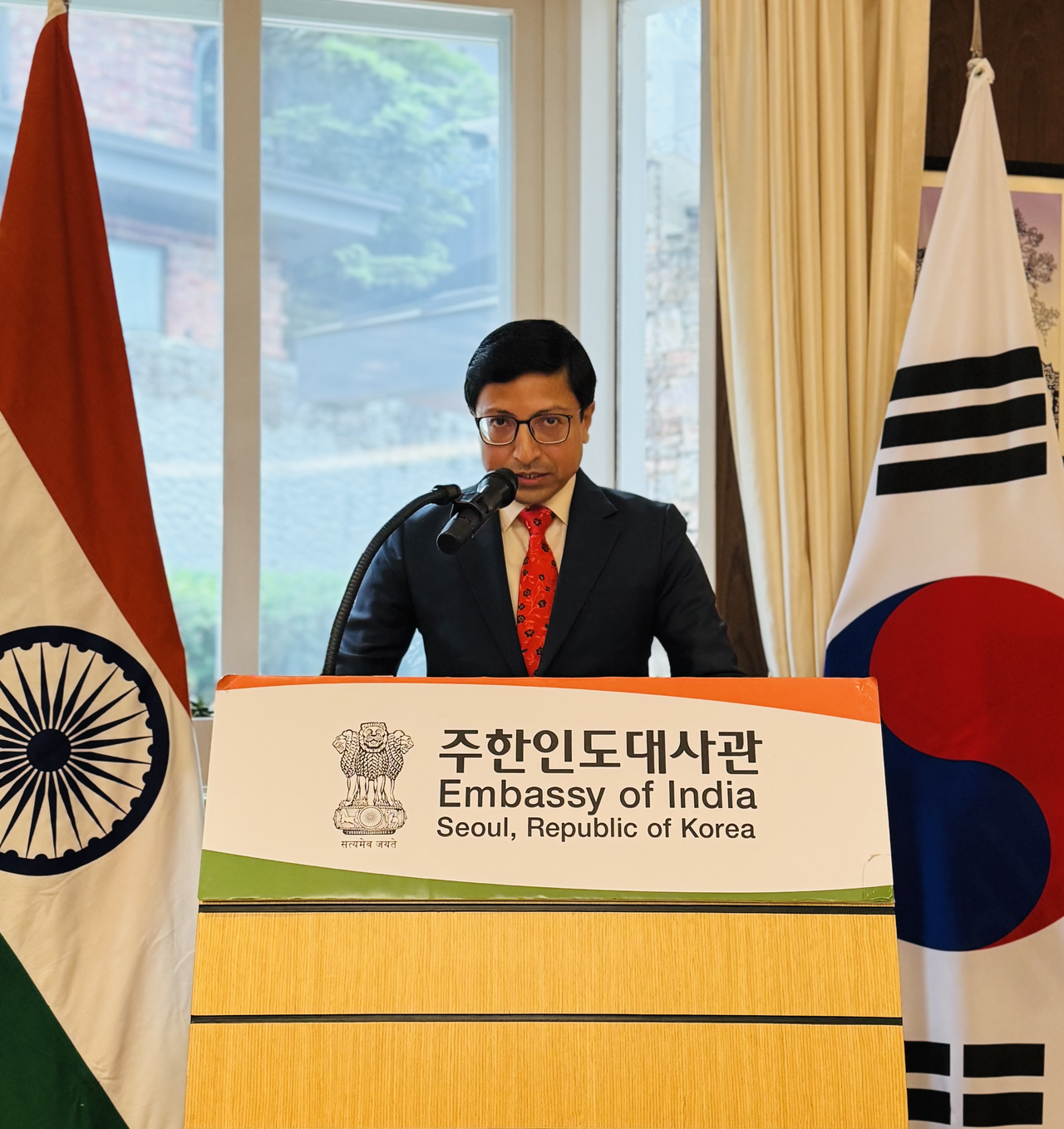
South Korea is emerging as a key partner in India’s long-term economic and strategic transformation, one central to India’s Viksit Bharat vision of becoming a developed nation by 2047, Indian Ambassador to Korea Gouranga Lal Das said Thursday.
The Indian government aims to expand the economy to $5 trillion by 2027, $7 trillion by 2030 and $30 trillion by 2047.
“Korea is an important and very crucial partner in our developmental journey and in India’s vision of Viksit Bharat,” Das said during a media briefing.
Das underscored the growing convergence between the two democracies, driven by shared strategic interests and high-level engagement. He noted Prime Minister Narendra Modi’s long-standing admiration for South Korea’s development model and President Lee Jae Myung’s earlier role as chairperson of the ROK-India Parliamentary Friendship Group in the National Assembly.
The remarks came as India and South Korea unveiled a new roadmap for their Special Strategic Partnership, expanding cooperation across trade, defense, technology, maritime logistics and cultural exchanges over the next decade.
“The political outcomes from this summit set the structural framework of the India-ROK Special Strategic Partnership for the next decade,” the Indian Embassy in Seoul said, describing the agreements as a “blueprint” for 2026-2030. ROK is the acronym for South Korea's official name, the Republic of Korea
The summit produced four joint statements and 15 MOUs covering defense, the economy, science and technology, sustainability and people-to-people ties.
Das highlighted Korea’s strong presence in India’s manufacturing sector, citing Samsung as the country’s largest mobile phone maker and Hyundai as its second-largest automobile manufacturer. He described Korea as a priority partner for India’s manufacturing drive.
He also pointed to expanding cooperation in clean energy, including green hydrogen, nuclear energy and green steel.
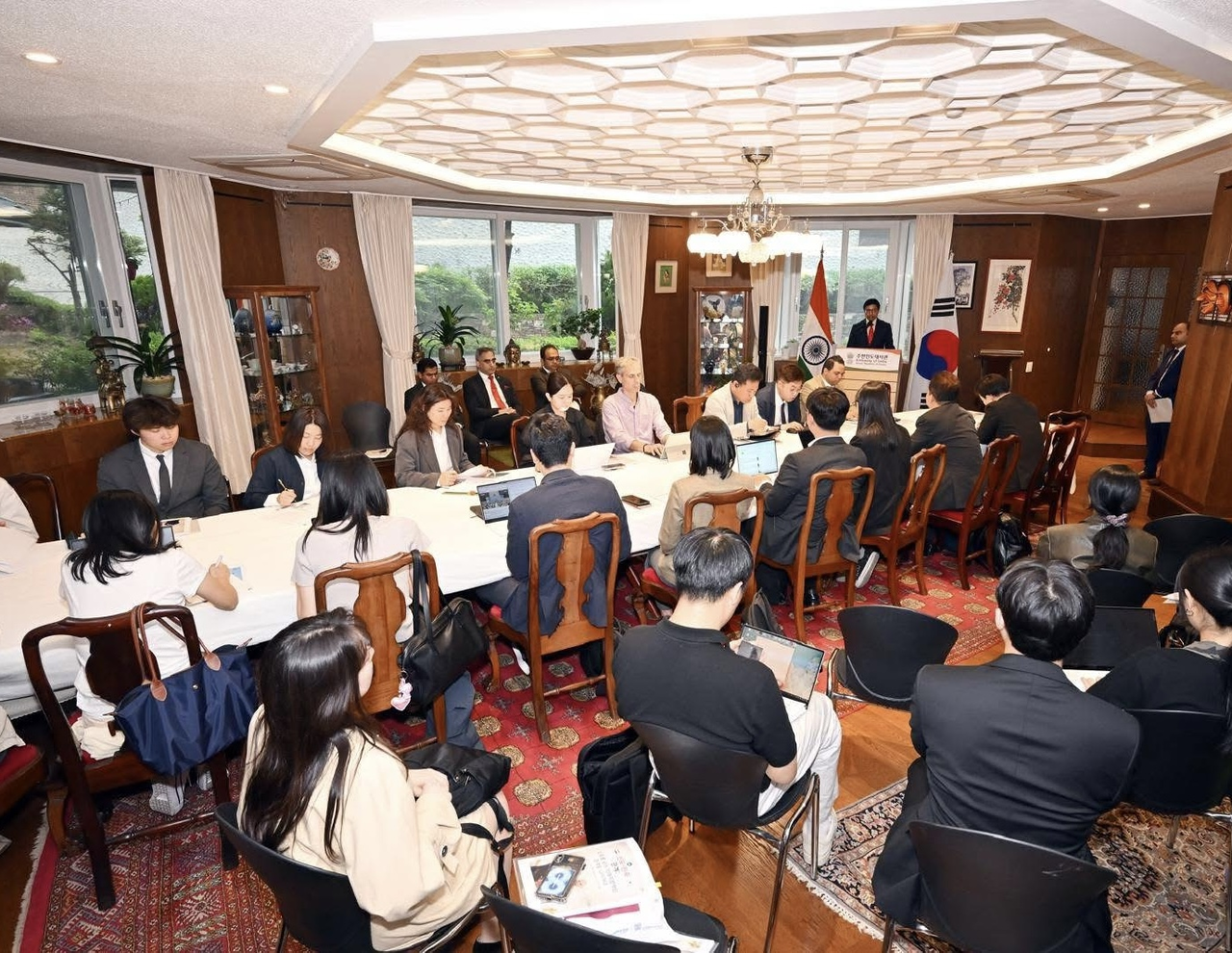
Key outcomes included a Joint Strategic Vision, a framework for shipbuilding and maritime logistics cooperation, and agreements on sustainability and energy security. The two sides also launched an Economic Security Dialogue focused on supply chains and critical technologies.
“The recent state visit of President Lee Jae-myung marked a major turning point in our bilateral relations,” said Sanjana Arya, commercial officer at the embassy.
The two countries set a target of doubling bilateral trade from about $25 billion to $50 billion by 2030 and agreed to accelerate negotiations on upgrading the Comprehensive Economic Partnership Agreement.
Emerging technologies are a major focus of the partnership. The India-Korea Digital Bridge initiative is aimed at deepening cooperation in semiconductors, AI, biotechnology and quantum technology. The two sides also announced a joint ISRO-KASA working group.
On the cultural front, India and South Korea extended their Cultural Exchange Programme to 2030 and designated 2028-2029 as the “Year of India-ROK Friendship.”
The embassy also announced the first India Day festival in Seoul, to be held at Yeouido Hangang Park on May 16, featuring Indian culture, cuisine, films and tourism. International Day of Yoga events will also take place across Seoul, Busan, Jeju Island and Nami Island in June.
sanjaykumar@heraldcorp.com